




Mentor Design Tool Simplifies J1939 Development
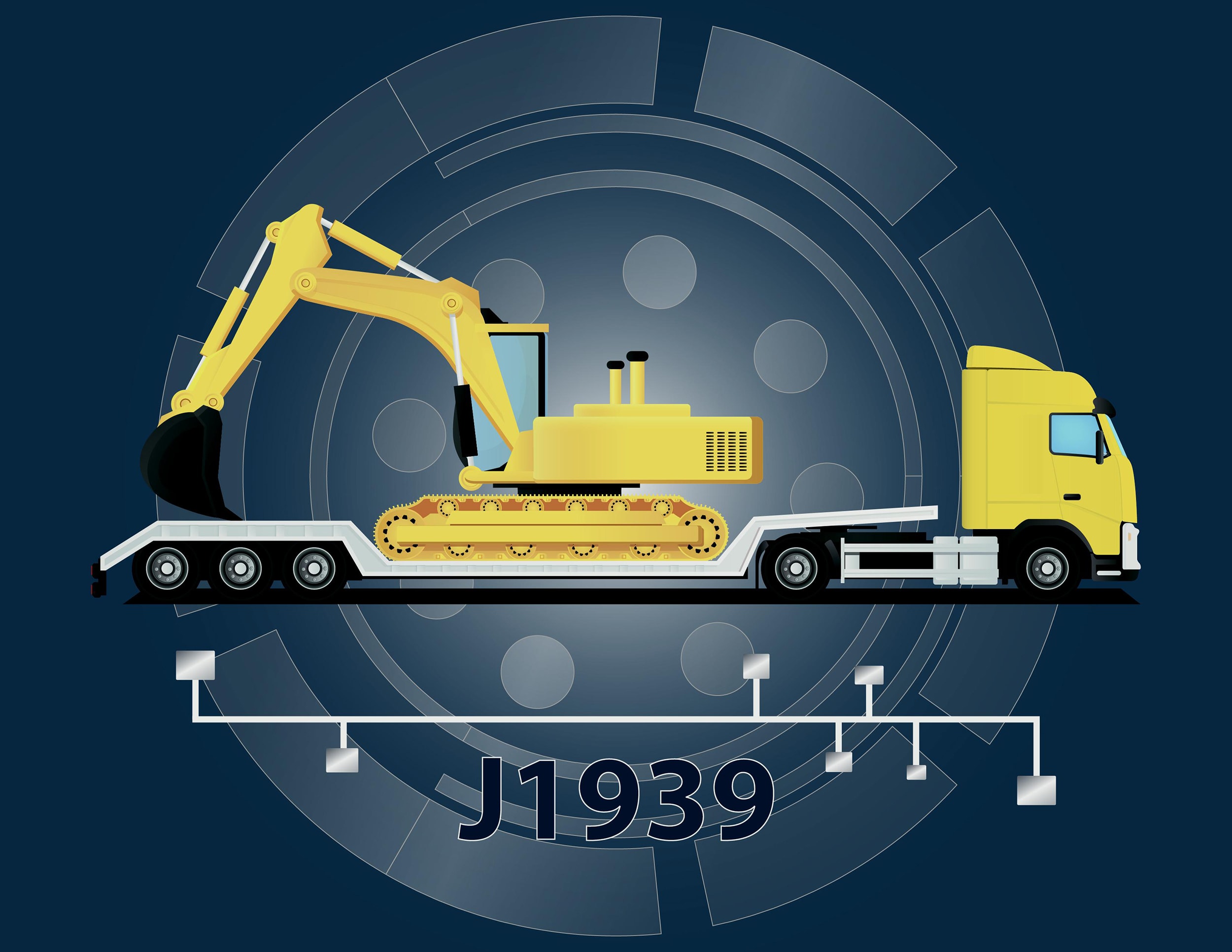
The explosion of electronic functions on commercial vehicles is driving an expansion of vehicle networks, making network design and configuration an important factor in electronic architectures. Mentor has unveiled a model-based design tool that it says can improve network design efficiency by as much as 90%.
The Capital Systems Networks tool simplifies the creation of Controller Area Network (CAN) networks based on SAE J1939. The tool automatically handles all the standard’s addresses and commands, such as parameter group numbers (PGNs) and suspect parameter numbers (SPNs), freeing engineers from the time-consuming task of entering information manually. It also routes signals, trimming design time by up to 90%. Digitizing tasks and using digital models also lets engineers try different layouts for component and functions.
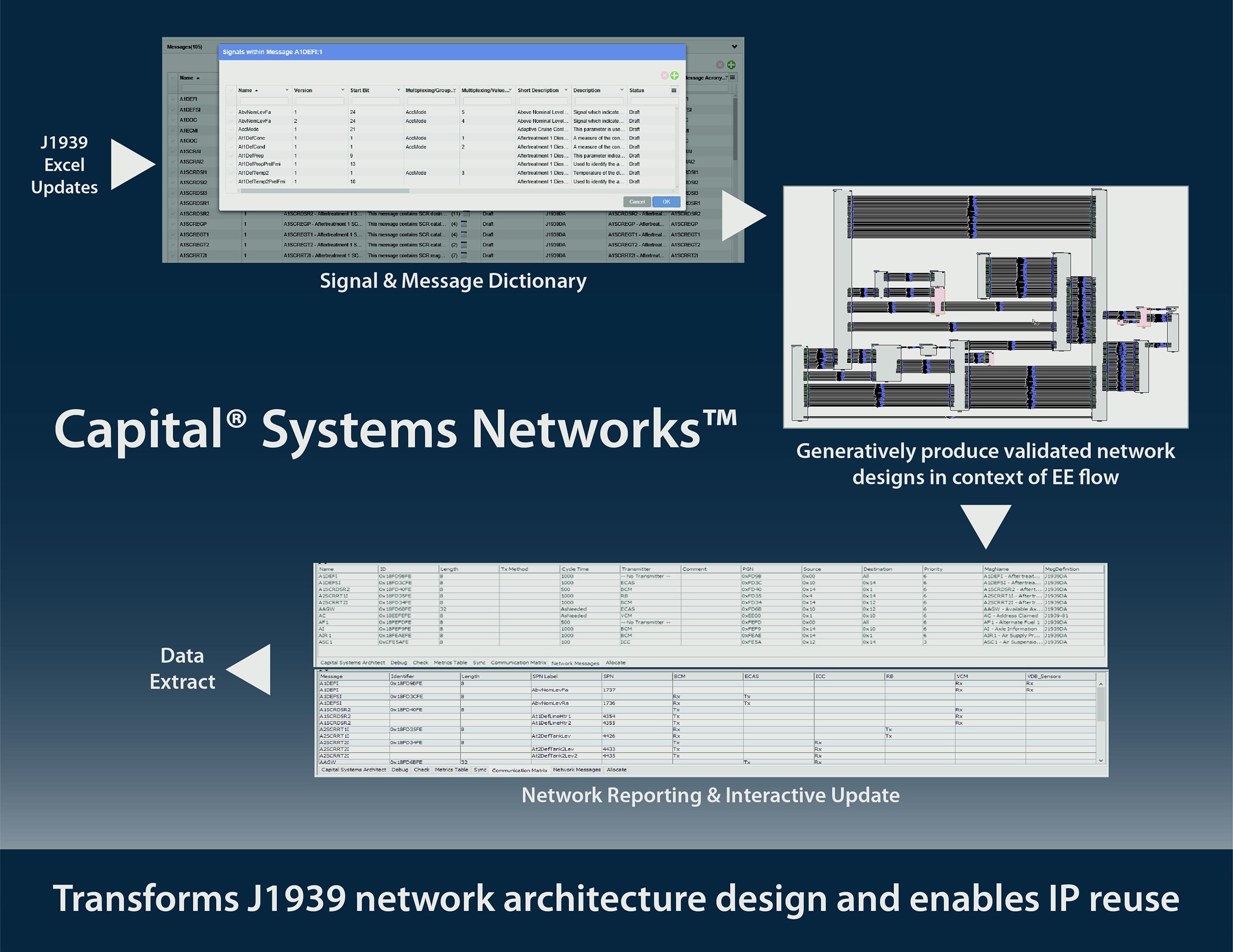
The tool augments Mentor’s Capital design software, which addresses electrical system and wiring harnesses. Wiring and network complexity have ballooned in recent years and are expected to grow as vehicles evolve to provide autonomous driving.
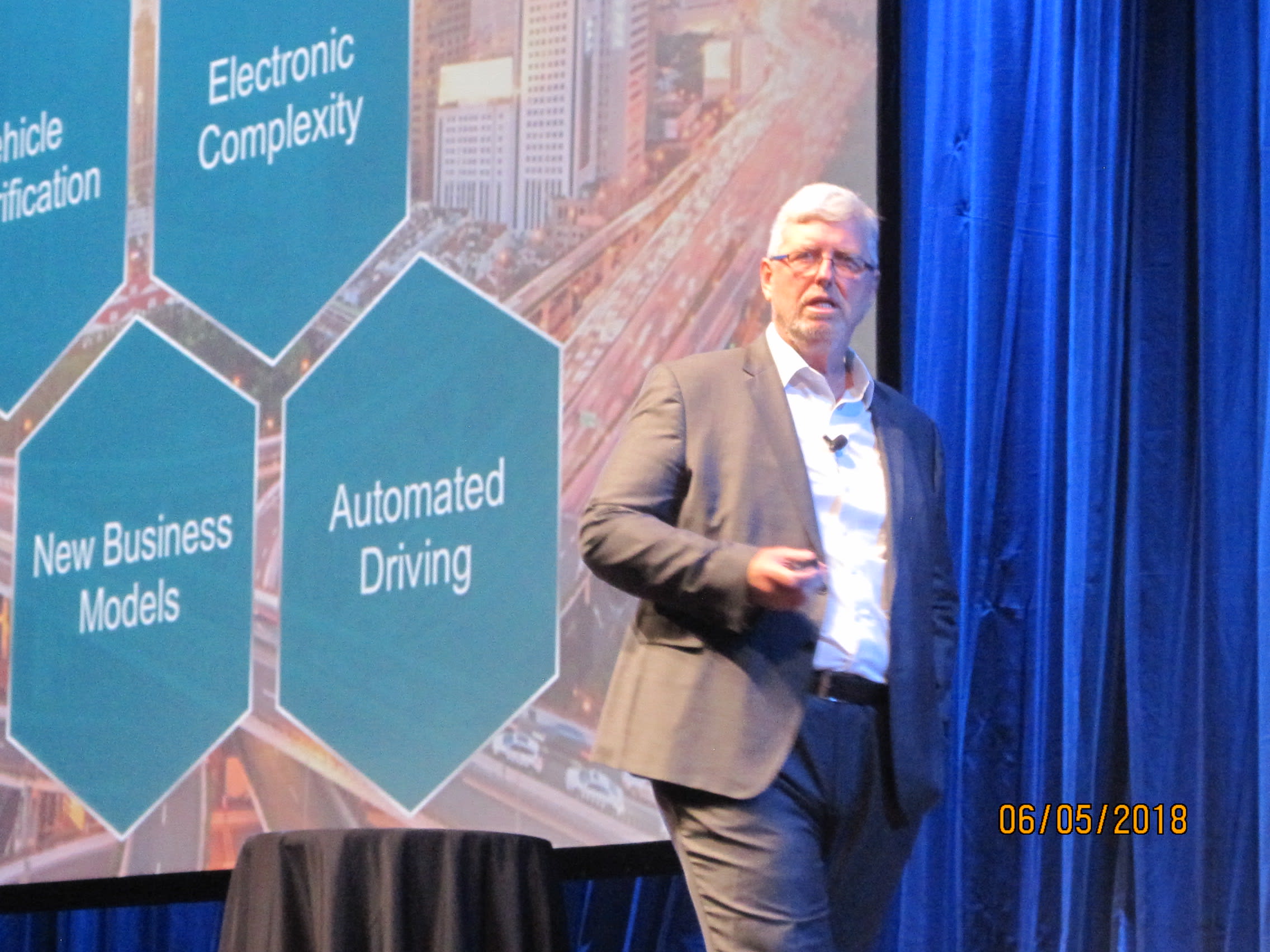
“Wiring harnesses are one of the most expensive systems on vehicles,” said Martin O’Brien, vice president and general manager of Mentor’s Integrated Electrical Systems Division. “To get autonomy, you need to add sensors, which can add about 40% to the wiring harness. There’s a huge weight and space problem with that much wiring.”
Digitizing networking information lets engineers try out a range of configurations, determining whether it’s more efficient to consolidate processors or partition processing power in sensors and other modules. Capital Systems Networks provides a generative design process for the electric and electronic architecture that lets engineers see how changes in one area impact other aspects of the design.
The tools can accept input from a range of sources including SysML and UML descriptions. Generated functional designs can be supplemented with J1939 signals stored in the library. These designs can be used to generate the electrical systems logic design, network and software architecture.
“Performance needs to be balanced against multiple costs,” O’Brien said. “Implementations need to be verified, electrical engineering content needs to be consolidated and the EE integration needs to be validated. You’re talking about hundreds of features and thousands of functions.”
Mentor was acquired by Siemens last year as part of a multi-billion-dollar expansion of its software business.
More From SAE Media Group
Automotive Engineering
Software Transforming Vehicle Development
Automotive Engineering
Real-Time Processors Key to the Zonal E/E Revolution
Autonomous Vehicle Engineering
Keeping Pace with In-Vehicle Data Speed
Automotive Engineering
NXP S32 CoreRide Platform Simplifies Development of Software-Defined Vehicles
Automotive Engineering
NXP Processors Evolve to Enable Software-Defined Vehicles
Off-Highway Engineering
TE Connectivity Powers down High-Power Systems
Off-Highway Engineering
Securing CAN Networks in Commercial Vehicles
Off-Highway Engineering
Allison Advances Commercial-Vehicle Electronic Controls
Automotive Engineering
Talking SDVs and Zonal Architecture with TE Connectivity
Aerospace & Defense Tech Briefs
SAE International Extends Call for Abstracts, Seeks Submissions for AeroTech Conference
Automotive Engineering
Nvidia Partners with AdaCore to Secure Self-Driving Firmware
Aerospace & Defense Tech Briefs
Industry Invited to Participate in AeroTech Aerospace and Defense Technical Program
Autonomous Vehicle Engineering
Aptiv’s Satellite Route to ‘Democratizing’ Autonomous Tech

Off-Highway Engineering
Softing Envisions Secure, Reliable Predictive Maintenance
Off-Highway Engineering
Scalable Hardware-Software Interface Answers Overlooked AV Testing Need
Off-Highway Engineering
Making Software-Defined Vehicles Cyber-Secure
Off-Highway Engineering
Not Quite Your Father’s Cab
Off-Highway Engineering
Design Tools Ensure Component Compatibility, Create Autonomous Driving Tests
Automotive Engineering
Power over Coaxial in Automotive: A Simplified Path to Advanced Vehicle Systems
Off-Highway Engineering
CrossControl Advances Virtual Fencing and Object Detection
Aerospace & Defense Tech Briefs
AIA Predicts Flying Air Taxis, Supersonic Air Travel, and Space Industry for 2050
Automotive Engineering
Closing Gap to Leverage Enhanced Computational Power for SDV Advancement
Autonomous Vehicle Engineering
Autonomy’s Computing Edge
Off-Highway Engineering
Digitalizing Off-Highway Machines Delivers Actionable Data
Automotive Engineering
From Emissions Tech to EV Electronics
Automotive Engineering
Continental’s New CTO to Lead Retooled R&D Pillar
Automotive Engineering
Wireless Road Charging for EVs to Debut in 2023
Off-Highway Engineering
Peloton Develops a Level 4 Automated Platooning System, but Keeps the Driver in Charge
Automotive Engineering
ZF Hikes Performance of ProAI Supercompute Platform
Top Stories
NewsSensors/Data Acquisition
 Microvision Aquires Luminar, Plans Relationship Restoration, Multi-industry Push
INSIDERRF & Microwave Electronics
 A Next Generation Helmet System for Navy Pilots
INSIDERWeapons Systems
 New Raytheon and Lockheed Martin Agreements Expand Missile Defense Production
NewsAutomotive
 Ford Announces 48-Volt Architecture for Future Electric Truck
INSIDERAerospace
 Active Strake System Cuts Cruise Drag, Boosts Flight Efficiency
ArticlesTransportation

Webcasts
Aerospace
 Cooling a New Generation of Aerospace and Defense Embedded...
Energy
 Battery Abuse Testing: Pushing to Failure
Power
 A FREE Two-Day Event Dedicated to Connected Mobility
Automotive
 Quiet, Please: NVH Improvement Opportunities in the Early Design Cycle
Electronics & Computers
 Advantages of Smart Power Distribution Unit Design for Automotive &...
Unmanned Systems
 Sesame Solar's Nanogrid Tech Promises Major Gains in Drone Endurance