




Design Tools Ensure Component Compatibility, Create Autonomous Driving Tests

Simulation has become a critical element in design and validation, expanding its reach to nearly every facet of vehicle development. Partnerships and cloud computing are among the techniques being used as tool developers strive to make it easier for programmers and engineers to see how the many elements in vehicle systems interact.
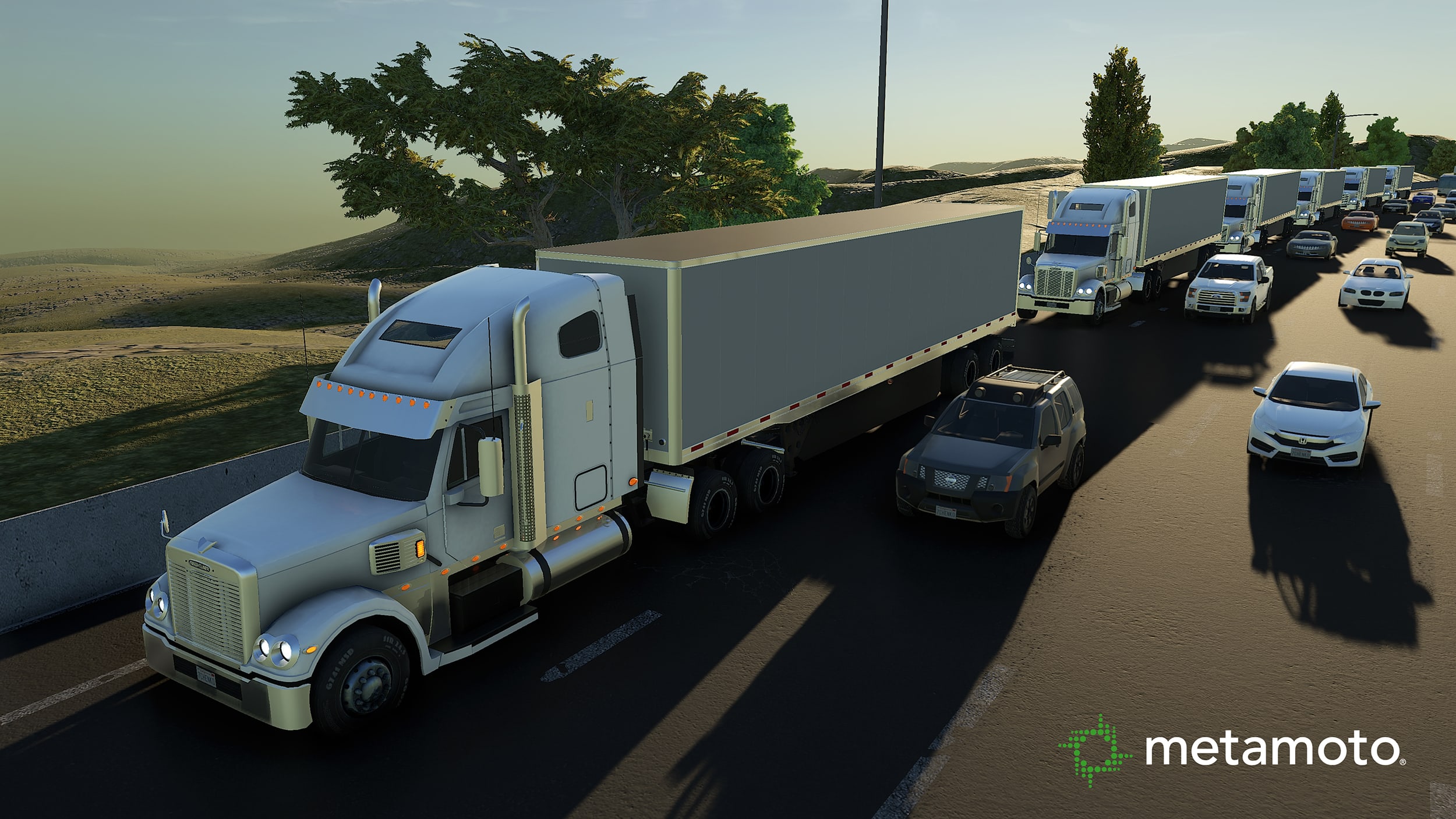
Virtual tools are being used for jobs as diverse as wiring layout to creating virtual roadways for testing autonomous driving systems. Much of the focus in recent years has been on ensuring that everything works well when multiple systems work together. Tools are helping commercial-vehicle designers make significant improvements in overall designs.
“One large OEM determined that going from the existing wiring harness to a new design yielded changes in weight, material costs and maintenance costs; they could save $14,000 per vehicle,” said David Fritz, global technology manager, autonomous and ADAS, at Siemens. “They also realized that with the new architecture, three ECUs would see some delays, so it would be beneficial to combine them.”
Leveraging the cloud
For design teams involved in autonomous projects, a central objective is to get sensors, controller and actuators to work in harmony. Software is becoming a more important element in most designs, but programs still need hardware to make things happen. During development, that often includes linking hardware in the loop (HiL) and software in the loop (SiL) testing.
“More people are seeing the value of programs that connect the dots between HiL and SiL,” said Daniel Schambach, head of design at Metamoto. “Companies will be able to do a lot more in SiL. The cloud can be leveraged to do the work in less time. We’re trying to shorten the time it takes to get to test by letting programmers develop code, then push it over to the cloud to run a test immediately.”
Increasingly, design software suppliers are joining in the ecosystems that are being pulled together so the many vendors involved in advanced vehicle designs can work together more easily. Tool providers are also teaming up with other design software companies to help speed up the development cycle. One example is Elektrobit and Synopsys, which earlier this year announced a collaboration to accelerate automotive electronic systems development using virtual environments.
“The two companies are collaborating to bring together Synopsys Virtualizer Development Kits, Elektrobit operating systems, development and test tools, and complementary expertise to enable pre-silicon and pre-electronic control unit hardware availability and software development,” said Roman Iseler, product manager at Elektrobit. “The combined solution accelerates system testing cycles and enables automotive Tier 1 and OEM companies to transition from physical to virtual system testing.”
Virtual testing
Several systems will be combined to enable autonomous vehicle control. Once they’re combined effectively, they need to be tested on virtual roadways. Virtual tests, which typically precede physical driving tests, can let developers quickly examine many different variants in weather, traffic and road conditions, among other parameters.

Virtual tests make it easier to try these parameters out early in the process, often before all related elements are completed. The complexity of testing many programs that interact in real time often requires partnerships between multiple tool suppliers.
“We make it easy to generate scenarios for edge cases and generate behavioral models that mimic real vehicles on roads, doing large-scale simulations of populated roads,” said Heikki Laine, VP product & marketing, at Cognata. “A big part of what we’re doing through our partnership with Dassault is letting designers test things that are random. They can do that at any time from their desktop environment; they don’t have to wait until all the models are ready for testing. That makes it easier and quicker to test oddball ideas.”
The many systems used in autonomous vehicles often come from different suppliers. These companies work together to provide systems that meet strict OEM requirements. Technical challenges aren’t the only challenges that arise when vehicle makers and their suppliers see how these systems work together. These efforts are often temporary linkups between business rivals.
“We’re serving ecosystem suppliers who sometimes work together and sometimes compete,” Siemens’ Fritz said. “When they’re working together, our cloud interface lets suppliers build system models and upload them to run in the cloud. That way, they’re protected so they don’t have to worry about showing proprietary information. The cloud is an important part of collaboration.”
More From SAE Media Group
Off-Highway Engineering
Commercial Vehicle ADAS: Testing, Testing and More Testing
Autonomous Vehicle Engineering
Making the Strategic Move into AV Testing
Autonomous Vehicle Engineering
Data Drives Driverless Truck Launch
ADAS & Autonomous Vehicle Engineering
The Road to Zero Prototypes
Automotive Engineering
DSpace Launches Simphera AV Development Simulator
Aerospace & Defense Tech Briefs
Industry Invited to Participate in AeroTech Aerospace and Defense Technical Program
Automotive Engineering
Software Transforming Vehicle Development
Automotive Engineering
New Proving-Ground Tools Needed to Manage AV Testing
Automotive Engineering
Automated Vehicle Safety Series Addresses Design, Testing, Verification, and Validation
Aerospace & Defense Tech Briefs
SAE International Extends Call for Abstracts, Seeks Submissions for AeroTech Conference
Autonomous Vehicle Engineering
Aptiv Centralizing Computing Power to Speed Autonomous Vehicle Development
Autonomous Vehicle Engineering
10 Best Practices for ADAS and AV Testing
Automotive Engineering
Nvidia Partners with AdaCore to Secure Self-Driving Firmware
Autonomous Vehicle Engineering
5G Cellular-Enabled Test Infrastructure for Autonomous Vehicles Launched at U.K.’s Millbrook
Autonomous Vehicle Engineering
Horiba MIRA’s Vision for World-Class AV Testing
Autonomous Vehicle Engineering
Steering Toward Full Vehicle Autonomy
Autonomous Vehicle Engineering
New Digital Tools Driving Restructuring for Autonomy
Autonomous Vehicle Engineering
Complexity of Autonomous-Systems Simulation, Validation Soars to the Clouds
Autonomous Vehicle Engineering
BMW 7-Series Drives Itself Through Own Assembly
Automotive Engineering
Closing Gap to Leverage Enhanced Computational Power for SDV Advancement
Automotive Engineering
ZF Hikes Performance of ProAI Supercompute Platform
Automotive Engineering
NXP S32 CoreRide Platform Simplifies Development of Software-Defined Vehicles
Automotive Engineering
OEMs Add Functional Engineering as Digital Tools Evolve
Off-Highway Engineering
Addressing Electromagnetic Compatibility in the Context of Aircraft Electrification
Autonomous Vehicle Engineering
German University Installing Advanced Simulator to Study Autonomous-Vehicle Handover
Autonomous Vehicle Engineering
Keeping Pace with In-Vehicle Data Speed
Automotive Engineering
Designing and Assessing Vehicle Safety Functions with a Use Case Approach
Automotive Engineering
CASE Struggles to Fulfil Expectations
Autonomous Vehicle Engineering
Accelerating AV Training Data and Testing
ADAS & Autonomous Vehicle Engineering
AV Simulation Testing Faces a Long and Winding Road
Top Stories
NewsRF & Microwave Electronics
 Microvision Aquires Luminar, Plans Relationship Restoration, Multi-industry Push
INSIDERAerospace
 A Next Generation Helmet System for Navy Pilots
INSIDERDesign
 New Raytheon and Lockheed Martin Agreements Expand Missile Defense Production
INSIDERMaterials
 How Airbus is Using w-DED to 3D Print Larger Titanium Airplane Parts
NewsPower
 Ford Announces 48-Volt Architecture for Future Electric Truck
ArticlesAR/AI

Webcasts
Electronics & Computers
 Cooling a New Generation of Aerospace and Defense Embedded...
Automotive
 Battery Abuse Testing: Pushing to Failure
Power
 A FREE Two-Day Event Dedicated to Connected Mobility
Unmanned Systems
 Quiet, Please: NVH Improvement Opportunities in the Early Design Cycle
Automotive
 Advantages of Smart Power Distribution Unit Design for Automotive &...
Energy
 Sesame Solar's Nanogrid Tech Promises Major Gains in Drone Endurance