




Aerospace & Defense Technology - August 2017
Inside this issue
Overview
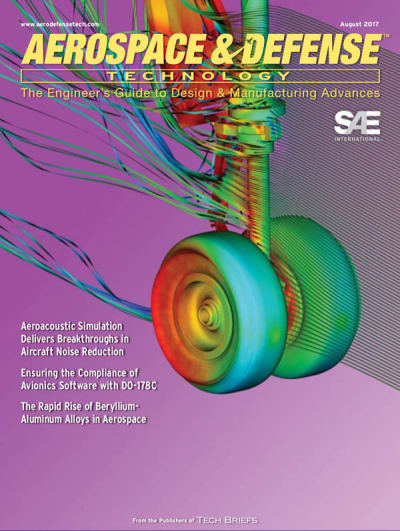
The August 2017 issue of Aerospace & Defense Technology presents a comprehensive overview of significant advancements and topics in the aerospace and defense sectors. This edition features a variety of articles that delve into technological innovations, regulatory compliance, and material science, reflecting the ongoing evolution of the industry.
Key Highlights:
-
Aircraft Noise Reduction: One of the standout articles discusses breakthroughs in aircraft noise reduction technologies. As noise pollution from aircraft operations becomes an increasing concern, the industry is focusing on innovative solutions to mitigate this issue. The article explores various methods, including advanced acoustic materials and design modifications, that aim to lower noise levels during takeoff, landing, and in-flight operations. These advancements not only enhance passenger comfort but also address regulatory pressures from communities surrounding airports.
-
Avionics Software Compliance: Another critical topic covered is the compliance of avionics software with DO-178C, a standard that governs the development of software for airborne systems. The article emphasizes the importance of adhering to this standard to ensure safety and reliability in avionics systems. It discusses the challenges faced by developers in meeting these stringent requirements and highlights best practices for achieving compliance. The piece also underscores the role of rigorous testing and validation processes in maintaining high safety standards in aviation.
-
Beryllium-Aluminum Alloys: The issue also features an insightful examination of the rapid rise of beryllium-aluminum alloys in aerospace applications. These materials are gaining popularity due to their unique properties, including high strength-to-weight ratios and excellent thermal stability. The article discusses the advantages of using these alloys in various aerospace components, such as structural parts and engine components, and how they contribute to overall performance improvements. Additionally, it addresses the challenges associated with the handling and processing of beryllium, given its toxicity concerns.
Industry Trends and Innovations: Throughout the magazine, there are various sections dedicated to emerging trends and innovations within the aerospace and defense sectors. These include advancements in unmanned aerial vehicles (UAVs), the integration of artificial intelligence in flight systems, and the development of next-generation propulsion technologies. The articles provide insights into how these innovations are shaping the future of aviation and defense, highlighting the importance of research and development in maintaining competitive advantages.
-
Regulatory and Economic Landscape: The issue also touches on the regulatory and economic landscape affecting the aerospace industry. It discusses the impact of government policies on defense spending and how these policies influence research funding and technological advancements. The articles provide a broader context for understanding the challenges and opportunities that companies face in navigating this complex environment.
-
Sustainability Initiatives: Sustainability is a recurring theme in this issue, with articles focusing on the aerospace industry's efforts to reduce its environmental footprint. This includes initiatives aimed at developing more fuel-efficient aircraft, exploring alternative fuels, and implementing sustainable manufacturing practices. The magazine highlights how these efforts are not only beneficial for the environment but also align with the growing demand for corporate responsibility among consumers and stakeholders.
-
Expert Opinions and Case Studies: The magazine features expert opinions and case studies from industry leaders, providing readers with valuable insights into best practices and lessons learned from real-world applications. These contributions enrich the content by offering practical perspectives on the challenges and successes experienced by companies in the aerospace and defense sectors.
Conclusion:
The August 2017 issue of Aerospace & Defense Technology serves as a vital resource for professionals in the aerospace and defense industries. With its focus on technological advancements, regulatory compliance, and material innovations, the magazine provides a well-rounded view of the current state and future direction of the industry. Readers can gain a deeper understanding of the challenges and opportunities that lie ahead, making it an essential read for anyone involved in or interested in aerospace and defense technology.
This issue not only informs but also inspires innovation and collaboration among industry stakeholders, reinforcing the importance of continuous improvement and adaptation in a rapidly evolving field.
Features
-
Application Briefs
Towed Airborne Plume Simulator
Hull Vibration Monitoring System
-
Articles
Using System Simulation to Manage Increasing Thermal Loads on Aircraft Fuel Systems
Ensuring the Compliance of Avionics Software with DO-178C
Microwave Photonic Notch Filter
The Rapid Rise of Beryllium-Aluminum Alloys in Aerospace
Aeroacoustic Simulation Delivers Breakthroughs in Aircraft Noise Reduction
Tech Briefs
Products
Top Stories
INSIDERDefense
 New Raytheon and Lockheed Martin Agreements Expand Missile Defense Production
NewsAutomotive
 Ford Announces 48-Volt Architecture for Future Electric Truck
INSIDERManufacturing & Prototyping
 Active Strake System Cuts Cruise Drag, Boosts Flight Efficiency
ArticlesTransportation
 Accelerating Down the Road to Autonomy
INSIDERMaterials
 How Airbus is Using w-DED to 3D Print Larger Titanium Airplane Parts
Road ReadyTransportation

Webcasts
Electronics & Computers
 Cooling a New Generation of Aerospace and Defense Embedded...
Power
 Battery Abuse Testing: Pushing to Failure
Connectivity
 A FREE Two-Day Event Dedicated to Connected Mobility
Automotive
 Quiet, Please: NVH Improvement Opportunities in the Early Design Cycle
Transportation
 Advantages of Smart Power Distribution Unit Design for Automotive &...
Aerospace
 Sesame Solar's Nanogrid Tech Promises Major Gains in Drone Endurance