




Solid-State, High-Energy Lasers Based on Rare-Earth Doped Gallium Nitride
This technique eliminates the bottleneck in the heat removal process.
Laser-based directed-energy weapons (DEW) are important components for future Army missile defense systems. The diode-pumped, rare-earth (RE)-doped, solid-state laser is a very promising path towards achieving a DEW-sufficient level of average power from a reasonably compact device. Even so, the extreme pump power densities, combined with the inevitable non-radiative losses in the pump-lase process, introduce severe thermal loading in the gain medium. Regardless of the sophistication of the heat removal technique and its efficiency, the gain medium itself is the bottleneck for non-distortive heat removal due to the low thermal conductivity of known gain media compared to that of heat-sinking materials. The bestknown laser hosts, e.g., yttrium aluminum garnet (YAG), possess thermal conductivities (10–11 W/(m-K)) that are ~1.5 orders of magnitude lower than those of known heat-sinking materials. In order to eliminate this technical hurdle, an innovative gain medium with a thermal conductivity on the same order as copper (~390 W/(m- K)) had to be engineered. A qualitatively new approach to highly scalable diode-pumped solid-state lasers was developed based on rare-earth neodymium (Nd3+) doping of gallium nitride (GaN), a high-thermal-conductivity material. The goal was to fully eliminate the bottleneck in the heat removal process associated with the low thermal conductivity of the gain medium compared to that of heat-sinking materials. It was demonstrated, for the first time, in situ neodymium (Nd) doping of gallium nitride GaN by plasma-assisted molecular beam epitaxy (PA-MBE). The Nd doping is controlled by the GaN growth conditions and the Nd effusion cell temperature. The Rutherford backscattering spectroscopy (RBS) and secondary ion mass spectrometry (SIMS) data indicated Nd doping as high as ~8 at. %, with no evidence of phase segregation identified by x-ray diffraction (XRD) for Nd up to ~1 at. %. The Nd incorporation reached a limit while maintaining crystal quality.
Strong room-temperature (RT) luminescence corresponded to the three characteristic Nd emission multiplets, with the Stark energy levels resolved by photoluminescence (PL) and photoluminescence excitation (PLE). Although the 4f electrons were well shielded from the host material, weak electron-phonon interactions were observed. Spectral correlation of the multiplets for above (325 nm) and below (836 nm) GaN bandgap excitation implied enhanced substitutional doping at the Ga site. The highest RT PL intensities corresponded to a doping level between 0.1 and 1 at. %.
The enhanced substitutional doping at the Ga site and low optical loss in waveguide structures suggests GaN:Nd with a high enough Nd concentration has significant potential for use in simple, area-scalable, RT, diode-pumped, solid-state, high-energy lasers (HELs).
This work was done by Michael Wraback and Mark Dubinskiy of the Army Research Laboratory. For more information, download the Technical Support Package (free white paper) at www.defensetechbriefs.com/tsp under the Photonics category. ARL-0075
This Brief includes a Technical Support Package (TSP).
Solid-State, High-Energy Lasers Based on Rare-Earth Doped Gallium Nitride
(reference ARL-0075) is currently available for download from the TSP library.
Don't have an account?
More From SAE Media Group
Aerospace & Defense Tech Briefs
Erbium Doped GaN Lasers by Optical Pumping
Aerospace & Defense Tech Briefs
Fabrication and Electrical Characterization of Correlated Oxide Field Effect Switching Devices for High Speed Electronics
Photonics & Imaging Technology
Creating High-Precision Glass for NIR Lasers
Aerospace & Defense Tech Briefs
On the Pulsed Laser Ablation of Metals and Semiconductors
Photonics & Imaging Technology
Photonics West 2021 Preview
Tech Briefs
Optimal Information About the Invisible
Aerospace & Defense Tech Briefs
Counter-Directed Energy Weapons: Defense of Air Assets
Aerospace & Defense Tech Briefs
Integration of Adaptive Optics Into High-Energy Laser Modeling And Simulation
Aerospace & Defense Tech Briefs
Nonlinear Effects in Transformation Optics-Based Metamaterial Shields for Counter Directed Energy Weapon Defense
Aerospace & Defense Tech Briefs
Development of Photoacoustic Sensing Platforms
Photonics Tech Briefs
Hot Dielectrics as Light Sources for TPV Devices and Lasers
Photonics & Imaging Technology
Continuous and Stable Lasing Achieved From Low-Cost Perovskites at Room Temperature
Aerospace & Defense Tech Briefs
Advances in Materials for Photonic Applications
Air Force Research Laboratory Technology Horizons
Patterned Gallium Arsenide Devices for Infrared Countermeasures

Medical Design Briefs
OPO Lasers Spur Advances in Mass Spectrometry Diagnostics
Photonics Tech Briefs
Scanning Tunneling Optical Resonance Microscopy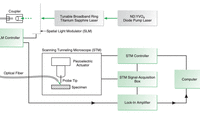
Photonics Tech Briefs
Diffractive Combiner of Single-Mode Pump Laser-Diode Beams
Aerospace & Defense Tech Briefs
Frequency Agile Plasmonic Antennas and Sensors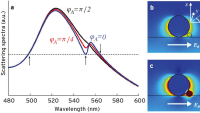
Aerospace & Defense Tech Briefs
New Class of Excimer-Pumped Atomic Lasers (XPALS)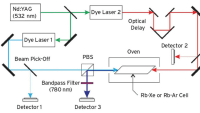
Photonics & Imaging Technology
A Laser That Could Reshape the Landscape of Integrated Photonics
Photonics & Imaging Technology
Using Magnets to Toggle Nanolasers Leads to Better Photonics
Photonics Tech Briefs
QC Lasers Improve Hazardous Gas Monitoring
Aerospace & Defense Tech Briefs
3D Meta-Optics for High-Energy Lasers
Medical Design Briefs
Tunable Lasers Expand for Time-Resolved Spectroscopy
Aerospace & Defense Tech Briefs
Directed-Energy System to Defeat Small Unmanned Aircraft System Swarms
Photonics & Imaging Technology
Researchers Generate Terahertz Laser with Laughing Gas
Photonics & Imaging Technology
A First-Of-Its-Kind Integrated Optical Isolator
Overview
The document titled "Rare-earth Doped Gallium Nitride (GaN)—An Innovative Path Toward Area-scalable Solid-state High Energy Lasers Without Thermal Distortion" presents research conducted by Michael Wraback and Mark Dubinskiy at the U.S. Army Research Laboratory. The report, finalized in April 2009, covers the period from December 2007 to December 2008 and focuses on the development of high-energy laser systems using rare-earth doped GaN.
The primary objective of the research is to address the challenges associated with thermal distortion in solid-state lasers, which can limit their performance and scalability. Traditional laser materials often suffer from thermal management issues, leading to reduced efficiency and beam quality. The authors propose that rare-earth doped GaN can provide a solution to these problems, enabling the creation of scalable laser systems that maintain high performance even at larger sizes.
The report outlines the properties of GaN, including its wide bandgap and high thermal conductivity, which make it an attractive candidate for laser applications. By doping GaN with rare-earth elements, the researchers aim to enhance its optical properties and improve the efficiency of laser light generation. The document discusses various experimental approaches and results that demonstrate the potential of this material in producing high-energy laser outputs.
Additionally, the report emphasizes the significance of developing area-scalable laser systems for military and industrial applications. Such systems could be used in a variety of fields, including defense, telecommunications, and medical technologies. The findings suggest that rare-earth doped GaN could lead to advancements in laser technology that are both innovative and practical.
The document also includes disclaimers regarding the findings, stating that they do not represent an official position of the Department of the Army unless specified otherwise. It encourages the destruction of the report when it is no longer needed, rather than returning it to the originator.
In summary, this research highlights the potential of rare-earth doped GaN as a transformative material for high-energy lasers, addressing thermal distortion issues and paving the way for scalable laser systems that could have wide-ranging applications.
Top Stories
NewsRF & Microwave Electronics
 Microvision Aquires Luminar, Plans Relationship Restoration, Multi-industry Push
INSIDERAerospace
 A Next Generation Helmet System for Navy Pilots
INSIDERDesign
 New Raytheon and Lockheed Martin Agreements Expand Missile Defense Production
INSIDERMaterials
 How Airbus is Using w-DED to 3D Print Larger Titanium Airplane Parts
NewsPower
 Ford Announces 48-Volt Architecture for Future Electric Truck
ArticlesAR/AI

Webcasts
Electronics & Computers
 Cooling a New Generation of Aerospace and Defense Embedded...
Automotive
 Battery Abuse Testing: Pushing to Failure
Power
 A FREE Two-Day Event Dedicated to Connected Mobility
Unmanned Systems
 Quiet, Please: NVH Improvement Opportunities in the Early Design Cycle
Automotive
 Advantages of Smart Power Distribution Unit Design for Automotive &...
Energy
 Sesame Solar's Nanogrid Tech Promises Major Gains in Drone Endurance