




Unlocking the Clean Potential of ICE
Even after more than 100 years, the internal combustion engine still holds promise, especially with a tank of H2 or biofuel.
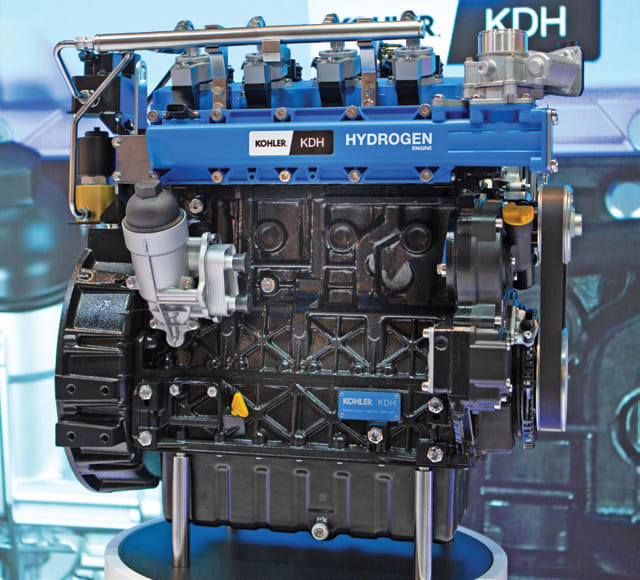
The internal combustion engine (ICE) often gets overlooked in sustainability discussions. Yet, in light of current decarbonization goals, ICEs continue to play a crucial role in shaping future road transport. The transition to low- and zero-emission technologies varies in pace across the globe, influenced by economic pressures, regulatory uncertainty, and infrastructure challenges. The conversation frequently focuses exclusively on the development of new propulsion systems and infrastructure. However, upgrading and optimizing existing technologies, such as the ICE, alongside the option of new systems, presents a faster and more scalable path to decarbonization.
In the century since its introduction, the ICE has undergone continuous refinement, resulting in a reliable propulsion system. It is supported by a robust ecosystem comprising manufacturing assets, supply chains, experienced designers, skilled service and maintenance technicians, and an extensive distribution network. These resources can be effectively harnessed to accelerate the move toward sustainability.
Driving innovation across all technologies
The EU’s Clean Industrial Deal provides a powerful framework to decarbonize the transport sector while maintaining industrial competitiveness. This framework includes support for industrial solutions that leverage existing technologies and infrastructures. Reducing emissions, controlling costs, and building resilience across the European technology and manufacturing sectors are vital to meeting decarbonization targets. To remain globally competitive, European industrial companies require reliable, affordable energy. Policy frameworks should look to support innovation in all clean technologies, not just those newly emerging. Decarbonization policies need to include efficient combustion systems designed for clean fuels, including hydrogen internal combustion engines (H2ICE).
In addition to the infrastructure overhaul for new tech, a faster-track, fuel-agnostic approach offers an accelerated, pragmatic route by improving existing engines to run on alternative fuels. This approach bridges the gap between objectives, ensuring decarbonization efforts are inclusive and scalable. Through recognizing the potential of current technological capabilities, sustainability improvements can take shape more rapidly.
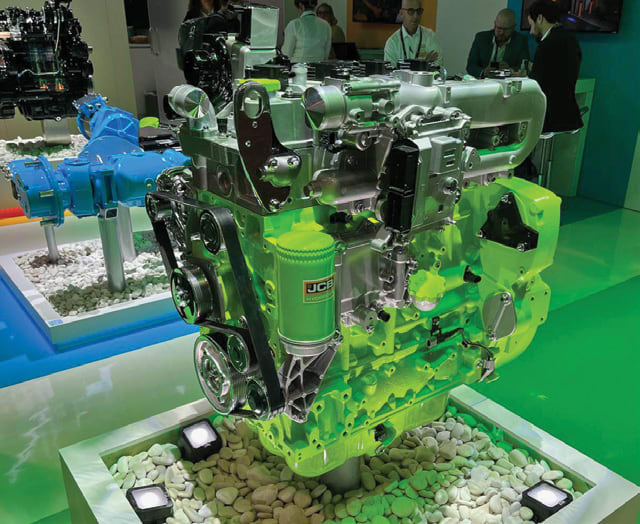
To support technology neutrality, the Innovation Fund, a major EU financing program aimed at supporting the demonstration of innovative low-carbon technologies, must be accessible to all low-carbon solutions, including those that improve the performance and sustainability of internal combustion engines. Prioritizing only new, developing technologies risks overlooking the significant emissions reductions possible from enhancing existing systems. Inclusive ICE-based innovations, such as hydrogen combustion and alternative fuel upgrades, help the industry achieve faster progress toward decarbonization while supporting industrial competitiveness and energy resilience.
Hydrogen: a critical component of the clean energy mix
Hydrogen occupies a unique space in clean energy, offering a zero-carbon alternative and boasting broad applications: powering heavy-duty transport, off-road operation vehicles and machinery and blending into existing gas grids. As the global demand for hydrogen continues to grow, its role in shaping the automotive future is evolving, revealing its importance and promising potential. Hydrogen is also important as a feedstock for other alternative fuels, notably e-fuels and hydro-treated vegetable oil (HVO).
However, hydrogen’s role in global energy systems is increasingly shaped by politics. Countries are vying to secure production capacity and control of supply chains, often aligning their industrial strategies around hydrogen hubs, trade agreements, and national subsidy programs. These geopolitical activities bring both opportunity and risk. On one hand, they fuel innovation and investment. On the other hand, they risk creating regional disparities in access, particularly where infrastructure is underdeveloped.
Without a parallel push to ensure broad, scalable deployment with use cases across vehicle fleets and energy systems, hydrogen could be limited as a niche solution, rather than a broader market-decarbonization tool.
A regional lens helps clarify where fuel-agnostic approaches can have significant impact. While it is good to see EV infrastructure continuing to develop in mature markets, some regions outside the lead markets in China, North-Western Europe and coastal U.S. face grid limitations or economic barriers, making widespread electrification unfeasible in the near term. Electrification remains particularly challenging in segments such as long-haul and heavy-load commercial vehicle transport, off-road equipment and any application that operates in high load conditions, highly variable environmental conditions, continuous operating cycles, or remote environments.
In these cases, cleaner ICEs that run on biofuels, ethanol/methanol, e-fuels, HVO, natural gas or hydrogen present promising alternatives. They provide a quicker, more practical route to decarbonization using existing platforms.Utilizing clean fuels in modified ICEs helps reduce carbon emissions significantly, in parallel to the transition to electric vehicles in the segments where that is most applicable.
Making clean ICE solutions work
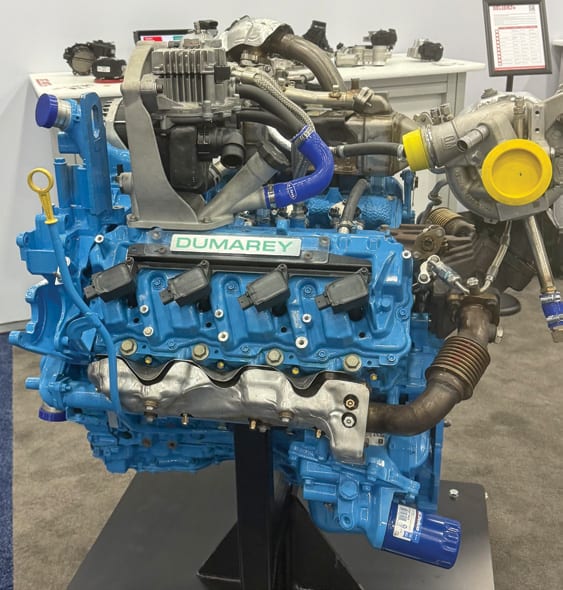
Alternative fuel vehicle ICE technology exists today and has been proven effective as a viable solution for on-road applications. Retooling engines and fuel systems to be compatible with drop-in or blended fuels is a simple, technically efficient solution. Through adapting existing technology, we can begin to reduce emissions now. However, this requires access to cost-effective fuels that are available in adequate quantities.
There are three critical barriers preventing cleaner ICE solutions from reaching their full potential: alternative fuel production, necessary infrastructure, and associated cost.
The first barrier
First, alternative fuel production relies on existing technology, but scaling up is essential to meet broader market demand. Ideally, hydrogen should be produced in a ‘green’, sustainable manner to maximize decarbonization benefits duing use. Other types of hydrogen production may also be viable options in the near-term to encourage technology adoption, while paving the way for longer-term green hydrogen solutions. However, there is currently insufficient hydrogen production to enable widespread adoption in transportation.
Although there have been announcements regarding the construction of sustainable hydrogen production facilities and ongoing investment, we are still far from achieving the necessary volume and scale. For instance, global electrolyzer manufacturing capacity doubled to 25GW/year in 2023, However, only 2.5 GW of that capacity was actually installed. Moreover, the cost of producing renewable hydrogen remains 1.5 to six times higher than fossil-based alternatives, posing substantial economic challenges for widespread adoption.
This barrier is particularly critical in the automotive industry, where the adoption of alternative fuels like hydrogen is essential but currently limited. The production of other alternative fuels varies by region, which necessitates targeted solutions in specific locations, such as ethanol in Brazil and compressed natural gas (CNG) in India. To effectively support this transition, production output must be increased.
Second barrier: Fueling infrastructure

The second barrier of infrastructure limitations also complicates adoption of alternative fuel ICE technology. Establishing new fuel networks is both capital-intensive and time-consuming. Although the technology exists, many fueling stations, distribution systems, and vehicle platforms are not yet available at the scale needed.
While the world continues toshift to electric vehicles, charging infrastructure challenges are still prevalent. For example, in the U.S. and UK, public charger build-out has not kept pace with EV deployment, and the number of electric light-duty vehicles per public charging point increased in 2024. Conversely, ICE systems compatible with clean fuels require less drastic infrastructure overhauls, offering a critical pathway to decarbonization.
Infrastructure expansion remains crucial to alternative fuels gaining traction in the transport industry. A regional example demonstrates that Europe has taken formal steps to increase hydrogen infrastructure via an Alternative Fuels Infrastructure Regulation (AFIR). Fortunately, hydrogen already benefits from a foundation of industrial expertise in storage and safety protocols. Similarly, ethanol and biodiesel can be distributed through existing supply chains, further reducing the need for capital-intensive rollouts.
Third barrier: Cost
The third barrier is the cost of alternative fuels. While implementing sustainable solutions for our planet is important, it does not come without expense. Currently, the cost of alternative fuels is higher than that of traditional technologies. However, the cost of fuel can be reduced through advancements in the two previous areas. As production increases, costs tend to decrease, and the development of infrastructure that provides access to fuel can further enhance usage and overall volume. Although the cost gap can improve with increased production, achieving effective global scaling of these systems will require collaborative action from policymakers and industry leaders.
Repositioning ICE as a net-zero enabler
For some parties, the internal combustion engine is seen as a symbol of emissions and environmental harm. But when paired with clean fuels and advanced combustion technologies, ICEs can assert their position as a net-zero enabler.
H2ICEs represent one of the most advanced adaptations of ICE technology. By running on clean-burning hydrogen while using the foundation of existing engines, they offer a unique combination of sustainability, reliability, and cost-effectiveness. These engines are particularly well-suited to hard-to-electrify segments such as heavy-duty vehicles, long-haul trucking, and off-road machinery. It is important to actively advance this technology through hydrogen fuel injection systems that can integrate into conventional technologies, accelerating adoption while minimizing disruption. When supported by the right policy and investment, H2ICEs can scale rapidly to reduce emissions across large portions of the global fleet.
By retrofitting engines to accommodate alternative fuels and incentivizing upgrades to cleaner fuel injection and exhaust aftertreatment systems, short-term significant carbon reductions can be achieved. Manufacturers are developing technologies and solutions, such as hydrogen fuel injection systems, to make these transitions more seamless and meet the demands of current and future emissions regulations. This strategy not only lowers emissions but also makes the transition inclusive, addressing the needs of communities and businesses that cannot immediately shift to EVs or hydrogen fuel cell technologies.
PHINIA, where we use advanced technologies to explore new possibilities for internal combustion engines, is pioneering this approach with our hydrogen fuel systems technology development and deployment. PHINIA has constructed several demonstrator light-duty commercial vehicles, continuously optimizing performance. We are demonstrating the practicality and utility of the H2ICE vehicle solution. We are ready to expand the technology into larger fleets to demonstrate the potential of hydrogen internal combustion in the segment. Truck manufacturers have also started to build fleets of hydrogen ICE vehicles. These activities will help to accelerate the roll-out of the technology and make it a convenient option for decarbonization in the transport sector.
Scaling the opportunity: enabling fuel-agnostic strategies
Alternative fuels such as hydrogen, e-fuels, HVO, ethanol, methanol, natural gas, and biodiesel are gaining more attention in policy and regulatory circles. Yet, there is still uncertainty. For fuel-agnostic strategies to reach their potential, policies and investment frameworks are critical. Governments should explore implementing pragmatic solutions that emphasize outcome-based regulations aiming to reduce real-world emissions, irrespective of vehicle, technology or fuel type.
Key actions include fuel-neutral incentives that reward lower emissions regardless of technology type. It is also important to consider improved infrastructure funding for clean fuel distribution, blending, and storage. To do this, it is crucial to implement proper research and development support for combustion technologies optimized for alternative fuels. These policies would create a level playing field where electric, hydrogen, and low-carbon liquid fuels can coexist.
Market diversity in infrastructure, fuel availability, and energy policy demands regionally specific strategies. There is no universal template for success. Global progress relies on enabling localized solutions, from bioethanol-driven fleets in Brazil to hydrogen-CNG hybrids in India. Tailored approaches offer a scalable, inclusive path forward, ensuring no region is left behind in the race to decarbonize.
Unlocking the fast track to net-zero
Evolving global hydrogen strategies policies offer a solid foundation for creating a more sustainable and resilient energy future. However, it is crucial to not overlook present-day realities. Upgrading existing engines and infrastructure to operate on clean fuels may not be a silver bullet, but it presents a practical and actionable route to reducing emissions in the near term.
As the world navigates the economics and geopolitics of hydrogen and low-carbon fuels, the most effective approach is not only to embrace new technologies, but also to make smarter use of existing resources.
Todd Anderson is vice president and chief technology officer at PHINIA, and wrote this article for SAE Media.
More From SAE Media Group
Off-Highway Engineering
Alternative Fuels Overshadowed in EV Era
Off-Highway Engineering
The Future of Carbon-Neutral Fuels for Heavy-Duty Machines
Tech Briefs
High-Power Direct Borohydride Fuel Cells
Off-Highway Engineering
Combustion Engines Carry on in Construction
Automotive Engineering
The International Fight over EFuels, Internal Combustion’s Would-Be Savior
Automotive Engineering
Fuels to Transition the Global Legacy Fleet
Tech Briefs
Making Hydrogen Power a Practical Proposition
Off-Highway Engineering
Alternative Fuels, Propulsion Poised for Growth in U.S. Fleets
Off-Highway Engineering
Hydrogen Generates BUZZ in Power Generation

Off-Highway Engineering
Steel Sector Aids Sustainability Efforts
Off-Highway Engineering
Liebherr Goes All in on Hydrogen Fuel
Off-Highway Engineering
Zeroing in on Zero-Carbon Fuels
Off-Highway Engineering
Hexagon Bullish on CNG for Long-Haul Trucks
Automotive Engineering
Other Expert Voices

Off-Highway Engineering
Zeroing in on Zero Emissions
Off-Highway Engineering
AI Influence on ICE Design
Off-Highway Engineering
Deere Bullish on Biodiesel, Renewable Diesel
Off-Highway Engineering
Allison’s Now Open for Hydrogen Testing
Automotive Engineering
Electrons, Combustion, and Bosch
Off-Highway Engineering
Hydrogen ‘Inevitable’ for Commercial Vehicles
Off-Highway Engineering
Mahle Amps up Its Electrification R&D
Automotive Engineering
EFuels: An Alternative to the Alternative
Off-Highway Engineering
SAE WCX 2022: All Transportation Modes Targeting Alternative Fuels
Automotive Engineering
Handicapping the ‘Race Toward Zero’
Off-Highway Engineering
Bosch Sees Two Paths Forward for On-Road Hydrogen Trucks
Off-Highway Engineering
Hydrogen’s Humming in Power Generation
Off-Highway Engineering
Hybrid Powertrains in the Product Mix
Off-Highway Engineering
Danfoss and Sany Extend Electrification of Off-Highway Machines
Top Stories
INSIDERManufacturing & Prototyping
 How Airbus is Using w-DED to 3D Print Larger Titanium Airplane Parts
NewsAutomotive
 Microvision Aquires Luminar, Plans Relationship Restoration, Multi-industry Push
INSIDERAerospace
 A Next Generation Helmet System for Navy Pilots
INSIDERDesign
 New Raytheon and Lockheed Martin Agreements Expand Missile Defense Production
ArticlesAR/AI
 CES 2026: Bosch is Ready to Bring AI to Your (Likely ICE-powered) Vehicle
Road ReadyDesign

Webcasts
Semiconductors & ICs
 Advantages of Smart Power Distribution Unit Design for Automotive...
Unmanned Systems
 Quiet, Please: NVH Improvement Opportunities in the Early Design...
Electronics & Computers
 Cooling a New Generation of Aerospace and Defense Embedded...
Power
 Battery Abuse Testing: Pushing to Failure
AR/AI
 A FREE Two-Day Event Dedicated to Connected Mobility
