




Prototype Aims to Reduce Fuel Use, Improve Tactical Vehicle Performance
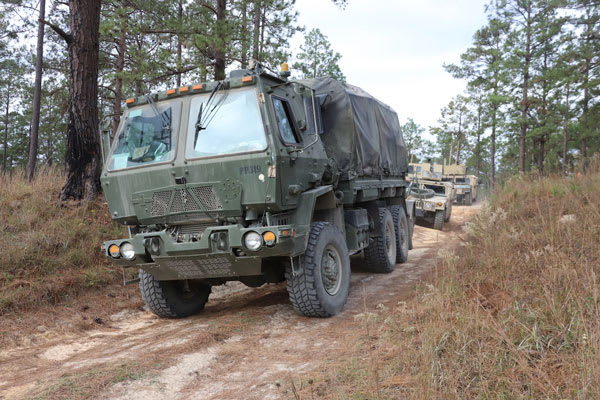
The Defense Department maintains a fleet of more than 250,000 tactical vehicles, which frequently operate in austere conditions. These vehicles often spend as much of their operational time stationary as they do in motion, said Ben Richardson, director of the Defense Innovation Unit's advanced energy and materials portfolio. However, even when stationary, the engines must run in order to power the essential onboard electronics, as well as the heating and cooling systems in the crew compartments. This results in significant fuel consumption while the vehicle idles.
"By integrating an anti-idle capability into our existing fleet of tactical vehicles, the DOD has the opportunity to meaningfully reduce fuel consumption by its operational forces, enabling them to operate longer between refueling," Richardson said. "This also promises to reduce the amount of fuel that must be transported into combat zones, reducing the demand on, and risk to, logistics supply chains.
In August, the DIU and the Army's Project Manager Transportation Systems — part of the Program Executive Office for Combat Support and Combat Service Support — issued awards to XL Fleet and Volta Power Systems to integrate their commercial solutions into a prototype to idle-reduction some two-and-a-half to 10-ton trucks. Idle reduction technologies reduce fuel waste and engine wear. After demonstration and evaluation of the prototypes, the companies will be asked to develop and deliver a retrofit kit for fielding and easy installation by soldiers operating at logistics depots and motor pools across the force, Richardson said.
Beyond the fuel savings to be gained from the introduction of anti-idle capability, officials in the Program Executive Office for Combat Support and Combat Service Support also see this as a step toward further hybridization and electrification efforts.
More From SAE Media Group
Defense INSIDER
Army to Consider Electric Vehicles, Alternative Fuel Options

Off-Highway Engineering
Danfoss and Sany Extend Electrification of Off-Highway Machines
Tech Briefs
High-Power Direct Borohydride Fuel Cells
Off-Highway Engineering
Fuel-Cell Power for Monster Mining Trucks in GM, Komatsu Deal
Automotive Engineering
Hydrogen Industry Vet Says Fuel Cells Still a ‘Go’


Automotive Engineering
Ricardo’s Scalable TorqStor Flywheel System Promises FE Gains at Reduced Cost
Automotive Engineering
Handicapping the ‘Race Toward Zero’
Off-Highway Engineering
Combustion Engines Carry on in Construction
Off-Highway Engineering
Danfoss Targets Excavators with New Digital-Hydraulics System
Aerospace INSIDER
Boeing Selects New Electric Power Generation System for B-52 Bomber

Aerospace & Defense Tech Briefs
SAE International Issues, Revises Technical Reports for Aerospace Engineering
Power Electronics INSIDER
New Smart Charger May Pave the Way for More EVs
Power Electronics INSIDER
An Electrifying Collaboration: From the Lab to the Marketplace
Off-Highway Engineering
Emerson Supports Scalability of Fuel Cell Systems
Power Electronics INSIDER
Electric Vehicles Play a Surprising Role in Supporting Grid Resiliency
Off-Highway Engineering
Hydrogen’s Humming in Power Generation
Battery & Electrification Technology
Upcycling Commercial Fleets into Circular EVs
Tech Briefs
Repurposing Mines for Underground Energy Storage
Tech Briefs
2025 Award Finalists
Green Design & Manufacturing
Green Aircraft Contest Takes Off

Automotive Engineering
Hydrogen Storage in a Box!
Automotive Engineering
Propulsion Tech Tops SAE WCX 2021 Papers and Presentations
Automotive Engineering
Electrons, Combustion, and Bosch
Off-Highway Engineering
Deere Bullish on Biodiesel, Renewable Diesel
Off-Highway Engineering
Zeroing in on Zero Emissions
Top Stories
INSIDERManufacturing & Prototyping
 How Airbus is Using w-DED to 3D Print Larger Titanium Airplane Parts
INSIDERManned Systems
 FAA to Replace Aging Network of Ground-Based Radars
NewsTransportation
 CES 2026: Bosch is Ready to Bring AI to Your (Likely ICE-powered) Vehicle
NewsSoftware
 Accelerating Down the Road to Autonomy
EditorialDesign
 DarkSky One Wants to Make the World a Darker Place
INSIDERMaterials
 Can This Self-Healing Composite Make Airplane and Spacecraft Components Last...
Webcasts
Defense
 How Sift's Unified Observability Platform Accelerates Drone Innovation
Automotive
 E/E Architecture Redefined: Building Smarter, Safer, and Scalable...
Power
 Hydrogen Engines Are Heating Up for Heavy Duty
Electronics & Computers
 Advantages of Smart Power Distribution Unit Design for Automotive...
Unmanned Systems
 Quiet, Please: NVH Improvement Opportunities in the Early Design...
