




F-35 Proves Nuke Drop Performance in Stockpile Flight Testing

Sandia, in conjunction with the National Nuclear Security Administration (NNSA), conducted a series of recent stockpile flight tests at Tonopah Test Range in Nevada, with support and aircraft generation from Hill Air Force Base in Utah.
The tests, conducted Aug. 19-21, yielded positive results as inert units of the B61-12 nuclear gravity bomb were successfully carried and dropped by an F-35, marking a significant milestone in evaluating the weapon’s performance. In late 2024, NNSA completed a multiyear life extension program for the B61-12, extending the bomb’s service life by at least 20 years.

The August tests were the only B61-12 stockpile flight tests of joint test assemblies on an F-35 aircraft, solidifying the end-to-end reliability of the aircraft, crews and weapon system during missions.
However, that was not the only significant first during these tests. The series also included the first-ever thermal preconditioning of a joint test assembly for carriage on an F-35 aircraft prior to its release, validating B61-12 environmental requirements in a real-world combined environment. Stockpile flight tests support the NNSA laboratories’ annual assessments and exercise warfighter capabilities.

“These B61-12 F-35A stockpile flight tests and captive carry flight test were the capstone accomplishment of a tremendous amount of planning and effort by those who were involved across not only Sandia, but many other agencies,” said Sandia’s Jeffrey Boyd, Surveillance Lead for the B61-12 and B61-13. “In addition, these B61-12 stockpile flight tests represent the completion of the most B61-12 flight testing surveillance scope in a year to date and the most in a given year for the foreseeable future.”
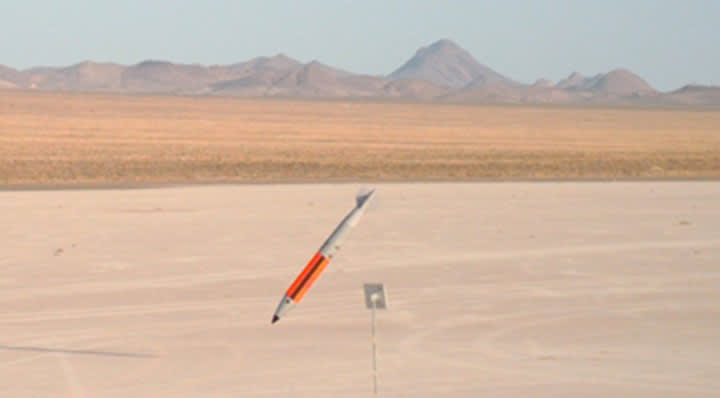
Tonopah Test Range Manager Brian Adkins, who oversaw the tests at the range, said test days always require adapting a test plan with adjustments necessary to safely execute the test. “Expedient coordination by the entire test team resulted in two successful days of testing to evaluate three test assets,” he said.
Collaboration between Sandia stockpile systems, the operational test staff at Tonopah Test Range and the U.S. Air Force enhances operational evaluation of the F-35 aircraft’s reliability and accuracy for various missions. As data from these tests is analyzed, it will yield critical insights that support Sandia’s mission to advance the frontiers of science and technology and contribute to national security efforts at the Labs.
More From SAE Media Group
Defense INSIDER
Sandia-Led Team Helps Extend Life of B61 Nuclear Deterrent
Defense INSIDER
Nuclear Bomb Proves Compatible With F-15E Strike Eagle
Defense INSIDER
Warhead Life-Extension Program Passes Key Milestone
Defense INSIDER
Sandia Works on Nuclear Weapon Life Extension Program
Tech Briefs
Inside Sandia National Laboratories
Aerospace INSIDER
How the Air Force's B-21 Raider is Advancing Across Test and Production
Defense INSIDER
Drop of Mock Nuclear Weapon Is First of New Flight Tests
Defense INSIDER
SDPE’s Rapid Dragon Capability Demonstrated in Norway
Aerospace INSIDER
Archer Delivers First Midnight eVTOL to US Air Force


Defense INSIDER
Lab-Designed Instrumentation Flies Aboard Unarmed Missile
Aerospace INSIDER
UK Selects Companies for New Domestic Hypersonic Development Framework
Aerospace Manufacturing and Machining INSIDER
Counter UAS Systems Tested Against Swarms of 50 Drones in Latest Yuma Exercise
Aerospace INSIDER
The B-21 Raider Starts Flight Testing

Aerospace INSIDER
Air Force Performs First Test of Microwave Counter Drone Weapon THOR
Defense INSIDER
Military Tests New Chemical Agent Detection Systems
Defense INSIDER
How to Dismantle a Nuclear Bomb
Aerospace INSIDER
Germany's New Military Surveillance Jet Completes First Flight
Aerospace INSIDER
Can Microvanes Improve Fuel Efficiency for Legacy Air Force Aircraft?
Aerospace INSIDER
Quarterhorse Hypersonic Test Aircraft Completes First Flight
Aerospace INSIDER
Hermeus Quarterhorse Joins Hypersonic High Cadence Testing Program
Aerospace & Defense Tech Briefs
Lockheed Martin Announces Latest Hypersonic Progress at Le Bourget
Aerospace INSIDER
Anduril Completes First Semi-Autonomous Flight of CCA Prototype
Aerospace & Defense Tech Briefs
Advanced Airborne Defensive Laser for Incorporation on Strike Fighter Aircraft
Top Stories
INSIDERDefense
 New Raytheon and Lockheed Martin Agreements Expand Missile Defense Production
NewsAutomotive
 Ford Announces 48-Volt Architecture for Future Electric Truck
INSIDERManufacturing & Prototyping
 Active Strake System Cuts Cruise Drag, Boosts Flight Efficiency
ArticlesTransportation
 Accelerating Down the Road to Autonomy
INSIDERMaterials
 How Airbus is Using w-DED to 3D Print Larger Titanium Airplane Parts
Road ReadyTransportation

Webcasts
Electronics & Computers
 Cooling a New Generation of Aerospace and Defense Embedded...
Power
 Battery Abuse Testing: Pushing to Failure
Connectivity
 A FREE Two-Day Event Dedicated to Connected Mobility
Automotive
 Quiet, Please: NVH Improvement Opportunities in the Early Design Cycle
Transportation
 Advantages of Smart Power Distribution Unit Design for Automotive &...
Aerospace
 Sesame Solar's Nanogrid Tech Promises Major Gains in Drone Endurance