




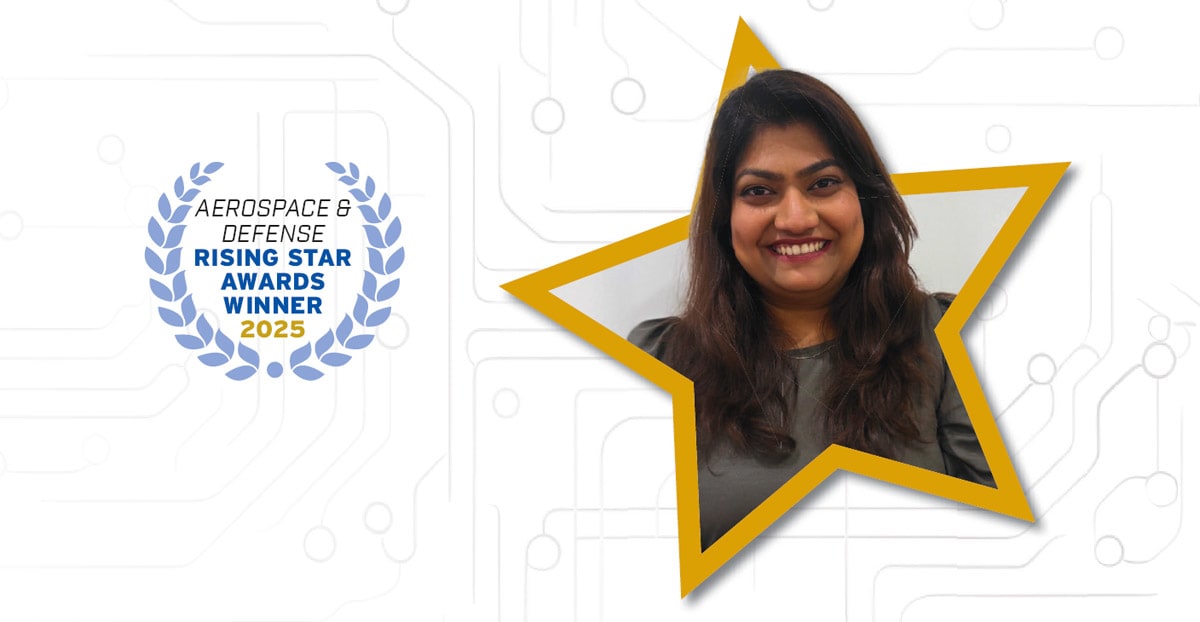
2025 RISING STAR AWARDS Aerospace and Defense Winner – Keshika Warnakula

Keshika Warnakula is a Senior Flight Mechanics Engineer at Syos Aerospace Limited and the winner of the 2025 Rising Stars Award Aerospace and Defense category.
Syos Aerospace is based in Mount Maunganui, New Zealand, specializing in robotics engineering and the development of autonomous air, land, and sea vehicles. The company also has an office located in Fareham, UK, and was recently named New Zealand’s “Hi-Tech Company Of the Year.”
Warnakula is responsible for most of the flight calculations and design optimization for drones developed by Syos Aerospace. These responsibilities range from performing Computational Fluid Dynamics (CFD) analysis investigating stall limits and flow behavior across a blade, or solving complex set of 6 non-linear equations simultaneously in MATLAB analyzing performance and behavior of the overall air vehicle.
Additionally, she has taken on a mentoring role within the company for junior engineers, including instructing them on how to solve complex math equations in MATLAB, as well as running CFD analysis in Ansys.
Keshi, as she is known by her colleagues, is also a volunteer in the Wonder Project, which is a free program for schools that inspires young students to pursue careers in science, technology, engineering and math (STEM). The Wonder Project is managed by Engineering New Zealand, a nonprofit with 22,000 members that helps future engineers find careers.
As a member of the Wonder Project, Warnakula travels to schools throughout New Zealand. Not only does she volunteer her time, but she has also attracted other colleagues to volunteer. Based on her lead and success in recruiting volunteers to the Wonder Project, Syos now has a program that counts the first six hours of each month of any volunteering time as part of their employees’ standard work week.
Keshika Warnakula
Senior Flight Mechanics Design Engineer
Syos Aerospace
MS, Aerospace Vehicle Design
How did you first become involved in or interested in working in the aerospace industry? When did you first start thinking about working in aerospace or what made you choose this specific industry?
My interest in aerospace started when I was really young. I remember when I was around 11 years old, my parents took me abroad for the first time for a holiday. I was completely blown away watching airplanes take off and land live at the airport.
And from that moment, I couldn’t stop thinking about how these amazing, massive machines worked and the incredible engineering that made it fly. So I was curious about the whole process and the concept, and my interest in aerospace has been growing ever since. As I kept maturing in school, one of my math teachers noticed that I was doing well in mathematics, so she also encouraged me to consider a career in engineering.
So along with that encouragement, and my curiosity and love for aircraft made me realize I should do aerospace engineering when I grow up and that would be a great fit for me.
I also have to say my lovely parents and my sister have been incredibly supportive throughout my journey. They would get me books and magazines about aircraft and also DVDs about things like air shows and aviation documentaries. Reading those books and watching those DVDs from a young age further helped nurture my love for aerospace and motivated me to pursue a career in in this industry.
I feel like I’m not only lucky to fulfill my lifelong dream of becoming an aerospace engineer, but also to be able to combine my enthusiasm for aircraft with my natural analytical and technical skills.
What is the main focus of your role at Syos Aerospace and what are some of the main technologies, products or services that you primarily work on?
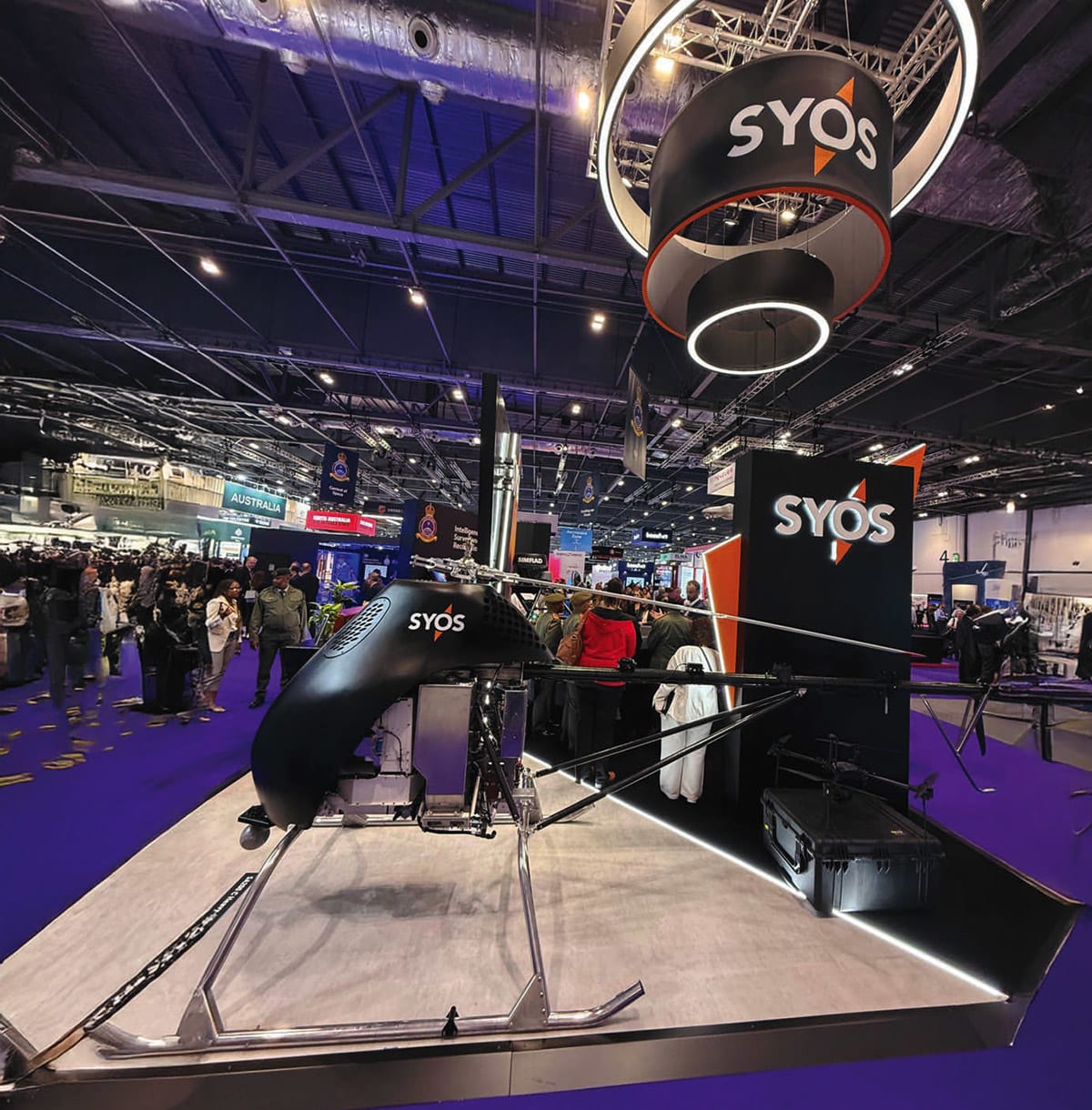
My role as a senior flight mechanics design engineer at Syos, is based in our research and development facility in Mount Mangani, New Zealand. Syos is a robotics company specializing in design and manufacture of utilitarian uncrewed vehicles across air, land and sea domains. We have a diverse product family including uncrewed aerial, service vehicles, and ground vehicles (UAV, USV, and UGV). Each of these vehicles has modular payloads to enhance capabilities.
I am part of the vehicle design team where I primarily focus on designing rotary-wing UAVs. My main focus is on analyzing and optimizing aircraft performance, stability and control.
Throughout various flight phases, that involves advanced simulation, running advanced simulations, flight, flight dynamics modeling and system level performance assessment. I also work closely with multiple teams to ensure our vehicles meet safety, efficiency and regulatory standards while also pushing boundaries for what’s possible in uncrewed aerial systems.
What is the aerospace industry like in New Zealand? Is there a large presence of aerospace manufacturers and suppliers?
The aerospace industry here in New Zealand is growing rapidly and getting a lot of attention from the local and international aerospace community. It’s a thriving sector, especially when it comes to advanced aviation and space innovation.
This beautiful country has over 5 million people population wise, and it supports around 17,000 full time jobs across the aerospace/advanced aviation sector, which is quite impressive.
Companies like Syos Aerospace, Rocket Lab, and Dawn Aerospace are playing a big role in helping kickstart a lot of growth and interest in the local as well as international aerospace scenes. We also do have a busy facility in South Island and it’s actually growing really fast from a sales-perspective.
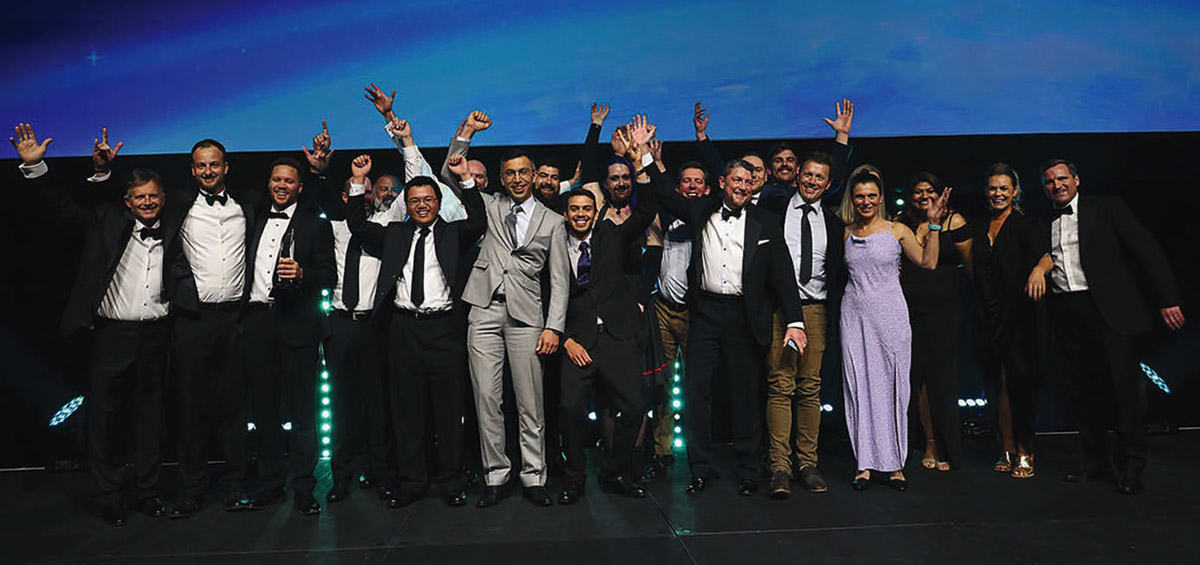
Syos was also named the New Zealand Hi-Tech Company of the Year at the 2025 NZ Hi-Tech Awards event held in May, which we are really proud of. Even though the aerospace industry here is smaller than other countries, we’re definitely punching above our weight when it comes to innovation and advanced technology in aerospace. I’m really excited to be part of that growth.
Based on your experience over your career, do you still see aerospace as a male-dominated industry? Is that changing?
I think it’s traditionally been a male dominated industry, but that’s definitely changing and I’m excited to be part of it. Actually, I’ve seen a lot of women, more and more women stepping into all kinds of role, especially on the engineering and design side of aerospace, and also in leadership roles on the innovation side as well.
If I talk about our company at size, we are actually proud to be part of the Women in Defense Charter and contributing towards improving gender balance and supporting women in the industry.
Personally, I also spend time volunteering with young kids, especially girls, to help spark their interest in engineering and aerospace. I think it’s important for kids to see people in the industry to get inspired and make it feel like it’s possible. So sharing my story and what I do, it’s all about showing them aerospace is an industry they can consider.
I feel like the presence of women in aerospace is growing and I feel like it’s headed toward a positive gender-balanced direction.
Are there any new or emerging aerospace or defense technologies that you have a particular interest in? How do you see that technology evolving in the future?
I’m really interested in the emerging technologies, especially drone technology and how it’s growing in both commercial and defense sectors. At Syos, we are seeing how new advancements from better structural design to autonomy and use of artificial intelligence (AI) are really pushing the limits of what drones can do. They’re no longer just tools for collecting data. They’re also becoming fully integrated platforms.
For things like logistics, surveillance and environmental monitoring, what excites me the most is moving from manually operated drones to fully autonomous systems that can make real -time decisions using onboard AI and machine learning.
That shifts open up a huge potential, especially for beyond visual line of sight operations, which I think is a major growth area, particularly in the areas like infrastructure inspection, search and rescue and precision agriculture.
So looking ahead, I really believe drone technology will become a core part of both civil and commercial aerospace, especially with new UAV traffic management systems being developed and regulatory support expanding.
This article was written by Woodrow Bellamy III, Senior Editor, SAE Media Group (New York, NY).
More From SAE Media Group
Aerospace & Defense Tech Briefs
AI Co-Pilot Enhances Human Precision for Safer Aviation
Aerospace & Defense Tech Briefs
Industry Invited to Participate in AeroTech Aerospace and Defense Technical Program
Aerospace INSIDER
Controlling Heat Spikes in Electric Aircraft at Takeoff
Defense INSIDER
Swarms of Autonomous Aerial Vehicles Test New Dogfighting Skills

Aerospace & Defense Tech Briefs
Rising Star Awards: Women in Engineering Aerospace Winner - Heather Cummings

Aerospace INSIDER
Reliable Robotics to Provide Aircraft Automation Study for US Air Force
Aerospace & Defense Tech Briefs
XPONENTIAL 2018 – An AUVSI Experience
Defense INSIDER
Controlling Drones with the Human Brain
Aerospace & Defense Tech Briefs
Model-Based Design Is Shaping the Next Phase of eVTOL Systems Development
Motion Design INSIDER
AI-Powered Vision System Helps Drones Navigate Safely
Aerospace & Defense Tech Briefs
Nomination Period Now Open for SAE International Aerospace Engineering Awards
Motion Design INSIDER
Tailless Jet Flies Free with Novel Control Technique
Aerospace & Defense Tech Briefs
Assessment of Noncommercial Icing Prediction Capabilities for Army Applications
Aerospace & Defense Tech Briefs
Uncrewed Solar Aircraft Passes Key Ground Tests
Tech Briefs
Embracing Agile Product Development
Aerospace & Defense Tech Briefs
New Zealand Will Become a Testbed for Airbus Unmanned Aircraft and Space Technology


Defense INSIDER
Researcher Creates System to Control Robots With the Brain
Motion Design
Foot Pedal Controller
Aerospace & Defense Tech Briefs
New Method to Measure Wind Speed Could Unlock Drones’ Potential
Aerospace & Defense Tech Briefs
How Airbus Is Designing the Future of Combat Aircraft Cockpit Avionics
Aerospace INSIDER
Helsing Unveils New Autonomous Fighter Jet 'CA-1 Europa'
Aerospace & Defense Tech Briefs
Centre for Modelling & Simulation to Develop Digital Twins for GKN Aerospace Additive, Composite, and Industry 4.0 Technologies
Top Stories
NewsRF & Microwave Electronics
 Microvision Aquires Luminar, Plans Relationship Restoration, Multi-industry Push
INSIDERAerospace
 A Next Generation Helmet System for Navy Pilots
INSIDERDesign
 New Raytheon and Lockheed Martin Agreements Expand Missile Defense Production
INSIDERMaterials
 How Airbus is Using w-DED to 3D Print Larger Titanium Airplane Parts
NewsPower
 Ford Announces 48-Volt Architecture for Future Electric Truck
ArticlesAR/AI

Webcasts
Electronics & Computers
 Cooling a New Generation of Aerospace and Defense Embedded...
Automotive
 Battery Abuse Testing: Pushing to Failure
Power
 A FREE Two-Day Event Dedicated to Connected Mobility
Unmanned Systems
 Quiet, Please: NVH Improvement Opportunities in the Early Design Cycle
Automotive
 Advantages of Smart Power Distribution Unit Design for Automotive &...
Energy
 Sesame Solar's Nanogrid Tech Promises Major Gains in Drone Endurance