




Audio Updates You Can’t Even Hear
Ram and Klipsch. Volvo and Polestar and Bowers & Wilkins. AKM and Dirac. In-cabin audio partnerships keep turning it up.

While autonomous driving, electric powertrains and the evolving role of AI in automotive get most of the attention (deservedly, sure), technological advancements aimed at the audio experience in today’s vehicles continue to improve.
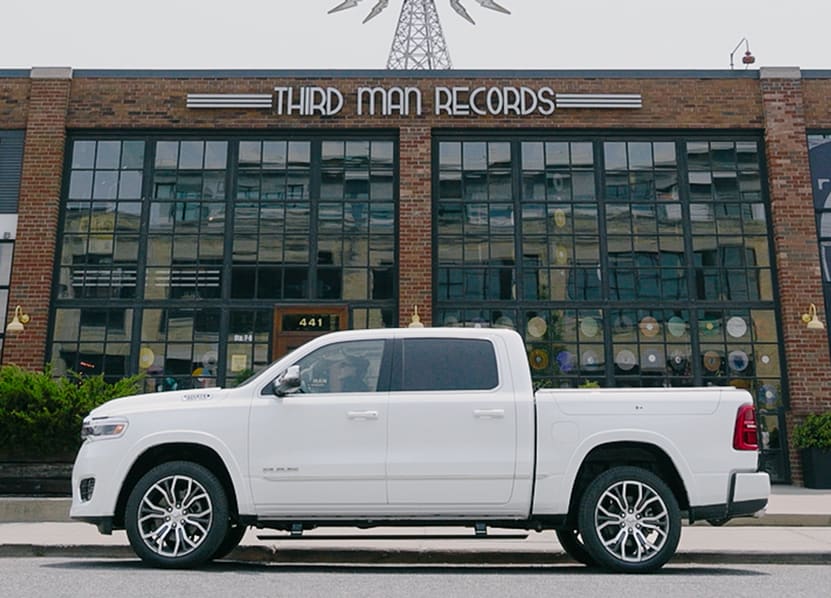
SAE Media heard one of these advancements first-hand during a visit to Third Man Records in Detroit in June. Ram and Klipsch were there promoting the audiophile sound system in the new Ram 1500 Tungsten, built in nearby Sterling Heights.
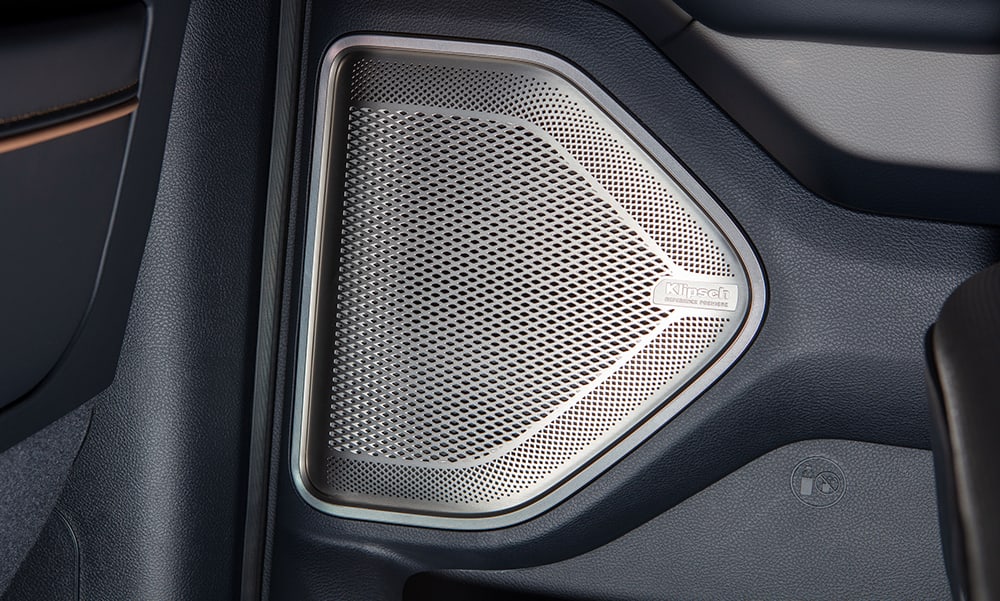
The 1500’s top-of-the-line Tungsten trim was introduced for the 2025 model year with an upgraded, 24-channel, 23-speaker sound system engineered with help from Klipsch. Speakers are sprinkled and hidden throughout the cabin, from the tweeters in the dashboard corners to the two-inch overhead speaker for each seat to the ceiling to 6-x-9 speakers in the doors. Klipsch’s DJX 3D Surround sound algorithm takes a stereo input and up-mixes it to surround sound, with the compute contained in the amplifier under the driver’s seat. The 1,228-watt system in the Tungsten is capable of hitting 120 dB, even though anything over 85 dB is usually cautioned against for longer periods. Garrett Laskowski, acoustic engineering manager at Panasonic Automotive Systems Company of America, told SAE Media that it was just what was required for the Tungsten.
“Stellantis wanted it that way,” he said. “They wanted an over-the-top system.”
The Tungsten’s system was finely tuned using a slightly mysterious song. When we listened to the song in the car, Shazam told me it was “Posty” by DJ Kayy. Subsequent searches turned up zero versions of this song online and even less concrete information. Nonetheless, the important point is that it’s a banger with a specific moment. Klipsch used the song when it was tuning its SPL series of subwoofers under Mark Casavant, senior vice president, Global Brand and Business Development at Klipsch. When Klipsch and Panasonic started working on the Tungsten with Ram, the song came, too.
“This is one of the test tracks that those guys were using to make sure that the design of the sub was good enough,” Lawkowski said. “Because even their new 10-inch will hit 20 hertz no problem. We’ve been using this in the cars as well to make sure that we’re getting the right stuff. There’s one note that’s 25 hZ where you hear it less but you feel it, because the sensitivity of human hearing starts to dip right there.”
Dirac, AKM craft a “…platform for audio innovation”
In May, Swedish audio company Dirac announced a partnership with semiconductor company Asahi Kasei Microdevices (AKM) to embed Dirac’s AudioIQ smart acoustics platform into AKM’s line of automotive digital signal processors (DSPs). The partnership intends to improve in-cabin audio, especially in future electric and autonomous vehicles, according to Takeshi Fujita, general manager for ES Project at AKM.
“With the electrification of vehicles and growing demand for premium passenger experiences, high-quality in-cabin sound has never been more critical,” Fujita said in a statement, adding that using Dirac’s DSPs and proprietary audio technologies will allow AKM to “create a more natural and immersive acoustic environment for every seat in the vehicle.”
It’s the immersive part that’s important here, AKM said. In 2023, the company conducted a survey that found passengers are increasingly emphasizing in-cabin experiences as driverless vehicles become more common. For example, AKM said its proprietary software can provide better in-car karaoke features. AKM has shipped over 200 million audio DSPs over the last two decades. AudioIQ is Dirac’s name for its suite of software-defined smart acoustics solutions, which combines measurement-based tuning with advanced signal processing.
Volvo, Polestar visit Abbey Road
Finally, for now, Volvo and Polestar announced in June that the Volvo EX90 and the Polestar 3 would be the first to get the new Abbey Road Studios Mode sound technology via a free over-the-air update. The sibling automakers say Abbey Road Studios Mode was “designed to capture the essence of the iconic recording studio’s unique environment,” and only models with the optional Bowers & Wilkins High Fidelity Audio system can take advantage of this retro effect. Volvo said future ES90 models with that sound system will also get this mode, straight from the factory.
Abbey Road Studios Mode includes a number of presets, including a Producer Mode with more texture than just bass-mid-high EQs. This mode “allows you to engineer your own sound … [including by] shifting the acoustic from a retro vintage to a deeper, modern sound, narrowing or expanding the stereo sound field and adjusting the acoustic environment, just as a producer or engineer would do,” the company said. Polestar also highlighted four of the presets - Intimate, Open, Energized, and Expansive - that “[draw] on the sound of the control rooms and live spaces whilst taking inspiration from the studios ’original EMI-era equipment, used in the recording, mixing and mastering process on countless era-defining recordings.”
The Bowers & Wilkins audio upgrades in both the EX90 and the Polestar 3 are 1,610-watt, 25-speaker systems.
The pace of audio development doesn’t take a break. Tom Dunn, director of global audio at Panasonic Automotive, was on hand at Third Man with the Tungsten. Panasonic also has audio partnerships with brands like Infiniti and Acura (with its ELS Studio systems). His team is incredibly proud of the positive reviews the Ram has gotten so far, he said, but they’re not done yet. The Tungsten is just “one of the first iterations of this new sound concept that has four wheels,” he said.
More From SAE Media Group
Automotive Engineering
Preview: SAE 2021 WCX
Autonomous Vehicle Engineering
Delivering on Autonomous Transport
Autonomous Vehicle Engineering
Accessibility: The Future of Mobility
Automotive Engineering
Spelling Ford with an ‘E’
Automotive Engineering
GM Deploying Electricals of the Future
Automotive Engineering
WCX 2021: Systems Thinking as Powerful as Propulsion Systems
Automotive Engineering
Snapdragon Ride Flex Puts Safety, Infotainment onto Single Chip
Off-Highway Engineering
WCX 2021: Top Engineers Talk Industry Transformation
Automotive Engineering
Volvo’s Electric High-Wire Act
Automotive Engineering
WCX 2024: The Technologies That Will Define Future Mobility
Autonomous Vehicle Engineering
BMW 7-Series Drives Itself Through Own Assembly
Automotive Engineering
Automated Vehicles Not an 'If' but a 'When'
Autonomous Vehicle Engineering
TCU Testing at the Heart of Vehicle Connectivity
Automotive Engineering
Electrifying Opportunities at IAV
Automotive Engineering
Clarios Sees Low-Voltage Electricals as Vital in EV, AV Future
Automotive Engineering
Real-Time Processors Key to the Zonal E/E Revolution
Automotive Engineering
In-Vehicle Software and Services Are Transforming the Industry
Autonomous Vehicle Engineering
Sony Jumps into AV Sensors, Software
Automotive Engineering
Continental’s New CTO to Lead Retooled R&D Pillar
Automotive Engineering
2025 Hyundai Ioniq 5 Brings All the Right Updates
Automotive Engineering
Talking SDVs and Zonal Architecture with TE Connectivity
Automotive Engineering
Expanding the ‘Bubble’ of Cabin Acoustics
Automotive Engineering
ZF’s Current Innovations Build for EV, AV Future
Autonomous Vehicle Engineering
Harman Using Empathy to Help Elevate the User Experience
ADAS & Autonomous Vehicle Engineering
Volkswagen Plants Autonomous-Testing Flag in Austin
Off-Highway Engineering
ZF Premieres AxTrax 2 Electric Axle Platform at ACT Expo
Automotive Engineering
Automated Vehicle Safety Series Addresses Design, Testing, Verification, and Validation
Off-Highway Engineering
Sensors Evolve to Satisfy CV Demands
Automotive Engineering
Industry Vet: Rapid Change Required to Catch up to Chinese EV Maker
Off-Highway Engineering
Volkswagen ID.Buzz All-electric Vans Combine Iconic Styling With Modern Technology
Top Stories
NewsSensors/Data Acquisition
 Microvision Aquires Luminar, Plans Relationship Restoration, Multi-industry Push
INSIDERRF & Microwave Electronics
 A Next Generation Helmet System for Navy Pilots
INSIDERWeapons Systems
 New Raytheon and Lockheed Martin Agreements Expand Missile Defense Production
NewsAutomotive
 Ford Announces 48-Volt Architecture for Future Electric Truck
INSIDERAerospace
 Active Strake System Cuts Cruise Drag, Boosts Flight Efficiency
ArticlesTransportation

Webcasts
Aerospace
 Cooling a New Generation of Aerospace and Defense Embedded...
Energy
 Battery Abuse Testing: Pushing to Failure
Power
 A FREE Two-Day Event Dedicated to Connected Mobility
Automotive
 Quiet, Please: NVH Improvement Opportunities in the Early Design Cycle
Electronics & Computers
 Advantages of Smart Power Distribution Unit Design for Automotive &...
Unmanned Systems
 Sesame Solar's Nanogrid Tech Promises Major Gains in Drone Endurance