




Volkswagen Plants Autonomous-Testing Flag in Austin
VW ID.Buzz models with lidar, radar and cameras will eventually expand testing to four other U.S. cities.
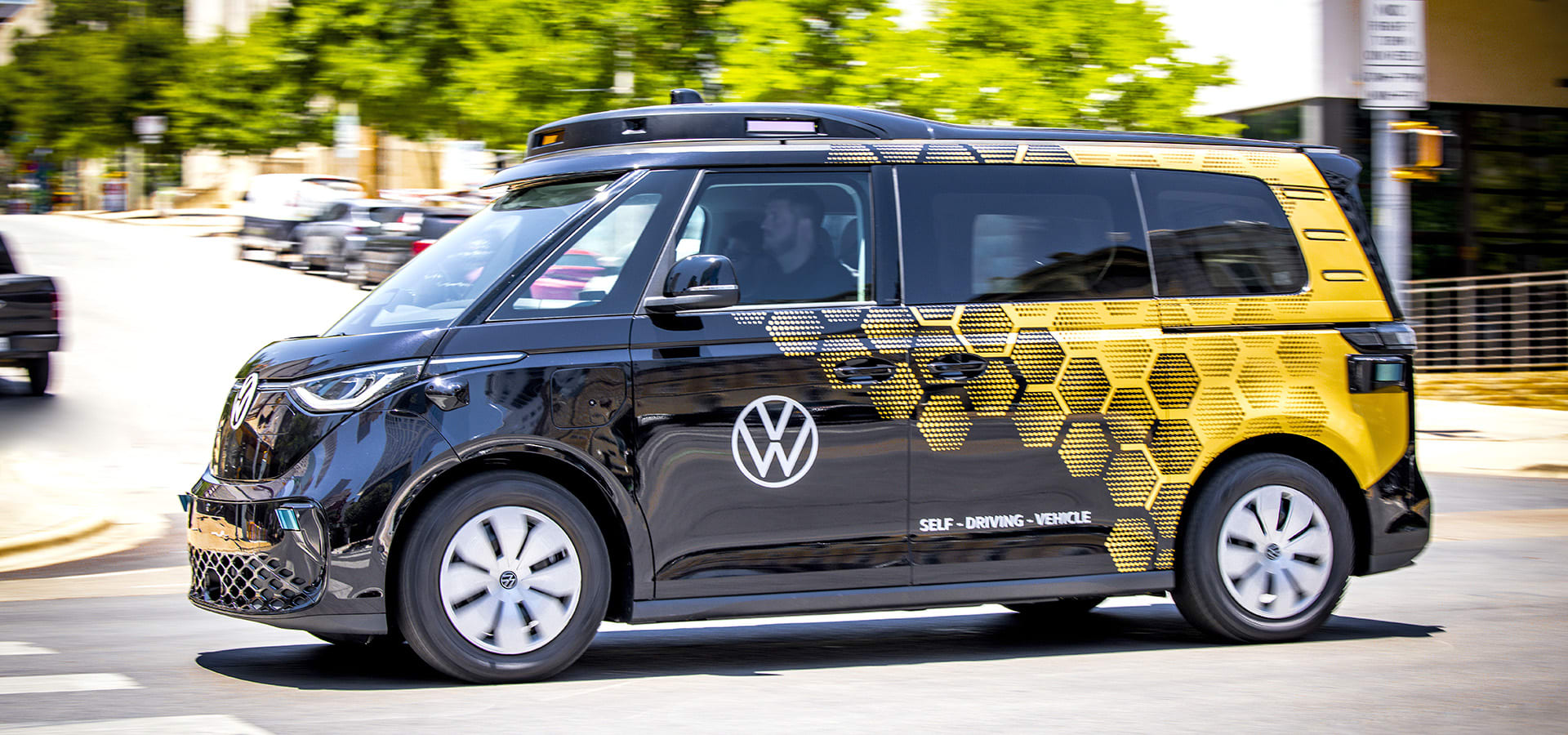
Volkswagen Group of America announced on July 6 that it would launch an autonomous test fleet of ID.Buzz EVs in Austin, Texas. The company said that the three-year program would eventually expand to at least four other U.S. cities.
In a news release, Volkswagen set an ambitious target of 2026 for the commercial launch of SAE Level 4 autonomous vehicles in the U.S. Previously, a Volkswagen Commercial Vehicles executive had said that by the end of 2025, customers could use MOIA, VW’s ride-sharing tech company, to book autonomous trips in Hamburg, Germany.
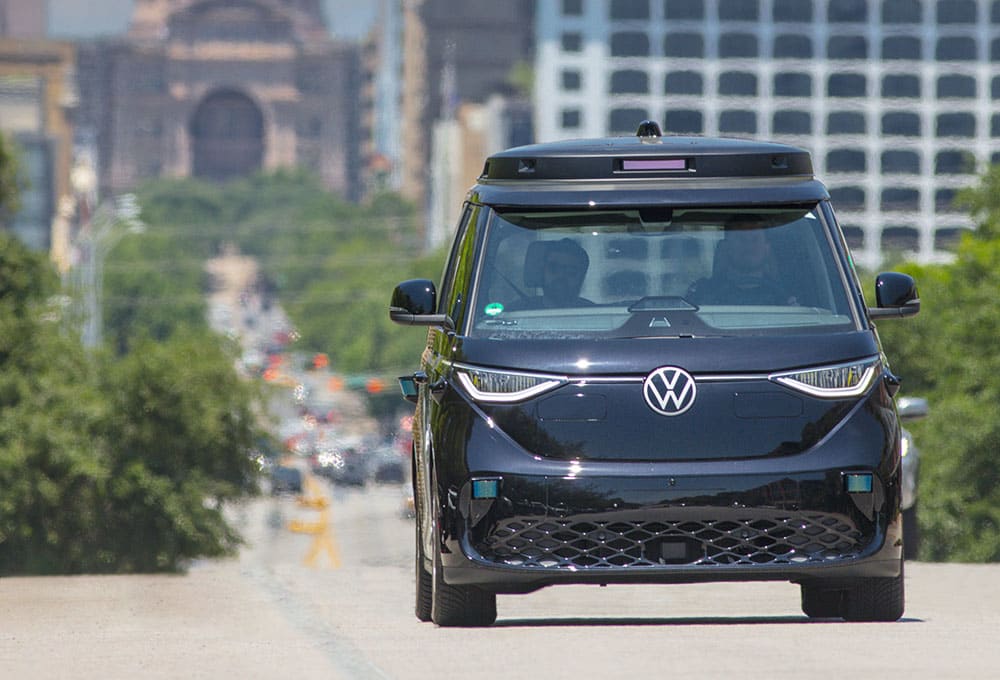
Jonas Kulawik, Volkswagen Group of America head of technology communications, told SAE Media that initial operations would be confined to downtown and the East Austin area with later expansion planned.
The company said it has created a subsidiary ─ Volkswagen Autonomous Driving Mobility and Transport (ADMT) ─ with the sole mission of developing autonomous technology in the U.S., and said the team includes former employees of Argo AI. That company was partially owned by VW and Ford, which shut it down in October 2022.
Volkswagen’s pursuit of Level 4 autonomy marks a point of divergence from Ford’s vision of Argo AI’s mission. At the time, Ford said it was going to shift its focus from Level 4 autonomy to what it called “Level 2+” and Level 3, in which the driver must be ready to take over control of the vehicle.
VW’s autonomous program has been developed in partnership with Mobileye. The system on the ID.Buzz vehicles includes cameras, lidar and radar systems. A human safety driver will be in each vehicle. Kulawik said the company is confident it can hit its Level 4 target. “We’ve acquired deep knowledge over the recent years, and with Mobileye, we have a great technology partner that is very strong in scaling the technological experience of the [autonomous driving] system we’re using in our ID.Buzz vehicle fleet.”
Christian Senger, a member of VW Commercial Vehicles’ board of management, said the Austin program will bring VW closer to enabling commercial mobility options. “This next phase will help us test, validate and refine the technology,” he said.
Pablo Di Si, president and CEO of VgoA, said the company wanted to take advantage in the future of increased demand for new mobility services, saying the program “will also offer a truly captivating product to support transportation services American consumers can rely on and trust.”
Eventually, VW wants to be able to sell fleets of ID.Buzz vehicles as part of a program that would include fleet management and remote guidance. The company did say, though, that there are no plans to develop a dedicated ride-hailing or ride-sharing service on its own.
In addition to Austin, Volkswagen ADMT employs a team in Belmont, California.
More From SAE Media Group
Automotive Engineering
MOIA’s L4 ID. Buzz AVs Starting Service Next Year
Autonomous Vehicle Engineering
The ‘Buzz’ in Driverless Shuttling
Automotive Engineering
Focus for 2017: Cyber, Connected-Car, EV Charging, Vehicle Autonomy
ADAS & Autonomous Vehicle Engineering
AV Life After Argo AI
Automotive Engineering
Taking ‘Eyes-Off’ the ADAS Future
Automotive Engineering
CES 2020: VW Creates New Autonomous Subsidiary
Autonomous Vehicle Engineering
Going the Last Mile
Autonomous Vehicle Engineering
Making Safety Standard
Automotive Engineering
Preview: SAE 2021 WCX
Automotive Engineering
Autonomy Testing: Simulation to the Rescue
Autonomous Vehicle Engineering
Platform-Agnostic Interface Aims to Accelerate Truck Autonomy
Off-Highway Engineering
Autonomous Trucking Hits Rocky Road
Automotive Engineering
Jaguar, Waymo to Partner for Automated Driving with New I-Pace EV
Autonomous Vehicle Engineering
The Navigator: Mapping the Way to Safe Automated Driving
Autonomous Vehicle Engineering
May Mobility Starts ADA-Compliant AV Transit for Rural Area
Autonomous Vehicle Engineering
C-2VX Is Finally Gaining Momentum in the U.S.
Automotive Engineering
UAE Previews Autonomous Future at DriftX
Off-Highway Engineering
Liebherr Deploys Autonomous Mining Truck Fleet
Automotive Engineering
Nvidia’s New Level 2+ Autonomy Platform Is Making Cars Safer Today
Autonomous Vehicle Engineering
Purpose, Perceptions for Driver-Assist Tech Solidify
ADAS & Autonomous Vehicle Engineering
Tesla’s FSD Recall Impacts AV Industry
Off-Highway Engineering
Bollinger’s Electric Truck Enters Design Validation Phase
Autonomous Vehicle Engineering
Hopeful but Closer Scrutiny for SAE Level 4 Automation
Off-Highway Engineering
Ford Expands EV Lineup with E-Transit Cargo Van
Autonomous Vehicle Engineering
Autonomy Is Coming to Commercial Vehicles
Automotive Engineering
Wireless Road Charging for EVs to Debut in 2023
Autonomous Vehicle Engineering
Autonomy Takes Off-Highway
Automotive Engineering
Department of Transportation Asks for Public Input Regarding Relaxing AV Regulations
Off-Highway Engineering
Daimler Truck and Torc Intensify Pursuit of Autonomous Trucks
Autonomous Vehicle Engineering
'Level 2+': Making Automated Driving Profitable, Mainstream
Top Stories
NewsRF & Microwave Electronics
 Microvision Aquires Luminar, Plans Relationship Restoration, Multi-industry Push
INSIDERAerospace
 A Next Generation Helmet System for Navy Pilots
INSIDERDesign
 New Raytheon and Lockheed Martin Agreements Expand Missile Defense Production
INSIDERMaterials
 How Airbus is Using w-DED to 3D Print Larger Titanium Airplane Parts
NewsPower
 Ford Announces 48-Volt Architecture for Future Electric Truck
ArticlesAR/AI

Webcasts
Electronics & Computers
 Cooling a New Generation of Aerospace and Defense Embedded...
Automotive
 Battery Abuse Testing: Pushing to Failure
Power
 A FREE Two-Day Event Dedicated to Connected Mobility
Unmanned Systems
 Quiet, Please: NVH Improvement Opportunities in the Early Design Cycle
Automotive
 Advantages of Smart Power Distribution Unit Design for Automotive &...
Energy
 Sesame Solar's Nanogrid Tech Promises Major Gains in Drone Endurance