




Driving the New Nissan Leaf Prototype
New styling and performance result in a better Leaf.
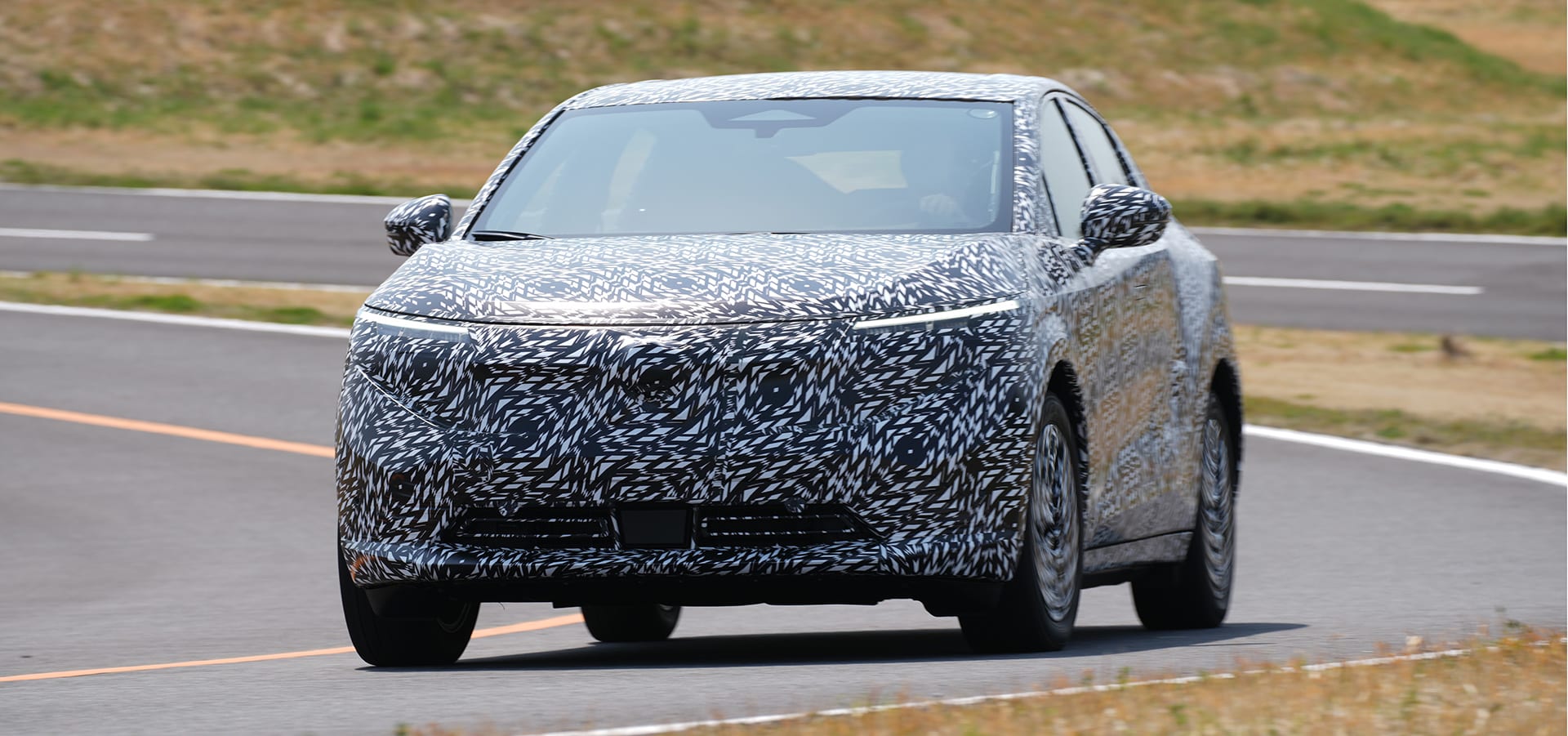
The first two-generations of the Leaf were about as exciting to drive as watching a slug inch its way across a sidewalk. Scratch that — at least a slug leaves a sparkly trail behind it. The Leaf, once you got behind the wheel, was a perfectly capable EV. It was also a bit of a snooze fest.

Nissan invited me to Japan earlier this year to talk to its new executive leadership about its next chapter, see its upcoming lineup, chat about solid-state batteries, and drive a few of those upcoming vehicles. One of those was a highly camouflaged – both inside and out – 2026 Leaf. The Leaf in question was a late-stage prototype, so not quite ready for public roads. It's not ready for you, but what I learned while behind the wheel shows that Nissan is ready to make the Leaf something worthy of memories.

I took my multi-lap jaunt in the prototype Leaf at Nissan's Granddrive test track at the Opama facility in Yokosuka City, Japan. The track recreates multiple driving scenarios at the test facility. Highway, twisties on a mountain road, driving through town, and on rutted asphalt. It's a tasting menu of driving conditions. None of it can give you the full experience of the vehicle. Instead, I'm taking in tiny morsels of the newest EV from Nissan, and it's good.

The acceleration curve is tighter without feeling overly aggressive. Acceleration on the earlier versions of the vehicle felt mushy and uninspired. While the 262 pound-feet of torque and 214 horsepower are key to acceleration, for EVs a properly mapped acceleration curve properly puts those power numbers to work.
The lifeless steering of the previous generation Leaf has been replaced with a tighter feel that gave the electric crossover a lively feel on the short curvy portion of the track. The previous version of the vehicle never suffered from excessive body roll due in part to its hatchback design. I'm happy to announce that the larger third-generation Leaf is squarely planted to the road in line with its market segment. I wouldn't autocross it, but i also wouldn't feel uncomfortable pushing it just a bit on some real mountain roads.
The 2026 Nissan Leaf prototype won't wow enthusiasts. What it does is give Nissan a real player in the increasingly crowded electric crossover market segment. It received a much-needed glam-up design-wise, while increasing in size into a segment that, regardless of powertrain, is where drivers are increasingly putting their money.
It's important to couch these impressions with the caveat that this is an early prototype. Nissan may adjust the suspension, acceleration mapping, and brakes ahead of production. These elements may get better. They might be adjusted to better comply with Nissan's decision to tune the vehicle's new rack electronic power steering system for the United States.
The vehicle I drove also benefited from the new multi-link independent rear suspension. These steering and suspension changes sit atop a better-looking Nissan Leaf. It's far more stylish than before and it's grown up to become a crossover. Yes, the world is silly with crossovers, but if you want to see a mass production vehicle to the actual masses, the segment is where driver dollars are going.
The 2026 Leaf will be available with two battery capacity options, 52 kWh and 75 kWh. Nissan is targeting an EPA range of up to 303 miles with the larger pack. Again, with the potential for up to 300+ miles of range, Nissan is seeing what's happening in the market and working towards being competitive.

To hit that range number, the Leaf has a drag coefficient of 0.26. The automaker has also worked to make its vehicle more efficient both on the road and during production. It uses a 3-in-1 powertrain with a compact integrated motor, inverter, and reducer combined into a single unit. The HVAC, battery, and powertrain are all part of a single thermal management system. It will dynamically route heat or cool liquid to various elements in the vehicle as needed.
On the charging end, the 400-volt platform Leaf supports DC fast charging up to 150 kW and AC charging up to 7.2 kW. The vehicle is shipped with NACS (SAE J3400) on the front passenger side of the vehicle for DC charging. For AC charging, a level 2 J1772 port resides on the driver side. The idea that while fast charging is moving to the NACS port, most AC charging in the world is still J1772.
The J1772 port also supports V2L via an adaptor similar to what Hyundai has available. An interior power outlet is also available.
NACS support will come with plug-and-play support for Tesla Supercharger stations for those who create a profile with a payment method in the Nissan app. This is in addition to plug-and-play support for other charging networks.
Unfortunately, what we don't know is the price. Nissan is expected to share more details ahead of the vehicle's release. The Leaf has been a bit of a deal in the EV world. With this newer, better generation hitting the road soon, it'll be interesting to see where it falls price-wise.
More From SAE Media Group
Automotive Engineering
Nissan Leaf Gets Updates – and Stays the Same – Where It Matters Most
Automotive Engineering
The EV Tech of BMW’s Neue-Klasse IX3
Automotive Engineering
Tariff Challenges, EV Advances at Mobility 360
Automotive Engineering
Ford Details All-Electric F-150 Lightning
Automotive Engineering
GM Follows Ford to Adopt Tesla EV Charging Connector, Join Supercharger Network
Automotive Engineering
Ford’s Top EV Engineer Advocates More Inclusive Charging Tech
Automotive Engineering
SAE Completes Next Step to Standardize Tesla-Developed EV Charging Connector
Automotive Engineering
BMW Previews an HMI Future Without Dashboard Screens
Automotive Engineering
2025 Hyundai Ioniq 5 Brings All the Right Updates
Automotive Engineering
2026 Nissan Leaf First Drive: Fun and More Efficient
Automotive Engineering
New CHAdeMO 3.0 Aims to Harmonize Global EV Quick-Charging Standards
Automotive Engineering
All-Electric Nissan Ariya Handles Ultra-Cold Temps on Pole to Pole Trek
Automotive Engineering
Automaker Coalition Plans High-Power Charging Network to Rival Tesla's
Automotive Engineering
2019 E-Tron SUV: Audi Goes Electric
Automotive Engineering
2026 Toyota BZ: Improved, but Still Not a WheeeeeEV
Automotive Engineering
Honda Ready with First North American Crossover EV
Off-Highway Engineering
Yanmar, ELEO Announce Electrification Strategy for Off-Highway Sector
Automotive Engineering
Rotax Keeps EV Development In-House
Automotive Engineering
BMW Engineers for the EV-Transition Reality
Off-Highway Engineering
HEVI Launches Lineup of Electric Off-Highway Equipment
Automotive Engineering
For Aptiv, More EVs Mean More Profit with SVA
Automotive Engineering
TI Fluid Systems Opens Facility to Create Cooling Products for EVs
Automotive Engineering
Honda Motocompacto Folding Scooter Is an Accessory with Pep
Automotive Engineering
Cadillac Counts on 2025 Escalade IQ for EV Sizzle
Automotive Engineering
Hyundai Details First EV-Dedicated Vehicle Architecture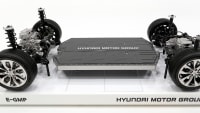
Off-Highway Engineering
Bollinger’s Electric Truck Enters Design Validation Phase
Off-Highway Engineering
Mercedes-Benz Goes Long with EActros 600 Electric Truck
Automotive Engineering
2026 Escalade IQL Is Cadillac’s Biggest, Roomiest EV Yet
Automotive Engineering
Ford Unveils 2021 Mustang Mach-E Electric Vehicle
Automotive Engineering
2025 BMW M5 First Drive: Stuffed like Schnitzel with PHEV Tech
Top Stories
NewsRF & Microwave Electronics
 Microvision Aquires Luminar, Plans Relationship Restoration, Multi-industry Push
INSIDERAerospace
 A Next Generation Helmet System for Navy Pilots
INSIDERDesign
 New Raytheon and Lockheed Martin Agreements Expand Missile Defense Production
INSIDERMaterials
 How Airbus is Using w-DED to 3D Print Larger Titanium Airplane Parts
NewsPower
 Ford Announces 48-Volt Architecture for Future Electric Truck
ArticlesAR/AI

Webcasts
Electronics & Computers
 Cooling a New Generation of Aerospace and Defense Embedded...
Automotive
 Battery Abuse Testing: Pushing to Failure
Power
 A FREE Two-Day Event Dedicated to Connected Mobility
Unmanned Systems
 Quiet, Please: NVH Improvement Opportunities in the Early Design Cycle
Automotive
 Advantages of Smart Power Distribution Unit Design for Automotive &...
Energy
 Sesame Solar's Nanogrid Tech Promises Major Gains in Drone Endurance