




Rotax Keeps EV Development In-House
A new Can-Am EV will be unveiled in August.
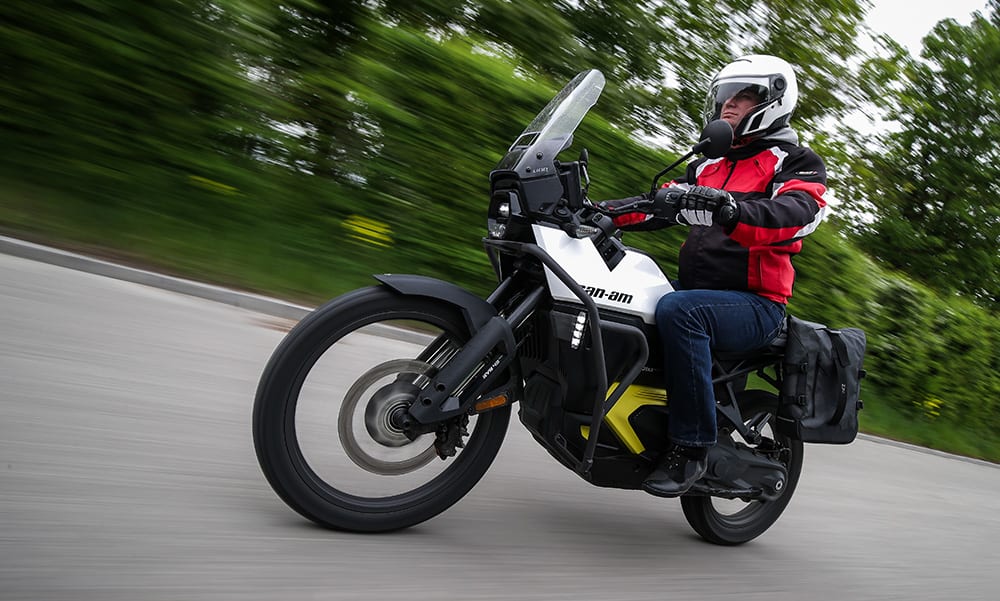
I've ridden the Can-Am electric motorcycles twice. Once in Texas, where it was punishingly hot, and once in Austria, where it rained all day. In both instances, the motorcycles performed as predicted, even during extreme heat. They also impressed those new to electric motorcycles.
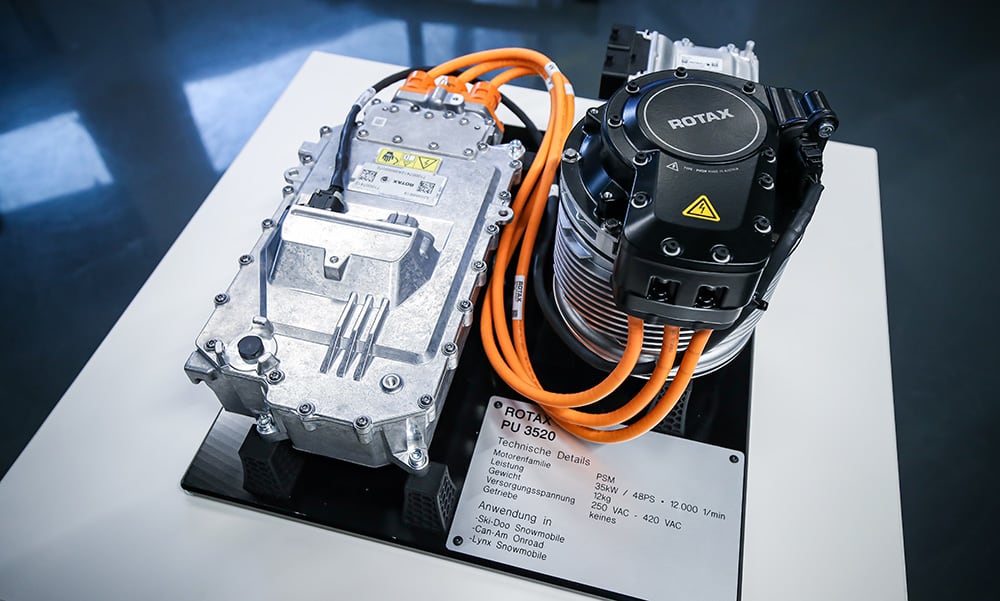
Entering the world of electrification requires a level of experience that some OEMs farm out to suppliers. It's not unusual for a vehicle to launch with a motor from a company like Bosch. BRP-Rotax opted to do what it does best. Build as much as it could in-house and design the parts that it can't manufacture so that they meet the company's specifications.
At its facility in Gunskirchen, Austria, Rotax shared details about the development of its electric REV Gen5 platform. Developed and partially built at the facility, the architecture currently resides in the Can-Am electric motorcycle, the Ski-Doo electric snowmobile, and its e-kart.
During a presentation, Mario Gebetshuber, BRP-Rotax Vice President of global sourcing and operations powertrain told SAE Media that the company is taking technologies from the electric vehicle sector and adopting them for its range of recreation vehicles. During a one-on-one interview Gebetshuber told SAE, "The product is good. What we need to see is if the market is ready."
Preparing the vehicles for the market required years of development.. While Rotax motors are in a variety of vehicle types including light planes and used by companies like BMW, Aprilla, and Harley Davidson, the company doesn't have the deep pockets of a Mercedes-Benz. The electric platform it built needs to be suitable for a variety of vehicles that perform in different environments.
The Ski-Doo EV, for instance, needs to be able to start at below freezing temperatures while the Can-Am motorcycles have to be able to handle the 115-degree Fahrenheit heat of a Texas highway. To handle the stark extremes, Rotax produced an impressive thermal management system. The liquid-cooled architecture pulls heat from the battery better than an air-cooled system and reduces thermal derating, when a motor has to be operated at less its max performance to protect it.
Rotax is mum on which company supplies its batteries. The pack, though, is part of the bike's structure which reduces weight. This is paramount for optimizing efficiency on an electric vehicle.
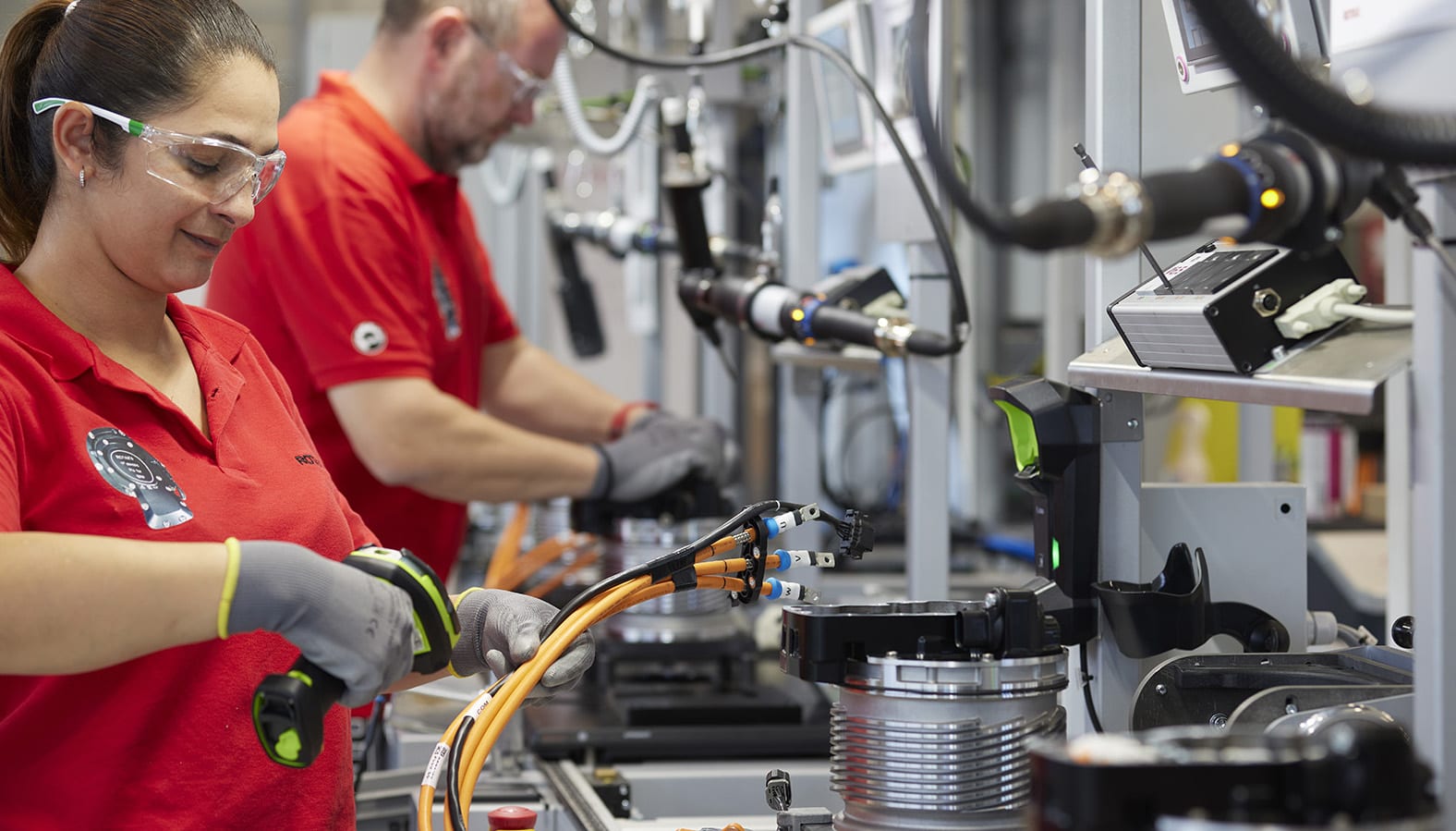
The motor itself is built within the Gunskirchen facility. A combination of automated and manual production. Machines wind the copper and get the stator and motor ready to be put together. The marrying of the stator and motor is done manually. The number of individuals and stations varies according to Rotax. It's dependent on production volumes.
Everything motor and battery-related (outside of the batteries themselves) is designed by Rotax. Development is done in-house and even though the inverter is manufactured by an outside the company but is built to a design created by Rotax.
Like the battery supplier, Rotax isn't talking about targets. It's expanding the availability of its Can-Am lineup beyond North America and Europe to Asia. While the US gets one version, Europe – and likely Asia – will receive both the 35kW variant and the 11kW variant. The lower power version allows those in some regions without a motorcycle endorsement on their license to ride the electric motorcycle since it lines up with a 125cc gas motorcycle.
During a ride through Austria on both versions of the Pulse motorcycle, the difference is there, but it's very slight. Mostly, the 35kW variant is quicker from zero to 60. Offering two trim levels expands Can-Am's market as it hopes to attract those who have adopted e-bikes as a form of transportation and are looking to level up for longer trips.
Currently, in the US, Can-Am's largest competitor is Zero Motorcycles. The electric bike builder has been in the market for years with a lineup of well-built and fun-to-ride motorcycles. Outside of Zero, there's not much competition from established brands outside of the offerings from Harley-Davidson and its Livewire lineup.
Can-Am knew that entering the crowded gas-bike market meant being lost in the shuffle. By going electric on its bikes, it can establish itself and learn from itself and others while being one of only a few companies building proper electric motorcycles.
The company’s ability to take what it's learned from snowboarding and e-karts and put that on a two-wheeled machine. In August, Rotax will introduce a third consumer-facing electric adventure product. Rotax won't say what it will unveil but don't be surprised to see a Can-Am electric side-by-side or quad.
As for gas-bike competitors? Rotax knows they are likely being monitored.
"They know what we did in the power sports industry, that we are a serious company with design development, manufacturing capabilities, an international footprint, an international global supply base, and we have the knowledge to do great products. If I (were) them, I would be watching us," Gebetshuber said.
More From SAE Media Group
Automotive Engineering
TI Fluid Systems Opens Facility to Create Cooling Products for EVs
Automotive Engineering
Tariff Challenges, EV Advances at Mobility 360
Off-Highway Engineering
HEVI Launches Lineup of Electric Off-Highway Equipment
Off-Highway Engineering
Mercedes-Benz Goes Long with EActros 600 Electric Truck
Automotive Engineering
BMW Previews an HMI Future Without Dashboard Screens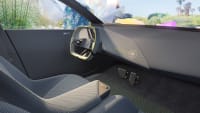
Automotive Engineering
ZF Meets Changing EV Market with Suite of Improved Components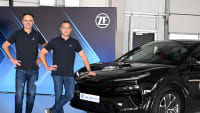
Automotive Engineering
VinFast Brings New EVs, Assembly Plans to U.S.
Automotive Engineering
Driving the New Nissan Leaf Prototype
Automotive Engineering
BMW Takes Multi-Modal Route to Manufacturing
Automotive Engineering
Magna Charging Ahead on Contract EV Production
Automotive Engineering
GM and Honda to Jointly Develop Honda’s Electric Vehicles
Off-Highway Engineering
Bigger Barrier to CBEVs: Batteries or Infrastructure?
Automotive Engineering
Toward an Electric Two-Wheeled Triumph
Automotive Engineering
Nissan Leaf Gets Updates – and Stays the Same – Where It Matters Most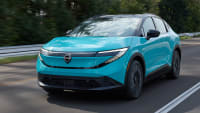
Off-Highway Engineering
Case Launches ‘Industry First’ Electric Backhoe Loader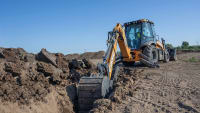
Automotive Engineering
Brunswick Launches All-Electric Marine Outboard
Automotive Engineering
Gearing Dana for the EV Future
Automotive Engineering
Bosch’s EV Efficiency Upgrade: Continuously Variable Transmissions
Automotive Engineering
Honda Pioneering New Manufacturing Tech for Zero Electrified Platform
Off-Highway Engineering
Lightning EMotors Adapts to Changing Electrification Market
Off-Highway Engineering
Lion Electric Proclaims Its Lion8 Tractor the New King of the EV Jungle
Off-Highway Engineering
Nikola Producing Battery-Electric Trucks, Fuel-Cell EVs Coming
Automotive Engineering
BEV Heat Pumps Recovering Cost Investments
Automotive Engineering
BMW Brings EV Motor Production to Steyr in Austria
Automotive Engineering
2019 E-Tron SUV: Audi Goes Electric
Automotive Engineering
Bosch Tunes Its Business to Face Mobility’s Challenges
Automotive Engineering
China Aims New EV Coolant Regulation at Battery Safety
Off-Highway Engineering
Tesla Semi “Crushes” SuperTruck 2 in Real-World Efficiency
Automotive Engineering
Honda Motocompacto Folding Scooter Is an Accessory with Pep
Automotive Engineering
Balancing the ‘Dominos’ in EV Thermal Management
Top Stories
NewsRF & Microwave Electronics
 Microvision Aquires Luminar, Plans Relationship Restoration, Multi-industry Push
INSIDERAerospace
 A Next Generation Helmet System for Navy Pilots
INSIDERDesign
 New Raytheon and Lockheed Martin Agreements Expand Missile Defense Production
INSIDERMaterials
 How Airbus is Using w-DED to 3D Print Larger Titanium Airplane Parts
NewsPower
 Ford Announces 48-Volt Architecture for Future Electric Truck
ArticlesAR/AI

Webcasts
Electronics & Computers
 Cooling a New Generation of Aerospace and Defense Embedded...
Automotive
 Battery Abuse Testing: Pushing to Failure
Power
 A FREE Two-Day Event Dedicated to Connected Mobility
Unmanned Systems
 Quiet, Please: NVH Improvement Opportunities in the Early Design Cycle
Automotive
 Advantages of Smart Power Distribution Unit Design for Automotive &...
Energy
 Sesame Solar's Nanogrid Tech Promises Major Gains in Drone Endurance