




GM’s CTO Driving New Paths to Technology Leadership
“We’re making actual production commitments regarding our advanced-technology strategy rather than just talking about it,” says GM’s CTO Jon Lauckner. “We’re absolutely going to be among the leaders, if not the leader, in these areas.”
Ask any car-savvy group about which companies they believe are leading the automotive advanced-technology race, and their reply is likely to put Google, Tesla, and Apple at the top of the list.
To which Jon Lauckner retorts, “Well, I don’t think so!” Lauckner is GM’s Chief Technology Officer and heads its global R&D organization. He’s also President of GM Ventures, a $200 million venture-capital subsidiary launched four years ago to identify and develop next-generation automotive technologies. Under Lauckner’s leadership GM Ventures to date has equity investments in 18 start-up companies “in which we believe we can somehow commercialize the technology and take it to market,” he told Automotive Engineering. “We are pretty selective about those companies we invest in.”
The diverse portfolio currently includes NanoSteel, whose new cold-formable, lightweight steel alloys are highly ductile yet strong; Sakti3, the Ann Arbor-based solid-state lithium battery developer; Empower Energies (formerly Sunlogics), maker of solar-powered EV charging stations; Proterra, the South Carolina-based electric bus maker now serving a dozen transit fleets; bio-energy developer Coskata; Powermat, the Israel-based specialist in inductive charging systems used in Chevrolet Volts as well as in Starbucks cafes; and Tula Technologies, creator of an advanced engine cylinder-deactivation system now undergoing vehicle testing.
“We’re investing in technologies at a pace, averaging about five per year thus far, that we think makes sense for us,” Lauckner explained. “We focus on those that can support our core automotive business and change the existing paradigm,” he said. Being unbridled from the corporate product-development role that burdens some CTOs allows him to range freely around the world to target potential “fits” for GM.
The entrepreneurial tact contrasts, of course, with GM’s 20th century history as an R&D titan that often underutilized its innovations. But the post-bankruptcy GM put a more relevant and nimble R&D strategy in place that leverages the start-ups portfolio, Tier 1 partners, and in-house resources — GM’s own labs remain on the cutting-edge of combustion science and fuel-cell advances (and patents), to name two areas.
While some GM engineers accuse their company of intentionally “going quiet” regarding its technology progress while Silicon Valley’s interlopers invaded the automotive discussion, Lauckner argues that GM has pushed ahead on multiple fronts.
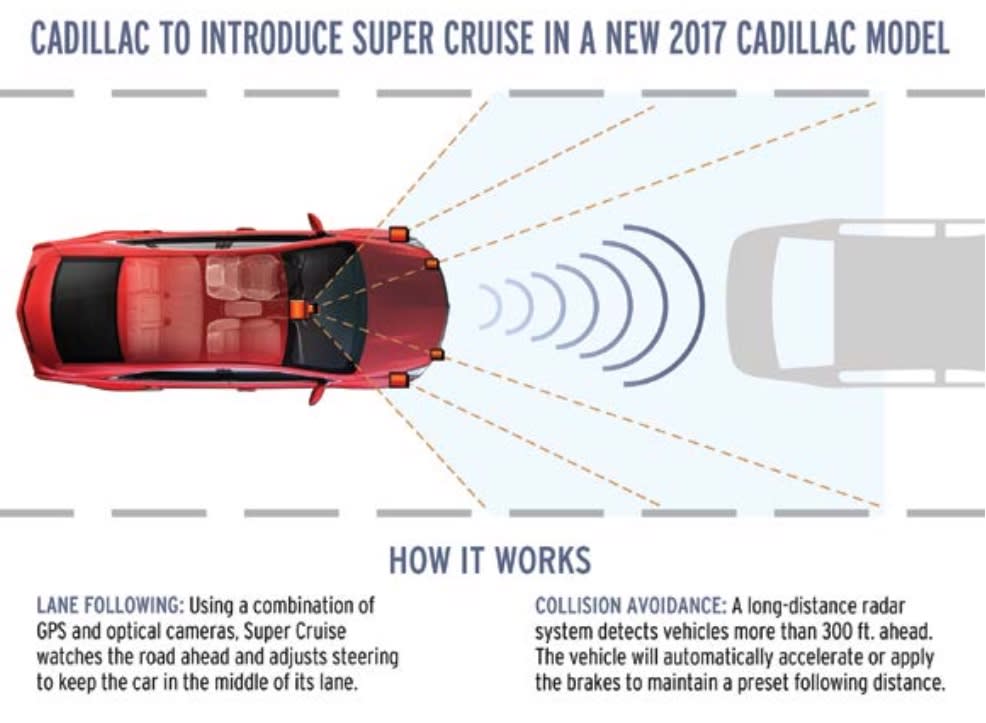
“We wait for opportunities to do more than just issue a press release to say we’re among the leaders in electrification or autonomous driving for this or that reason,” he said. “What we’d rather do is put up the proof points, such as introduction of the second-generation Volt. Such as the new EV we announced that will deliver 200 miles of all-electric driving range for $30,000; it re-exerts our claim to being among the leaders in electrification technology. And there’s the Super Cruise advanced-driving and safety system entering production for 2017, to name three.
“We’re making actual production commitments regarding our advanced-technology strategy, rather than just talking about it,” Lauckner asserted. “We’re absolutely going to be among the leaders, if not the leader, in these areas.”
Betting on five targets
Currently the GM Ventures team is focusing on start-ups in the following five areas:
Automotive ‘clean tech’ includes batteries, motors, and power electronics related to vehicle propulsion;
Connected-vehicle technology — Lauckner says GM’s decision to bring “the 4G LTE pipe” into its production vehicles “is a big enabler that’s going to pay us a lot of dividends going forward. And things that spring from 4G LTE won’t be traditional technologies, either.”
Advanced materials, encompassing lightweight metals and composites; eco-friendly and phase-change materials; and forming and joining technologies designed to support GM’s mixed-materials-product strategy;
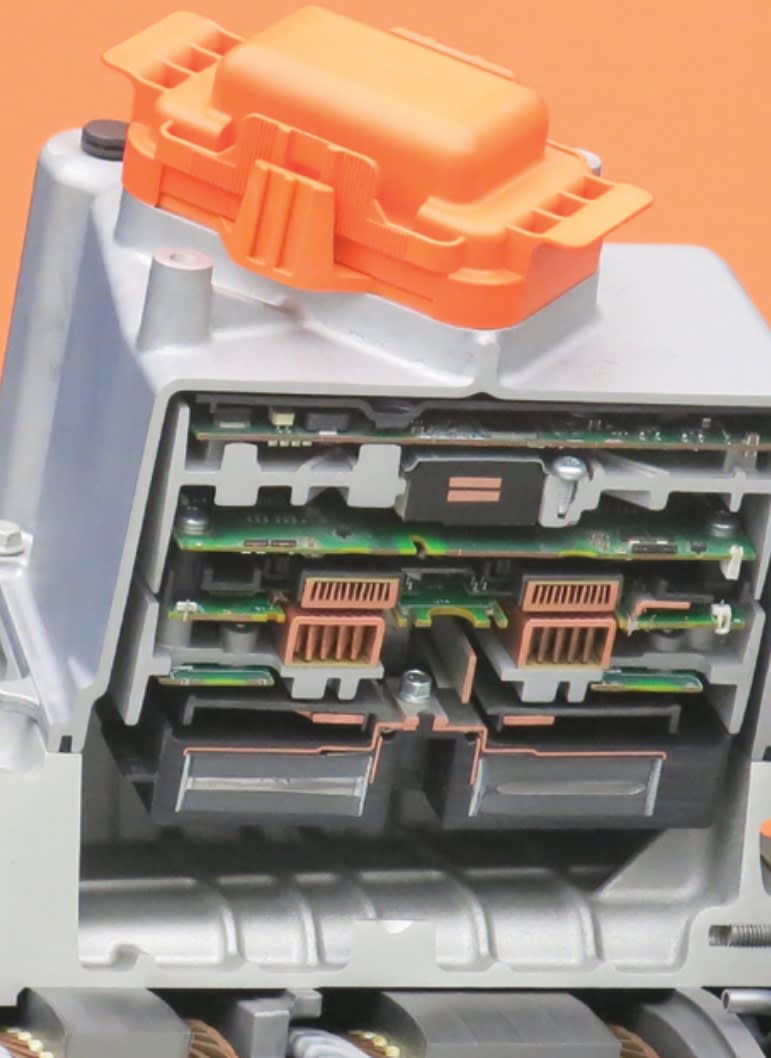
Sensors, processors, and memory innovations are manifest in the 2016 Chevrolet Volt’s all-new power electronics and propulsion system, as well as in Super Cruise, GM’s semi-autonomous driving and active-safety technology platform slated for production on Cadillac’s new-for-2017 CT6 flagship sedan. In the same timeframe the CTS will deploy V2V capability — “more appropriately it’s V2X because the same signal the cars are exchanging can be picked up by infrastructure and used for purposes of predicting traffic flows and things like that,” Lauckner explained.
“We’re not going to wait until we have a totally driverless vehicle that can work in 100% of situations,” Lauckner said. “There’s a lot that can be done with active-safety technology today before we get to perfect driverless technology.”
The fifth area of interest is in what Lauckner calls “value chain and business-model plays” — investigations into businesses upstream or downstream of GM’s automotive core but are highly related to it.
The Tula Technologies investment announced in late 2014 was based on the premise that California-based Tula had significant software expertise. But it was actually much more. It is developing an advanced system that deactivates cylinders based on how much torque the engine really needs to deliver while minimizing vibration. It can vary the number of cylinders to deactivate, not necessarily tied to a typical fixed deactivation pattern. Cylinder firing and sequence are based on real-time calculation of how much torque is required and knowing the geometry of the engine — for example, how often each cylinder fires based on crank revolutions.
Lauckner noted that his team and GM engineers at first weren’t convinced that it actually would work. “There’s still a lot to be done but Tula’s concept makes sense and honors the laws of physics and thermodynamics. But there are still engineering and software-development challenges aplenty,” he explained, “including not having it require a server rack that takes up the entire cargo area of a Yukon.”
“Free” patent sharing
Recent announcements by Tesla and Toyota that they intend to “share” their intellectual property and patents for the greater cause of vehicle electrification and fuel cells caused Lauckner to ponder.
“As an investor in start-up companies I know that typically when people provide venture-debt financing, they want to securitize the patent portfolio as collateral. That basically means that the company keeps its patent portfolio but it’s not free to do whatever it wants to do, because those patents are being securitized with the debt holder,” he noted.
“So, just how ‘free’ are those patents really — and what are the conditions to actually being able to use them? I can tell you that we don’t lose any sleep over whether GM has the kind of IP that it takes for us to be among the leaders going forward.”
More From SAE Media Group
Automotive Engineering
CES 2019: Blueprint for Future Auto Shows?
Battery & Electrification Technology
Ultracapacitor Solutions to Address Energy-Storage Needs of Vehicles
Autonomous Vehicle Engineering
Who’s Ahead in the Automated-Driving Race?
Off-Highway Engineering
Systems That Talk Together, Are Efficient Together
Automotive Engineering
2026 Nissan Leaf First Drive: Fun and More Efficient

Automotive Engineering
Welcome to the Automotive Engineering Podcast
Off-Highway Engineering
Freightliner’s Medium-Duty Makeover
Autonomous Vehicle Engineering
AV Powers Bring May Flowers
Automotive Engineering
Democratizing Hybrid Technologies

Tech Briefs
Are In-Wheel Motor Systems Catching On?
Off-Highway Engineering
Thor Lets Campers Go Further Off Grid With Electric Embark RV
Automotive Engineering
LEAF Turns to the 2020s
Autonomous Vehicle Engineering
Reinventing the Automobile’s Design
Autonomous Vehicle Engineering
First Smile, Last Smile
Off-Highway Engineering
ZM Trucks Starts Production in Fontana, California
Automotive Engineering
OEMs Deny Suppliers the Limelight
Autonomous Vehicle Engineering
Lockered and Loaded
Automotive Engineering
SAE ITC EVPKI Consortium™ Welcomes New Member Rivian
Automotive Engineering
A Peek at Electrify America’s Charging Station Future
Tech Briefs
SAE WCX™ Digital Summit Preview
Automotive Engineering
AVSC Develops Best Practices for Traceable AV Safety Inspection Protocols
Automotive Engineering
Time with the Teardown Titan


Automotive Engineering
Engineering Harley’s Electric 2020 LiveWire
Automotive Engineering
Electrifying ‘The Ultimate Driving Machine’
Autonomous Vehicle Engineering
Standards Play a Vital Role
Automotive Engineering
Wrecking Ball
Top Stories
INSIDERManufacturing & Prototyping
 How Airbus is Using w-DED to 3D Print Larger Titanium Airplane Parts
INSIDERManned Systems
 FAA to Replace Aging Network of Ground-Based Radars
NewsTransportation
 CES 2026: Bosch is Ready to Bring AI to Your (Likely ICE-powered) Vehicle
NewsSoftware
 Accelerating Down the Road to Autonomy
EditorialDesign
 DarkSky One Wants to Make the World a Darker Place
INSIDERMaterials
 Can This Self-Healing Composite Make Airplane and Spacecraft Components Last...
Webcasts
Defense
 How Sift's Unified Observability Platform Accelerates Drone Innovation
Automotive
 E/E Architecture Redefined: Building Smarter, Safer, and Scalable...
Power
 Hydrogen Engines Are Heating Up for Heavy Duty
Electronics & Computers
 Advantages of Smart Power Distribution Unit Design for Automotive...
Unmanned Systems
 Quiet, Please: NVH Improvement Opportunities in the Early Design...
