




The Complicated Future of Off-Highway Engines
Developing an optimum engine is getting tricky now that the European Union has established a Stage V for off-highway engines, and the U.S. has not. What effect will this have on future engine designs?

The latest twist for providers of engines for off-highway use is the recently proposed Stage V emissions regulations covering European Union countries. EU regulators will limit the allowable particle number (PN) for the first time in off-highway equipment, as well as further reducing particle mass (PM) compared to Stage IV. The PN limit is proposed at 1x10¹²/kW·h. The regulations will not be finalized until January 2016 and the expected phase-in will start in 2019. Most expect the final limits to be as currently proposed.
The proposed Stage V regulations will have different impacts on different engine categories, Michael Franke, Director, Light-Duty Diesel and Commercial Engines for FEV North America, told Off-Highway Engineering. He also noted that besides reducing PM and PN for engines between 19 kW and 37 kW, Stage V also reduces NOx, HC, and CO limits. “Stage V is applicable over a wider range of engine outputs [than Stage IV],” he said. “It includes compression ignition engines below 19 kW and all engines above 560 kW.”
Anticipation and business strategy
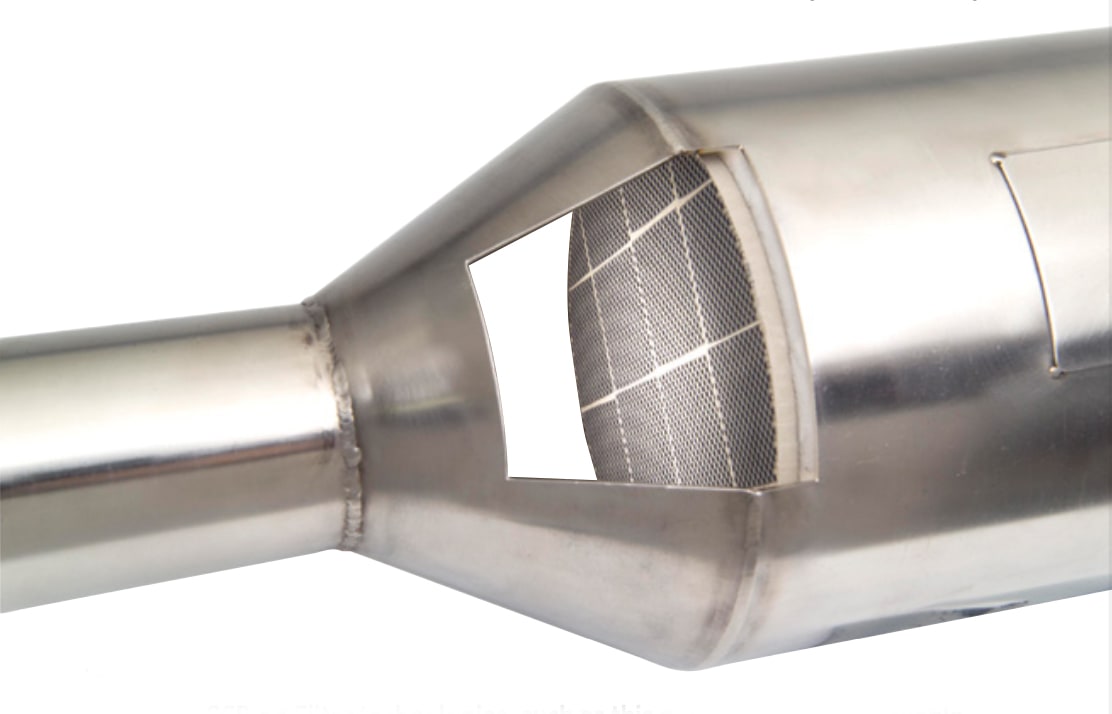
Some manufacturers such as Deutz are already advertising “Stage V Ready” engines. Their DPF-equipped engines in the 2.9- to 7.8-L range already meet the limits expected to take effect in 2019, according to Georg Diderich, Senior Vice President of Sales and Service for Europe, Middle East, and Africa for Deutz. (Also see “Deutz Diesels Take to Stage V”.) He believes that DPFs are the only feasible technical solution available today that can meet the PN requirement. “Other technical solutions can meet the PM requirement, but only a DPF will meet the PN limit,” he stated in an interview with OHE. The advantage to Deutz customers is they do not need to upgrade a machine packaged for an engine that meets Stage IV for Stage V.
Did Deutz have special insight into anticipating Stage V? Perhaps, but Diderich explained it was more a realization on their part that what happens in on-road emissions regulations will eventually make it to non-road, after a delay of a few years. “It was quite obvious that something was coming in the direction of DPFs, which are already mandatory today on the Euro VI [on-road engines],” he said. “From that perspective we anticipated the regulation to go into that direction.” This viewpoint is important because it will invariably inform other, future key decisions.
Is meeting the Stage V emissions a stretch for engine OEMs technically? Not necessarily. “Technologies to meet all Stage V requirements are available; however, they need to be adapted and integrated into the individual products, for example to meet lower PM and especially the PN requirements,” said Franke from FEV. He agrees that DPFs will be required. This will increase packaging complexity and the cost of the Stage V products, “which will be especially challenging for the smaller, very cost sensitive applications,” he said.

The variety of applications in the off-highway industry represents a significant challenge to engine OEMs as they seek to apply emissions technologies, Darrin Treptow, Manager, Worldwide Marketing for John Deere Power Systems (JDPS), told OHE. “JDPS will continue to tailor our engine solutions to fit the variety of off-highway applications while minimizing the regulatory impact on our customers,” he said.
Treptow believes the key is their building-block approach. This allows them to meet each new emissions regulation and still provide engines that meet performance and reliability expectations of their customers. “This approach offers the best combination of technologies to meet emissions regulations, and has already led us to a technology path that will achieve Stage V regulatory requirements,” he said, citing the John Deere Integrated Emissions Control system as a means to customize technology as needed.
Aftertreatment advances

It is interesting to note that a number of off-highway engine manufacturers were able to meet the EU Stage IV regulations without resorting to a DPF. Diesel engine makers employ various aftertreatment solutions, including reducing NOx using selective catalytic reduction (SCR) and diesel oxidation filters (DOCs). By optimizing the combustion process, for example using advanced cooled EGR and adopting low soot combustion approaches, many avoided a DPF and chose to use SCR as their only aftertreatment device. Others chose a combination of SCR and DOC.
An important point that Andy Noble, Head of Heavy Duty Engines at Ricardo, made to OHE is that the technology for trapping PN emissions has advanced in response to meeting heavy-duty on-road requirements for the Euro VI regulations.
“There are some synergies for manufacturers that already have Euro VI heavy-duty solutions,” he said. One in particular is SCR on Filter, or what he terms SCRoF. “This is an SCR on a DPF in one unit. This is an opportunity that was not available to the on-road guys when Euro VI was introduced. With Stage V, there is a possibility to move straight to SCRoF.” He related that the advantages over separate DPF and SCR aftertreatment include reducing package space and making it easier to manage the optimum temperature for the SCR operations.
SCR itself is rapidly improving. “The achievable efficiencies are getting higher,” Noble said. NOx conversion efficiencies of 97–98% are feasible with SCR equipment in 2015. The implication for future engines is that this could potentially eliminate a need for EGR as part of a NOx control strategy, since higher efficiencies in the SCR would mean tolerating more engine-out NOx.
Advancing technologies, priorities

Diderich from Deutz anticipates the next priorities beyond Stage V for off-road of tomorrow to be similar to those for on-road of today. “Again, you can look into the crystal ball of the automotive industry and easily imagine that reducing C02 and fuel consumption will be important for off-road,” he said. “The biggest improvements in fuel consumption cannot be done on the engine itself any more. So it becomes more important to properly integrate systems into machines so that you have an optimum combination of hydraulic driveline components and the engine combined with electronic controls that optimize the best fuel consumption for the whole machine.”
Franke from FEV anticipates a few current engine development advances to continue. “We expect that fuel-injection pressure will increase to 2500 bar and above. We also expect to see higher cylinder pressures, advanced air handling systems including two-stage boosting, and a trend to downsizing and down-speeding,” he said.
Another potential is electrification and hybridization, technologies of high focus and interest in the on-highway industry, according to Franke. “Their potentials for off-road applications must be evaluated carefully. Fuel-efficiency improvements through electrification and hybridization are very dependent on the application and the operation profile.”

Electrically driven accessories allow demand-controlled usage of the accessories and reduce parasitic losses. “Some off-road machines like agriculture tractors have increased demand to provide electricity to the attached machines; therefore, we expect a general increase, but various levels of electrification, in future off-road applications,” explained Franke.
Noble from Ricardo also predicts a few other novel technologies are possible—waste-heat recovery in particular, which can take many forms. “Waste-heat recovery can be mechanical in the form of an exhaust turbine that is connected to the drive shaft, called turbocompounding,” he explained. It can also be electric from a turbine-driven generator suspended in the exhaust stream, or a Rankine cycle that uses a phase change of a working liquid to extract energy.
“Now that engine manufacturers have met the monumental challenges presented by the current emissions regulations, we anticipate manufacturers will begin to focus upon improving the systems developed to meet those challenges,” said JDPS’s Treptow. He noted that JDPS is also currently investigating highly efficient and compact aftertreatment systems, thermal efficiency improvement, friction and parasitic reduction, optimization of thermal management, model-based control, and diagnostic systems.
Perhaps the greatest market challenge is the return of regulatory complexity, which was reduced with the (almost) harmonized U.S. Tier 4 and EU Stage IV regulations. A spokeswoman for the U.S. EPA confirmed for this article that a Tier 5 regulatory action is not currently on that body’s regulatory agenda. This means there are no foreseeable plans for a Tier 5 that would affect the U.S. market.
More From SAE Media Group
Off-Highway Engineering
Off-highway Calibration Challenges — Big and Complex
Off-Highway Engineering
Mahle, Liebherr Develop Active Pre-Chamber for Hydrogen ICE
Off-Highway Engineering
Iveco Pursues Natural Gas in Stralis NP Models
Tech Briefs
Making Diesel Engines Nearly Emission-Free
Automotive Engineering
Balancing GDI Fuel Economy and Emissions
Automotive Engineering
Future ICEs: What Comes After 2025?
Off-Highway Engineering
Unearthing the Solutions: The Road Ahead
Off-Highway Engineering
Delphi Injects Life into Diesel
Off-Highway Engineering
Off-Highway Emissions Set to Get Stricter
Automotive Engineering
Spark of Genius
Automotive Engineering
Audi's New V6 Diesel to Feature Electric Turbocharging, New NOx Technology
Off-Highway Engineering
MTU Training Facility Helps Keep Complex Engines up and Running
Automotive Engineering
Eaton Goes Internal with Its Next-Generation EGR Solution
Off-Highway Engineering
Downsizing a HD Diesel Engine for Off-Highway Applications
Off-Highway Engineering
Combustion Engines Carry on in Construction
Automotive Engineering
Cooled EGR Shows Benefits for Gasoline Engines
Automotive Engineering
Achates Aims at 2025 Light-truck Power
Off-Highway Engineering
Diesel Isn’t Dead
Automotive Engineering
Transforming Propulsion with Tula’s Digital-Control Magic
Off-Highway Engineering
JCB Debuts Clean-Sheet Hydrogen Combustion Engine
Off-Highway Engineering
Garrett Two-Stage Turbos Ramp up Off-Highway
Off-Highway Engineering
Kohler Extends Its Hand in Off-Highway Diesels
Off-Highway Engineering
FPT Plans Engines for Complex Market
Off-Highway Engineering
Cummins New X15 Engine Meets Upcoming Regs While Boosting Efficiency
Off-Highway Engineering
Westport Awarded LNG Development Program
Off-Highway Engineering
Cummins, Tula Test ‘Dynamic’ Cylinder Deactivation for Diesels
Off-Highway Engineering
Many ICE Paths Lead to Reduced Emissions
Off-Highway Engineering
Kohler Doubles down on ICE Development
Off-Highway Engineering
Innovation Is at the Core of Engine Design
Off-Highway Engineering
AGCO Goes Clean and Green with CORE75 Engine
Top Stories
INSIDERManufacturing & Prototyping
 How Airbus is Using w-DED to 3D Print Larger Titanium Airplane Parts
INSIDERManned Systems
 FAA to Replace Aging Network of Ground-Based Radars
NewsTransportation
 CES 2026: Bosch is Ready to Bring AI to Your (Likely ICE-powered) Vehicle
NewsSoftware
 Accelerating Down the Road to Autonomy
EditorialDesign
 DarkSky One Wants to Make the World a Darker Place
INSIDERMaterials
 Can This Self-Healing Composite Make Airplane and Spacecraft Components Last...
Webcasts
Defense
 How Sift's Unified Observability Platform Accelerates Drone Innovation
Automotive
 E/E Architecture Redefined: Building Smarter, Safer, and Scalable...
Power
 Hydrogen Engines Are Heating Up for Heavy Duty
Electronics & Computers
 Advantages of Smart Power Distribution Unit Design for Automotive...
Unmanned Systems
 Quiet, Please: NVH Improvement Opportunities in the Early Design...
