




Ford Engineering Lab Turns 100
The building that started Ford Motor Company’s innovation journey now houses an electrified engineering team.

“This might be our most forward-looking team occupying the building that was the impetus for our future-looking focus in the very beginning,” Jennifer Kolstad, Ford Motor Company’s Global Design and Brand Director, told SAE Media inside the 100-year-old Ford Engineering Lab’s library.
The two-story Dearborn, Michigan building, which spans two city blocks, is now the renovated and modernized workspace for Electrified Propulsion Engineering Team innovators. “They’re in-space before the research and development hub opens across the street,” Kolstad said.

That two-million-square-foot (186,000 sq m) research and engineering center is slated to wrap construction in 2027, with the first phase – a showroom and studios – slated for completion in early 2026, Kolstad said. “We’re currently decentralized with skilled teams scattered across our Dearborn campus. When finished, product development will be under one roof,” Kolstad said about the new, four-story research and engineering center.

Historical milestones underpin the character and charm of the revamped Ford Engineering Lab’s 221,000 sq ft (21,000 sq m) of workspace. A first-floor hallway leads to Henry Ford’s last remaining office — replete with a majestic marble fireplace, towering grandfather clock, and an immense work desk. Adjacent to the Ford Motor Company’s founder’s office is his son’s (Edsel Ford’s) office. “A lot of important decisions have been made here,” senior collections archivist Ciera Casteel said during a September 18 press tour of the building.
A second-floor hallway provides an entryway to a walk-in vault. With 8-in (203-mm) thick walls and a steel inner lining, the vault was typically stuffed with business records and substantial cash to pay employee salaries and bonuses as well as cover regular business expenses.
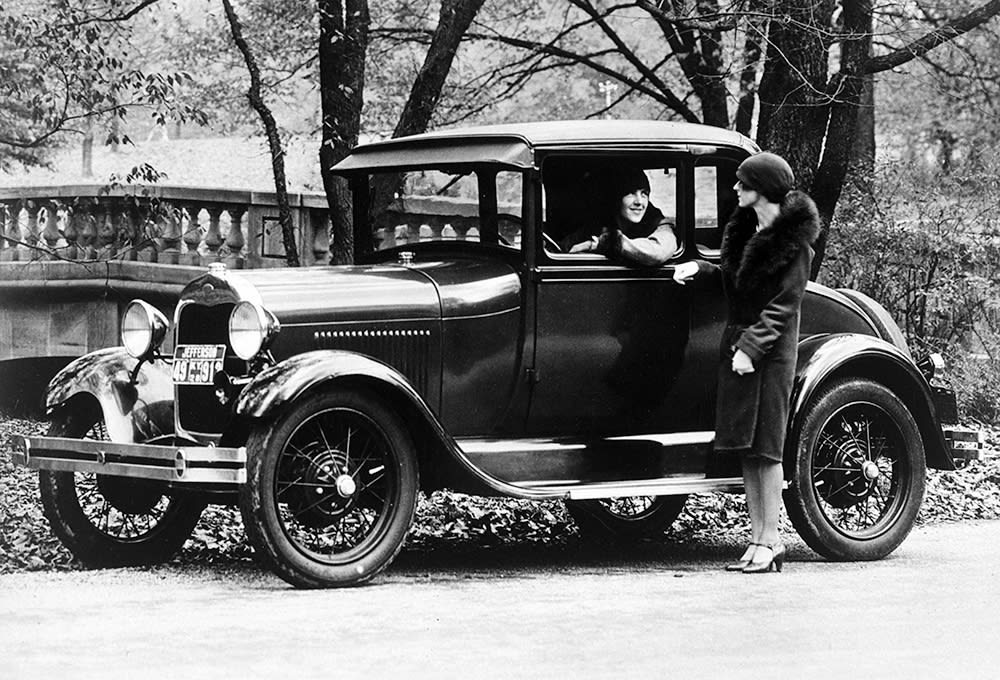
At the engineering lab’s 1924 opening, the building featured one of the largest open office spaces anywhere. That spacious environment inspired the design and development of many vehicles, including the 1928 Model A and the 1949 Ford, which sold more than one million units in its first production year.
Decommissioned in 2007, the engineering lab was later revitalized in a multi-year renovation project that resurrected features amid modernizations to lighting (including restoring the original skylights), electrical, plumbing, air quality, and other aspects. “Ninety percent of our global facilities – excluding manufacturing – will be renovated by 2027,” said Kolstad.
More From SAE Media Group
Automotive Engineering
GM and Honda to Jointly Develop Honda’s Electric Vehicles
Automotive Engineering
The Ford We Didn’t Know
Automotive Engineering
Tension and the Electric Takeover
Automotive Engineering
Zero Prototype Summit 2024: The Future Is Closer Than Ever
Automotive Engineering
Chrysler Names New Head of Product Planning
Automotive Engineering
Engineering ‘Electron Guzzlers’
Automotive Engineering
Industry Vet: Rapid Change Required to Catch up to Chinese EV Maker
Automotive Engineering
Ford Announces Changes to Senior Leadership Team
Aerospace & Defense Tech Briefs
SAE International Extends Call for Abstracts, Seeks Submissions for AeroTech Conference
Automotive Engineering
GM Creates New Executive Position to Oversee Safety Globally
Automotive Engineering
Engineers Are Re-Engineering Ford
Aerospace & Defense Tech Briefs
Industry Invited to Participate in AeroTech Aerospace and Defense Technical Program
Off-Highway Engineering
ACT Expo 2022 Roundup: Bollinger, Hyundai and Volvo Clean-Vehicle Updates
Automotive Engineering
Chinese Suppliers Shift Focus to Services as Market Growth Slows
Off-Highway Engineering
Allison Builds a Testing Powerhouse
Off-Highway Engineering
Truck OEMs Invested in Infrastructure
Automotive Engineering
Toyota Tops 2021 OEM-Supplier Relations Study
Automotive Engineering
Fiat Chrysler Names New Quality Chief
Off-Highway Engineering
Perkins Tackles Decarbonization of Off-Highway Machines
Off-Highway Engineering
John Deere Power Systems Expands Lineup, Introduces New 13.6- and 18-Liter Engines
Automotive Engineering
Diesel Darkness Won’t Go Away
Automotive Engineering
Radiated Emissions Testing Gathers Bandwidth
Automotive Engineering
Does Autonomy Have Room for the ‘Engineer Enthusiast?’
Off-Highway Engineering
Addressing Electromagnetic Compatibility in the Context of Aircraft Electrification
Automotive Engineering
A Darker Side of the Chip-Shortage Story
Automotive Engineering
Ford Announces Mulally Scholarship Program
Automotive Engineering
An Exhaust Symphony in the Key of C8
ADAS & Autonomous Vehicle Engineering
The Road to Zero Prototypes
Aerospace & Defense Tech Briefs
Boeing and NASA Unveil Lightweight, Ultra-Thin, More Aerodynamic Transonic Truss-Braced Wing Concept
Automotive Engineering
Ford Debuts New Airbag Design in 2015 Mustang
Top Stories
NewsRF & Microwave Electronics
 Microvision Aquires Luminar, Plans Relationship Restoration, Multi-industry Push
INSIDERAerospace
 A Next Generation Helmet System for Navy Pilots
INSIDERDesign
 New Raytheon and Lockheed Martin Agreements Expand Missile Defense Production
INSIDERMaterials
 How Airbus is Using w-DED to 3D Print Larger Titanium Airplane Parts
NewsPower
 Ford Announces 48-Volt Architecture for Future Electric Truck
ArticlesAR/AI

Webcasts
Electronics & Computers
 Cooling a New Generation of Aerospace and Defense Embedded...
Automotive
 Battery Abuse Testing: Pushing to Failure
Power
 A FREE Two-Day Event Dedicated to Connected Mobility
Unmanned Systems
 Quiet, Please: NVH Improvement Opportunities in the Early Design Cycle
Automotive
 Advantages of Smart Power Distribution Unit Design for Automotive &...
Energy
 Sesame Solar's Nanogrid Tech Promises Major Gains in Drone Endurance