




Automotive Engineering - December 2024

Inside this issue
Supplements
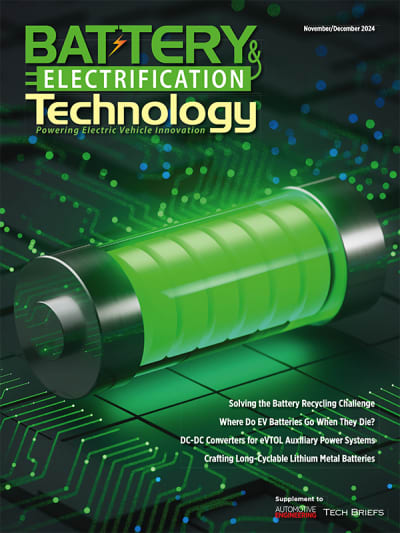
Overview
The December 2024 issue of Automotive Engineering presents a comprehensive overview of the current state and future trajectory of the automotive industry, particularly in light of recent political and economic developments. The editorial emphasizes the significance of the U.S. elections and their potential impact on vehicle emissions legislation, trade agreements, and the competitive landscape of the automotive market.
Key Highlights:
-
Political Landscape and Emissions Legislation: The editorial discusses the implications of the U.S. elections on light vehicle emissions legislation. The outcome is expected to influence California's greenhouse gas (GHG) waiver, which allows the state to set its own emissions standards. This, combined with the funding from the Inflation Reduction Act (IRA), is anticipated to accelerate the adoption of hybrid and battery electric vehicles (EVs). The response of original equipment manufacturers (OEMs) and suppliers to these changes will be crucial for their future viability in the market.
-
Trade Agreements and Market Dynamics: The upcoming renegotiation of the United States-Mexico-Canada Agreement (USMCA) in 2026 is highlighted as another critical area affected by the election results. Regardless of which political party prevails, changes to the USMCA are expected, particularly concerning U.S. value-add criteria and Mexico's role in the automotive supply chain. This shift will likely prompt suppliers and OEMs to optimize their operations in response to potential trade-driven changes.
-
Global Competitive Landscape: The issue also addresses the rising influence of China-based OEMs and the implementation of tariffs on Chinese-made EVs in the U.S., Canada, and the EU. These tariffs are expected to alter competitive dynamics significantly, potentially leading to reciprocal tariffs from China on North American and European imports. This scenario could further challenge Western OEMs, especially if their exports are hindered. The focus for Chinese manufacturers may shift towards other export markets or establishing production facilities within North America or the EU.
Battery Technology and Electrification: A notable feature of this issue is the emphasis on battery technology and the electrification of vehicles. The magazine reports on the growing presence of Chinese companies in the EV battery sector, highlighting concerns that the U.S. may fall behind in this critical area. The Battery Show, which showcased over 1,150 battery suppliers and tech companies, underscored the advancements being made in North America and Europe, while also revealing the significant involvement of Chinese firms in the electrification mission.
-
Industry Challenges and Opportunities: The editorial notes a widening gap between Chinese automakers and their global counterparts, presenting both challenges and opportunities for the industry. The need for innovation and adaptation is emphasized, as companies must navigate the complexities of a rapidly changing market landscape. The discussions around battery independence and the development of new manufacturing technologies for electrified platforms are indicative of the industry's push towards sustainable solutions.
-
Supplier Perspectives: The issue features insights from industry experts, including Michael Robinet, Executive Director of Consulting at S&P Global Mobility. His commentary reflects on the pivotal nature of 2024 for the automotive sector, suggesting that the decisions made this year will have long-lasting effects on the industry's trajectory. The focus on supplier relationships and the importance of collaboration within the automotive ecosystem are also highlighted.
-
Technological Innovations: The magazine includes articles on various technological advancements, such as new thermal management fluids for electric vehicles and innovations in advanced driver-assistance systems (ADAS). These developments are crucial for enhancing vehicle performance, safety, and efficiency in an increasingly electrified automotive landscape.
-
Market Trends and Future Outlook: The issue concludes with a forward-looking perspective on market trends, emphasizing the importance of adaptability and strategic planning for OEMs and suppliers. As the industry faces challenges from regulatory changes, competitive pressures, and technological advancements, the ability to innovate and respond to market demands will be essential for success.
In summary, the December 2024 issue of Automotive Engineering provides a thorough analysis of the automotive industry's current challenges and opportunities, driven by political, economic, and technological factors. The insights shared in this edition serve as a valuable resource for industry stakeholders seeking to navigate the complexities of a rapidly evolving market.
Features
-
Articles
18 Integrating Sensor Data: Selecting an ADAS Decision-Making Process
27 Inside the Quiet, Never-Ending Battle over Automotive Refrigerants
Regulars
-
Technology Reports
Stories
-
News
ZF CubiX Lays out One Future for Chassis Design
Driving Success with the Software-Defined Product
Volvo XC90 Line-Up Keeps Hybrid Futures Safe
Honda Unveils Solid-State Battery Demonstration Production Line
Inside Tesla's Cybercab Future
Toyota Tacoma’s Resin Seat Named SPE’s 2024 Best Automotive Plastic Innovation
-
Briefs
20 Researchers Discover a Surprising Way to Jump-Start Battery Performance
21 Researchers Unveil Scalable Graphene Technology to Revolutionize Battery Safety and Performance
22 New Battery Cathode Material Could Revolutionize EV Market and Energy Storage
23 Dormant Capacity Reserve in Lithium-Ion Batteries Detected
24 Second Life of Lithium-Ion Batteries Could Take Us to Space
-
Articles
4 DC-DC Converters for High Reliability eVTOL Auxiliary Power Systems
8 Solving the Battery Recycling Challenge
14 Where Do EV Batteries Go When They Die?
18 Crafting Safe, Long-Cyclable Lithium Metal Batteries for High Temperatures
-
Products
Top Stories
NewsRF & Microwave Electronics
 Microvision Aquires Luminar, Plans Relationship Restoration, Multi-industry Push
INSIDERAerospace
 A Next Generation Helmet System for Navy Pilots
INSIDERDesign
 New Raytheon and Lockheed Martin Agreements Expand Missile Defense Production
INSIDERMaterials
 How Airbus is Using w-DED to 3D Print Larger Titanium Airplane Parts
NewsPower
 Ford Announces 48-Volt Architecture for Future Electric Truck
ArticlesAR/AI

Webcasts
Electronics & Computers
 Cooling a New Generation of Aerospace and Defense Embedded...
Automotive
 Battery Abuse Testing: Pushing to Failure
Power
 A FREE Two-Day Event Dedicated to Connected Mobility
Unmanned Systems
 Quiet, Please: NVH Improvement Opportunities in the Early Design Cycle
Automotive
 Advantages of Smart Power Distribution Unit Design for Automotive &...
Energy
 Sesame Solar's Nanogrid Tech Promises Major Gains in Drone Endurance