




Toyota Tops 2021 OEM-Supplier Relations Study
GM and Nissan also improve on fewer late engineering changes; Ford and Stellantis scores drop.
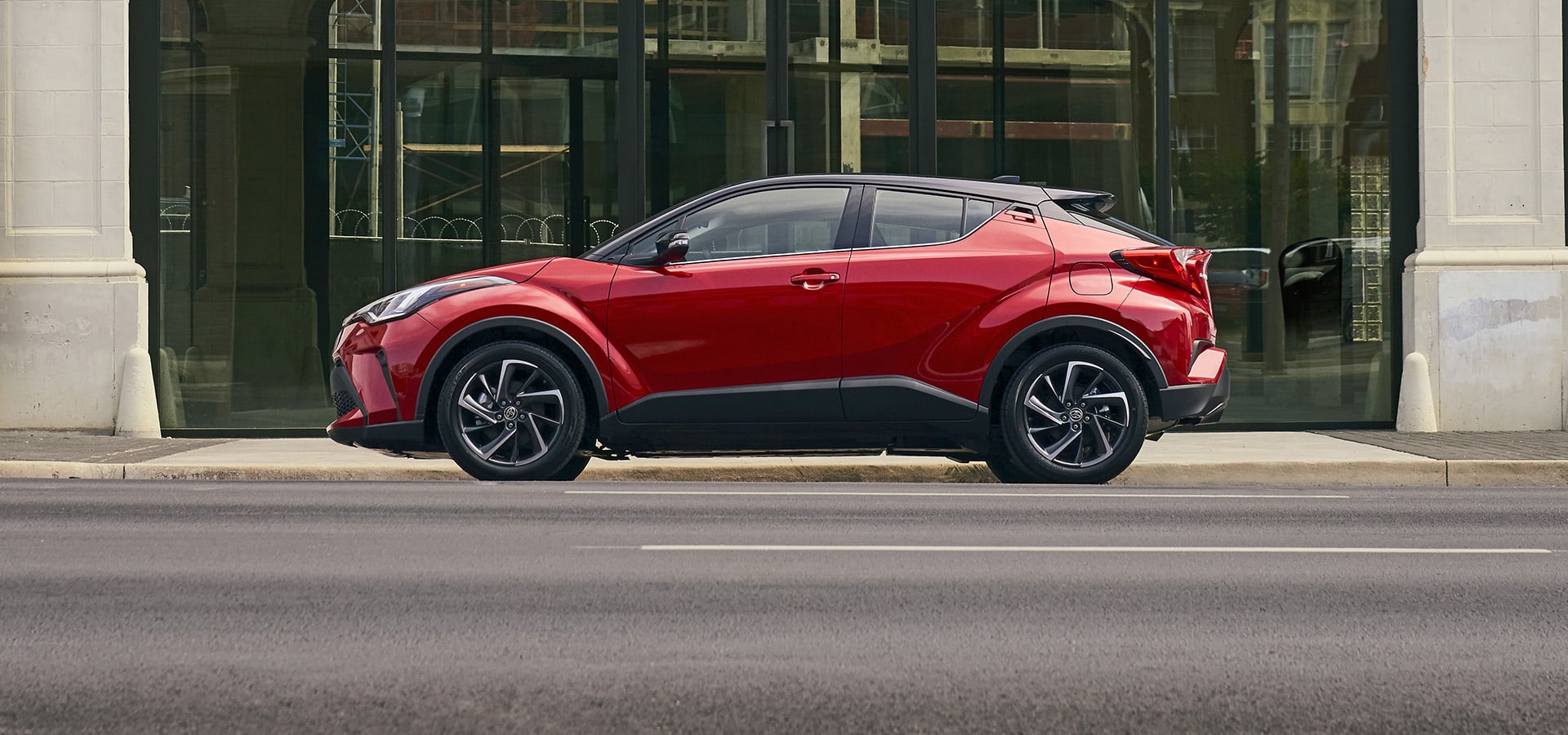
For a record eleventh-straight year, Toyota outperformed six major U.S. and Japanese automakers in a benchmark annual study of automotive OEM-supplier working relations as viewed by suppliers. “Toyota has made supplier relations the center of design, engineering and manufacturing decision-making,” said Dave Andrea, Principal in Plante Moran’s Strategy and Automotive & Mobility Consulting practice, about his firm’s 2021 North American Automotive OEM - Supplier Working Relations Index (WRI) Study.

That decision-making strategy, according to Andrea, means suppliers are involved upfront when designs and specifications are determined. “Being supplier-centric allows opportunities to engineer costs out and quality in,” he told SAE International.
Based on online responses collected from mid-February to mid-April from 841 salespersons at 503 Tier 1 companies, the survey addresses suppliers’ working relations with Stellantis (formerly Fiat Chrysler Automobiles US), Ford Motor Co., General Motors, Honda, Nissan, and Toyota. Those six OEMs account for approximately 60% of the annual buy from the Tier 1 suppliers.

Now in its 21st year, the WRI study was founded by Dr. John Henke of Planning Perspectives Inc. Plante Moran acquired it in 2019. In the 2021 study, Toyota ranked best overall for having the fewest late engineering changes. “Toyota improved on on-time product timing and cost targets, but slipped related to late changes affecting quality targets,” Andrea explained.
Toyota, Honda, GM and Nissan each gained points overall in this year’s study, while Ford and FCA US/Stellantis saw their scores drop versus the 2020 study. GM and Nissan had the largest overall point gains year-over-year.
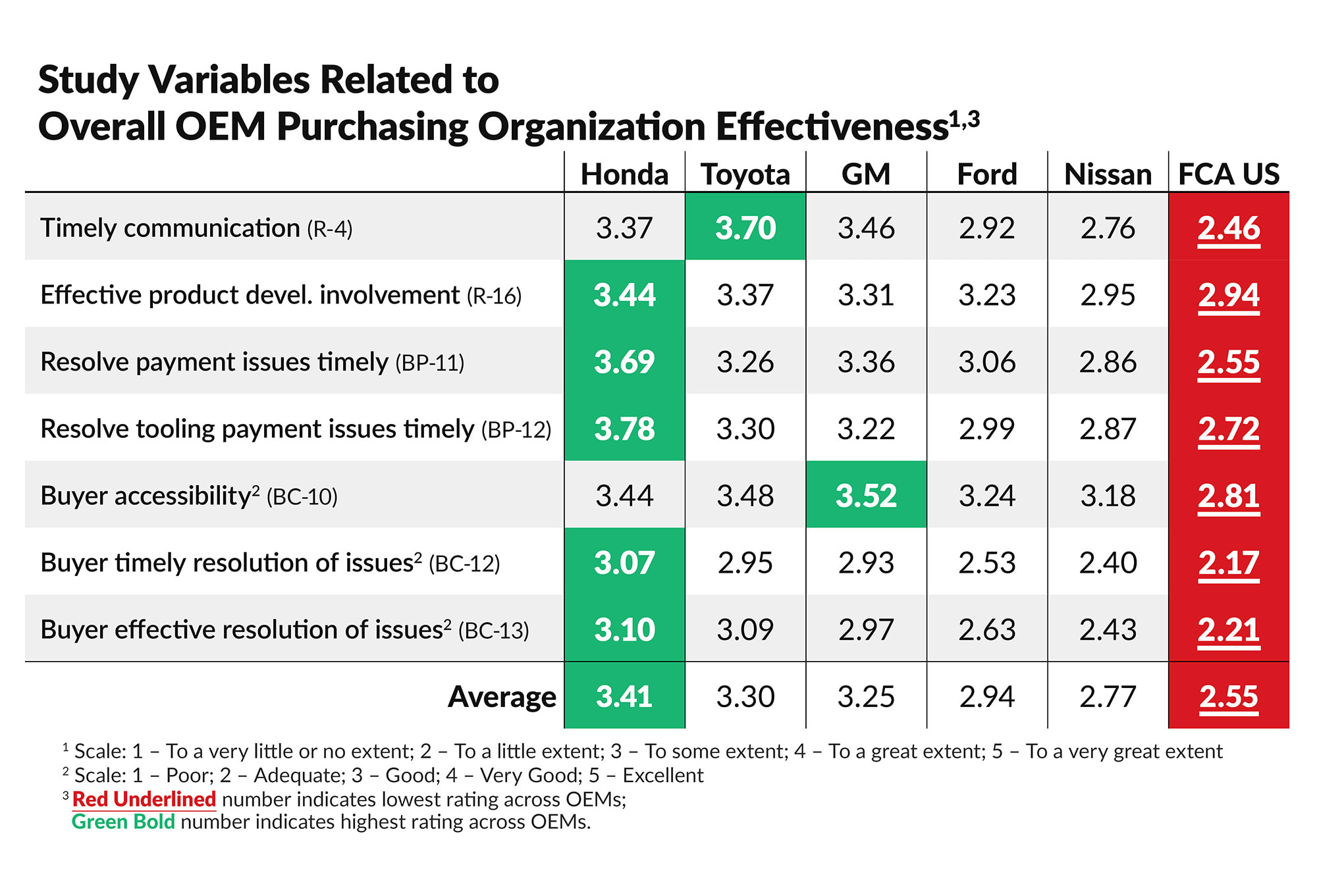
“Fewer engineering late changes and better alignment between engineering and purchasing during sourcing decisions were components of Nissan’s and GM’s higher WRI ratings,” Andrea said. FCA US/Stellantis scored the lowest overall points, and recorded the lowest points relating to timely communication, effective product development involvement and five other variables that impact overall OEM purchasing organization effectiveness.
The COVID-19 pandemic pushed a positive outcome for communicators. “Without a doubt, OEMs’ additional resources committed to communication and information-sharing showed up in improved trust, a vital driver of the WRI study,” Andrea said, noting that virtual meetings had many participants. “Rather than only the supplier’s account representative coming back with information from a meeting, engineering, manufacturing, quality and other functions required to optimize a solution were simultaneously represented,” he said.
More From SAE Media Group
Automotive Engineering
Toyota Tops 2020 OEM-Supplier Relations Study
Automotive Engineering
Japanese OEMs Tops at Involving Suppliers Early in Development Process, Says 2014 Study
Automotive Engineering
OEM Sourcing Trends Show More Program Discipline Needed
Automotive Engineering
GM Shines Brightest in Latest OEM-Supplier Relations Study
Automotive Engineering
Volvo’s Electric High-Wire Act
Automotive Engineering
Toyota Scores the Top Spot Again in 2024 OEM-Supplier Survey
Automotive Engineering
Electrification Brings Supplier Value Closer to Home
Automotive Engineering
Tenured Production CEO Leading VW’s U.S. Electrified Manufacturing Push
Automotive Engineering
Core Ford, New Ford…One Ford?
Automotive Engineering
Industry Vet: Rapid Change Required to Catch up to Chinese EV Maker
Autonomous Vehicle Engineering
Volvo Leads the Shift to ‘Driver Understanding’
Automotive Engineering
Airbus’ Connected Cabin Concept Is Materializing with First Round of Partnerships
Automotive Engineering
SAE WCX 2022: OEM Learnings from Level 2 ADAS
Automotive Engineering
Study: Information Desert Leaves Many Suppliers in EV Dust Bowl
Aerospace & Defense Tech Briefs
SAE International Extends Call for Abstracts, Seeks Submissions for AeroTech Conference
Automotive Engineering
Preview: SAE 2021 WCX
Automotive Engineering
Fiat Chrysler Names New Quality Chief
Automotive Engineering
2016 SAE Congress: Engineering Education Gets Industry Boost
Automotive Engineering
Systems-engineering a New 4x4 Benchmark
Aerospace & Defense Tech Briefs
Quality Management Experts Provide Guidance on AS9100 Standard, Equipment Calibration
Automotive Engineering
Labor Cost, OEM Complexities Pressure Suppliers
Aerospace & Defense Tech Briefs
Industry Invited to Participate in AeroTech Aerospace and Defense Technical Program
Automotive Engineering
Engineers Are Re-Engineering Ford
Automotive Engineering
Aisin Appoints New President of Plymouth, MI, Tech Center
Automotive Engineering
Innovative ‘Afreecar’ Wins SAE’s 2021 Create the Future Design Award
Automotive Engineering
Lexus Tops Consumer Reports' Reliability Survey
Battery & Electrification Technology
Advanced Electrical Architectures Demand New Developmental Strategies
Automotive Engineering
The Haters Go After Toyota
Automotive Engineering
Supplier Opportunities for 2021
Automotive Engineering
EV Confidence
Top Stories
NewsRF & Microwave Electronics
 Microvision Aquires Luminar, Plans Relationship Restoration, Multi-industry Push
INSIDERAerospace
 A Next Generation Helmet System for Navy Pilots
INSIDERDesign
 New Raytheon and Lockheed Martin Agreements Expand Missile Defense Production
INSIDERMaterials
 How Airbus is Using w-DED to 3D Print Larger Titanium Airplane Parts
NewsPower
 Ford Announces 48-Volt Architecture for Future Electric Truck
ArticlesAR/AI

Webcasts
Electronics & Computers
 Cooling a New Generation of Aerospace and Defense Embedded...
Automotive
 Battery Abuse Testing: Pushing to Failure
Power
 A FREE Two-Day Event Dedicated to Connected Mobility
Unmanned Systems
 Quiet, Please: NVH Improvement Opportunities in the Early Design Cycle
Automotive
 Advantages of Smart Power Distribution Unit Design for Automotive &...
Energy
 Sesame Solar's Nanogrid Tech Promises Major Gains in Drone Endurance