




Autonomous Navigation Kits
Defense Innovation Unit
Washington D.C.
This email address is being protected from spambots. You need JavaScript enabled to view it.
www.DIU.mil

The Department of Defense (DoD) operates a vast array of military vehicles crucial for both sustainment and combat operations. Traditionally, these vehicles have been reliant on human operators, who face natural limitations such as the need for rest, vulnerability to fatigue, and variability in training.
In an effort to leverage significant advancements in the commercial autonomous vehicle sector and reduce risk to soldiers and their missions, the U.S. Army, in collaboration with the Defense Innovation Unit, has selected three vendors to develop autonomous navigation kits for the Ground Expeditionary Autonomous Retrofit System (GEARS) project.
Falling under the Army’s Autonomous Transport Vehicle System (ATV-S) program and PEO Combat Support and Combat Service Support, this innovative prototyping initiative will retrofit 41 Palletized Load System (PLS) vehicles with autonomous kits, with the option to expand to other military vehicles in the future.
“Commercial technologies and economies of scale exist that will enable the Army to close technological gaps,” said Kyle Bruner, Project Manager for Force Projection at PEO CS&CSS, reinforcing the importance and urgency of the GEARS project. “Now is an opportune time to modernize with ATV-S in support of Multi Domain Operations in contested environments.”
The integration of cutting-edge commercial autonomous technology represents a strategic move to extend the operational reach of Army forces, while simultaneously reducing risks for soldiers operating in dangerous environments.
"Commercial industry has revolutionized autonomous vehicle technology over the past 5-10 years," said Major Will Ryan, Autonomy Project Manager at the Defense Innovation Unit. "Incorporating these sophisticated systems into military contexts not only bolsters our tactical strengths but also paves the way for innovative strategies and operational efficiencies that save lives, reduce cognitive burdens, and free up Soldiers to execute more complex missions.”
Following a rigorous down-select process, a panel of Army leaders and technical experts selected three vendors from an initial group of 51 contenders to spearhead the GEARS project prototyping phase: Carnegie Robotics, Neya Systems, and Robotic Research. Over the next year, these companies will develop and test viable prototypes during operational, safety, cyber, and other critical component evaluations, with a goal of fielding an initial fleet of 41 vehicles across operational units before moving into larger scale production.
More From SAE Media Group
Aerospace & Defense Tech Briefs
Autonomous Ground Reconnaissance Vehicles
Off-Highway Engineering
Kodiak Adapts Autonomous Tech for Military Vehicles
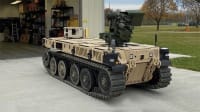
Defense INSIDER
Army Receives New Robot Combat Vehicle Prototypes
Aerospace & Defense Tech Briefs
Industry Invited to Participate in AeroTech Aerospace and Defense Technical Program

Aerospace & Defense Tech Briefs
SAE International Extends Call for Abstracts, Seeks Submissions for AeroTech Conference
Off-Highway Engineering
Autonomous Jobsites Edge Closer to Reality

Off-Highway Engineering
SAE Live: TuSimple and Penske Executives to Detail the Automated Freight Network Partnership


Aerospace & Defense Tech Briefs
Metal 3D Printer
Aerospace & Defense Tech Briefs
The CAN Bus: Driving the Future of Autonomous Military Vehicles
Aerospace & Defense Tech Briefs
Army Issues Prototyping Contracts for Common Tactical Truck Replacement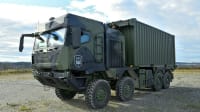
Tech Briefs
2025 Award Finalists
Tech Briefs
Compact 3D LiDAR Imaging System

Aerospace & Defense Tech Briefs
Army Common Tactical Truck
Aerospace & Defense Tech Briefs
Airfield Matting System
Tech Briefs
Army Research Laboratory
Off-Highway Engineering
Continental, Aurora Finalize Design of Scalable Autonomous Trucking System

Tech Briefs
Simulation of Autonomous Vehicles
Aerospace Manufacturing and Machining INSIDER
Army to Advance Prototype Competition for Future Electric Light Reconnaissance Vehicle
Defense INSIDER
3D-Printed Temporary Use Parts Reduce Downtime for Army Vehicles

Automotive Engineering
DATC Spells Progress for Defense Prototyping
Top Stories
INSIDERDefense
 New 3D-Printable Nanocomposite Prevents Overheating in Military Electronics
Technology ReportSoftware
 Talking SDVs and Zonal Architecture with TE Connectivity
NewsDesign
 2026 Nissan Sentra Review: Putting the Pieces Together
INSIDERDesign
 New Defense Department Program Seeks 300,000 Drones From Industry by 2027
INSIDERDefense
 Anduril Completes First Semi-Autonomous Flight of CCA Prototype
INSIDERDefense

Webcasts
Automotive
 SAE Automotive Podcast: Solid-State Batteries
Manufacturing & Prototyping
 SAE Automotive Engineering Podcast: Additive Manufacturing
Defense
 A New Approach to Manufacturing Machine Connectivity for the Air Force
Software
 Optimizing Production Processes with the Virtual Twin
Automotive
 EV and Battery Thermal Management Strategies
Aerospace
 How Packet Digital Is Scaling Domestic Drone Battery Manufacturing