




US Army, DIU Partner on Prototype Software for Autonomous Ground Vehicles

Ground warfare is fast, complex, and lethal. As the Department of Defense’s (DoD) land warfare component, the U.S. Army needs to find a way to safely conduct reconnaissance and related tasks in these environments. Substantial technical breakthroughs in robotics and self-driving vehicles are enabling the use of autonomous systems to support high-risk missions and reduce risk for combat troops in military operations.
The U.S. Army has partnered with the Defense Innovation Unit (DIU) to prototype a software as well as a process to adapt uncrewed vehicle technology to the diverse and challenging military operation environments. The Ground Vehicle Autonomous Pathways project will prototype software for the navigation of uncrewed vehicles by fusing data from multiple sensors and allow for teleoperations of unmanned ground vehicles (UGV). The project will also provide a technical pipeline to continue rapid development and deployment of autonomous features as they become commercially available.
“There has been a revolution in the techniques and capabilities of uncrewed ground vehicles occurring in the private sector over the past two decades,” said Dr. Kevin O’Brien, Technical Director for DIU’s Autonomy Portfolio. “We’re eager to bring these matured technologies back into the Department of Defense, where initial work was inspired by the DARPA Grand Challenges.”
DIU received 33 responses to the Ground Vehicle Autonomous Pathways solicitation. A panel of DoD subject matter experts facilitated a rigorous and competitive Commercial Solutions Opening (CSO) down-select process, resulting in the selection of five vendors for this effort— Applied Intuition Inc., Kodiak Robotics, Neya Systems, Robotic Research Autonomous Industries and Scale AI.
“The DIU CSO process brought new vendors, with significant development and testing experience, to raise the floor on autonomy in the DoD,” said Lieutenant Colonel Chris Orlowski, the Product Manager for the U.S. Army’s Robotic Combat Vehicle (RCV) program. “The commercial sector has invested heavily in this technology, and we are excited to see this in action by leveraging the self-driving technology that is working on American highways today.”
The integration of a software suite will enable a technical pipeline to continue rapid development and deployment of autonomous features as they become available by industry.
More From SAE Media Group
Aerospace & Defense Tech Briefs
Autonomous Ground Reconnaissance Vehicles
Aerospace & Defense Tech Briefs
Autonomous Navigation Kits

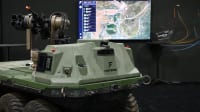
Defense INSIDER
Army Looks Toward Fully Autonomous Tactical Vehicle
Off-Highway Engineering
Kodiak Adapts Autonomous Tech for Military Vehicles
Defense INSIDER
Army Receives New Robot Combat Vehicle Prototypes
Aerospace & Defense Tech Briefs
Effectiveness of Inter-Vehicle Communications and On-Board Processing for Close Unmanned Autonomous Vehicle Flight Formations
Aerospace INSIDER
AI Algorithms Fly Uncrewed XQ-58A Valkyrie Drone for Three Hour Sortie
Aerospace & Defense Tech Briefs
XPONENTIAL 2019 – An AUVSI Experience
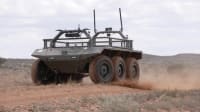
Off-Highway Engineering
Autonomous Jobsites Edge Closer to Reality
Aerospace INSIDER
Reliable Robotics to Provide Aircraft Automation Study for US Air Force
Aerospace & Defense Tech Briefs
Thailand Army Vehicle Computer System Upgrades
Tech Briefs
DARPA’s Experiment 4: RACER Heavy Platform
Automotive Engineering
Talking SDVs and Zonal Architecture with TE Connectivity
Aerospace & Defense Tech Briefs
The Role of Autonomous Unmanned Ground Vehicle Technologies in Defense Applications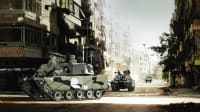
Automotive Engineering
Volvo EX90 Uses AI, NVIDIA SoC to Make Automated Driving Safer

Aerospace & Defense Tech Briefs
Aerospace & Defense Podcasts
Tech Briefs
Experiment 3: DARPA RACER Highlights
Defense INSIDER
Insect-Inspired Technology Could Extend Situational Awareness
Aerospace & Defense Tech Briefs
Army Common Tactical Truck
Aerospace INSIDER
Osprey MK III Completes First Autonomous Flight
Aerospace & Defense Tech Briefs
5 Startups Developing AI for Defense Application
Defense INSIDER
Algorithms for Autonomous Marine Vehicles
Top Stories
INSIDERManufacturing & Prototyping
 How Airbus is Using w-DED to 3D Print Larger Titanium Airplane Parts
INSIDERManned Systems
 FAA to Replace Aging Network of Ground-Based Radars
NewsTransportation
 CES 2026: Bosch is Ready to Bring AI to Your (Likely ICE-powered) Vehicle
NewsSoftware
 Accelerating Down the Road to Autonomy
EditorialDesign
 DarkSky One Wants to Make the World a Darker Place
INSIDERMaterials
 Can This Self-Healing Composite Make Airplane and Spacecraft Components Last...
Webcasts
Defense
 How Sift's Unified Observability Platform Accelerates Drone Innovation
Automotive
 E/E Architecture Redefined: Building Smarter, Safer, and Scalable...
Power
 Hydrogen Engines Are Heating Up for Heavy Duty
Electronics & Computers
 Advantages of Smart Power Distribution Unit Design for Automotive...
Unmanned Systems
 Quiet, Please: NVH Improvement Opportunities in the Early Design...
