




Google, OpenAI to Lead Development of AI Agents for Department of Defense

The Chief Digital and Artificial Intelligence Office (CDAO) announced individual contract awards — each with a $200 million ceiling — to Anthropic, Google, OpenAI and xAI to develop "agentic AI workflows" for several Department of Defense (DoD) mission areas.
The companies selected are described by CDAO as "frontier AI companies" because each of them lead industry's development of the most advanced AI models available. CDAO wants to leverage the partnerships established with frontier AI companies under the new contracts to broaden DoD use of and experience in frontier AI capabilities.
“The adoption of AI is transforming the Department’s ability to support our warfighters and maintain strategic advantage over our adversaries,” said Chief Digital and AI Officer Dr. Doug Matty. “Leveraging commercially available solutions into an integrated capabilities approach will accelerate the use of advanced AI as part of our Joint mission essential tasks in our warfighting domain as well as intelligence, business, and enterprise information systems.”
The contracts awarded to Anthropic, Google, OpenAI and xAI reflect DoD's latest efforts to invest in and leverage the use of generative AI, LLMs and AI agents for a wide variety of defense applications. Microsoft describes AI agents as taking "the power of generative AI a step further, because instead of just assisting you, agents can work alongside you or even on your behalf. Agents can do a range of things, from responding to questions to more complicated or multistep assignments. What sets them apart from a personal assistant is that they can be tailored to have a particular expertise."
Through research and development partnerships as well as industry solicitations by defense agencies such as the Defense Innovation Unit (DIU), more AI startups and companies are demonstrating to DoD what defense applications could leverage AI agents. In March for example, DIU awarded a prototype contract to Scale AI for the integration of AI agents into military operational and theater-level planning.
The prototype solution, called "Thunderforge,” will leverage LLMs, AI-driven simulations and interactive AI agent-powered wargaming. Thunderforge's overall goal is to leverage LLms and AI tools to improve how the U.S. military prepares for missions.
Scale AI is initially developing the system to be deployed with U.S. Indo-Pacific Command (INDOPACOM) and U.S. European Command (EUCOM) to support campaign development, theater-wide resource allocation, and strategic assessment, among other mission-planning activities. Thunderforge will also include Anduril’s Lattice software platform and LLMs developed by Microsoft.
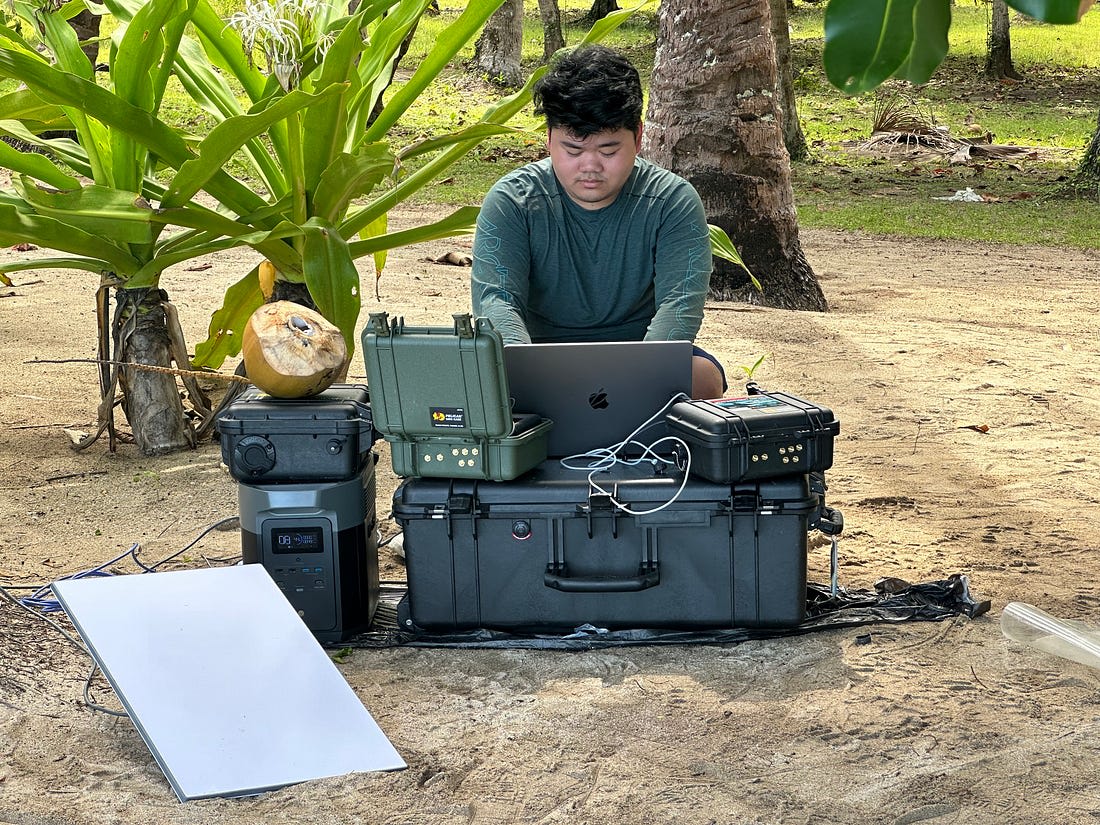
Over the last year, the U.S. 15th Marine Expeditionary Unit operating on ships throughout the South Pacific Ocean have been using a generative AI tool to analyze open-source foreign intelligence to identify and make their superiors aware of possible local threats in the region. The tool, developed by the defense technology startup Vannevar Labs , is capable of analyzing thousands of open-source foreign intelligence documents such as non-classified articles, reports, images and videos in countries where the 15h Marine Expeditionary Unit operates. Marines previously performed similar scans of open-source intelligence manually, according to an article published by MIT Technology Review about Vannevar Labs' technology.
In November 2024, DIU issued a production contract worth up to $99 million to Vannevar Labs to bring its generative AI technology to more military units. The startup wrote a blog post last year describing their experience working with several DoD units to understand specific use cases where generative AI and AI agents can be leveraged. The startup also has a team of "forward deployed engineers (FDEs)" who become embedded within specific military units to understand what type of AI and ML tools they should be developing.
In a lengthy blog post published in January, DIU further outlined their focus on partnering with leading commercial AI companies to bring LLMs, generative AI, agents and ML tools to as many areas of DoD as they can.
"This means making sure DoD’s data is available, accessible, and shareable; ensuring that the Department has access to the necessary computational resources both to train AI models on this data and deploy them to a heterogeneous set of systems; and leveraging the best of both open source and commercial software so that AI developers working on behalf of DoD can move as quickly as possible," Doug Beck, Director of DIU, wrote in their blog post.
Amid the announcement of CDAO's latest frontier AI contracts issued to Anthropic, Google, OpenAI and xAI, several of the contract winners released statements and updates about the AI tools they will be developing for DoD. Anthropic, the AI safety and research company behind the popular generative AI chatbot and LLM Claude, has already been working on defense and government versions of Claude.
“We’ve accelerated mission impact across U.S. defense workflows with partners like Palantir, where Claude is integrated into mission workflows on classified networks,” the company said in a July 14 press release . “This has enabled U.S. defense and intelligence organizations with powerful AI tools to rapidly process and analyze vast amounts of complex data.”
On the same day as CDAO announced its new frontier AI contract, xAI announced "Grok for Government," which it describes as a "suite of frontier AI products available to United States government customers." Grok is an AI chatbot that is part of the X social media platform.
"Under the umbrella of Grok For Government, we will be bringing all of our world-class AI tools to federal, local, state, and national security customers. These customers will be able to use the Grok family of products to accelerate America – from making everyday government services faster and more efficient to using AI to address unsolved problems in fundamental science and technology," the company said in a press release announcing the Grok for Government.
In addition to the new frontier contract awards, CDAO will be providing access to many of the latest generative AI models for general purposes to the following DoD units and platforms:
- Individual DoD Combatant Commands.
- Office of the Secretary of Defense, and the Joint Staff via Army’s Enterprise Large Language Model Workspace powered by Ask Sage.
- AI models embedded within DoD enterprise data and AI platforms, including Advancing Analytics (Advana) platform, Maven Smart System, and Edge Data Mesh nodes, which enable AI integration into workflows that occur within these data environments themselves.
More From SAE Media Group
Aerospace INSIDER
Air Force Launches New NIPRGPT Generative AI Tool
Aerospace & Defense Tech Briefs
USSOCOM’s New Generative AI Tool
Aerospace & Defense Tech Briefs
5 Startups Developing AI for Defense Application

Defense INSIDER
Department of Defense Establishes New Generative AI Task Force



Tech Briefs
My Opinion: How about HI?


Motion Design
The Impact of AI Across the Industrial Value Chain
Robotics & Automation INSIDER
Physical AI and Simulation Advances Accelerate Industrial Automation
Tech Briefs
Who Knows How Much AI Knows? This Tech Does

Motion Design
New Products


Tech Briefs
Executive Forum: Machine Learning & AI
Motion Design INSIDER
Physics-Aware Neural Networks Improve Camera-Based Machines
Robotics & Automation INSIDER
Humanoid Robots: The Next-Generation Robotic Workforce
Aerospace & Defense Tech Briefs
How Generative AI Wargaming Can Accelerate Mission Analysis


Robotics & Automation INSIDER
Using Generative AI to create Realistic Virtual Training Environments for Robots
Motion Design INSIDER
Teaching a Robot to Hang a T-shirt Starts with Data
Defense INSIDER
Anduril Brings AI-Powered Display to New EagleEye Army Helmets
Tech Briefs
AI Boosts Super-Resolution Microscopy

Aerospace INSIDER
Northrop Grumman to Develop Prototype Artificial Intelligence Assistant
Top Stories
NewsRF & Microwave Electronics
 Microvision Aquires Luminar, Plans Relationship Restoration, Multi-industry Push
INSIDERAerospace
 A Next Generation Helmet System for Navy Pilots
INSIDERDesign
 New Raytheon and Lockheed Martin Agreements Expand Missile Defense Production
INSIDERMaterials
 How Airbus is Using w-DED to 3D Print Larger Titanium Airplane Parts
NewsPower
 Ford Announces 48-Volt Architecture for Future Electric Truck
ArticlesAR/AI

Webcasts
Electronics & Computers
 Cooling a New Generation of Aerospace and Defense Embedded...
Automotive
 Battery Abuse Testing: Pushing to Failure
Power
 A FREE Two-Day Event Dedicated to Connected Mobility
Unmanned Systems
 Quiet, Please: NVH Improvement Opportunities in the Early Design Cycle
Automotive
 Advantages of Smart Power Distribution Unit Design for Automotive &...
Energy
 Sesame Solar's Nanogrid Tech Promises Major Gains in Drone Endurance