




How the Air Force Is Using AI to Fix Supply Chain Challenges
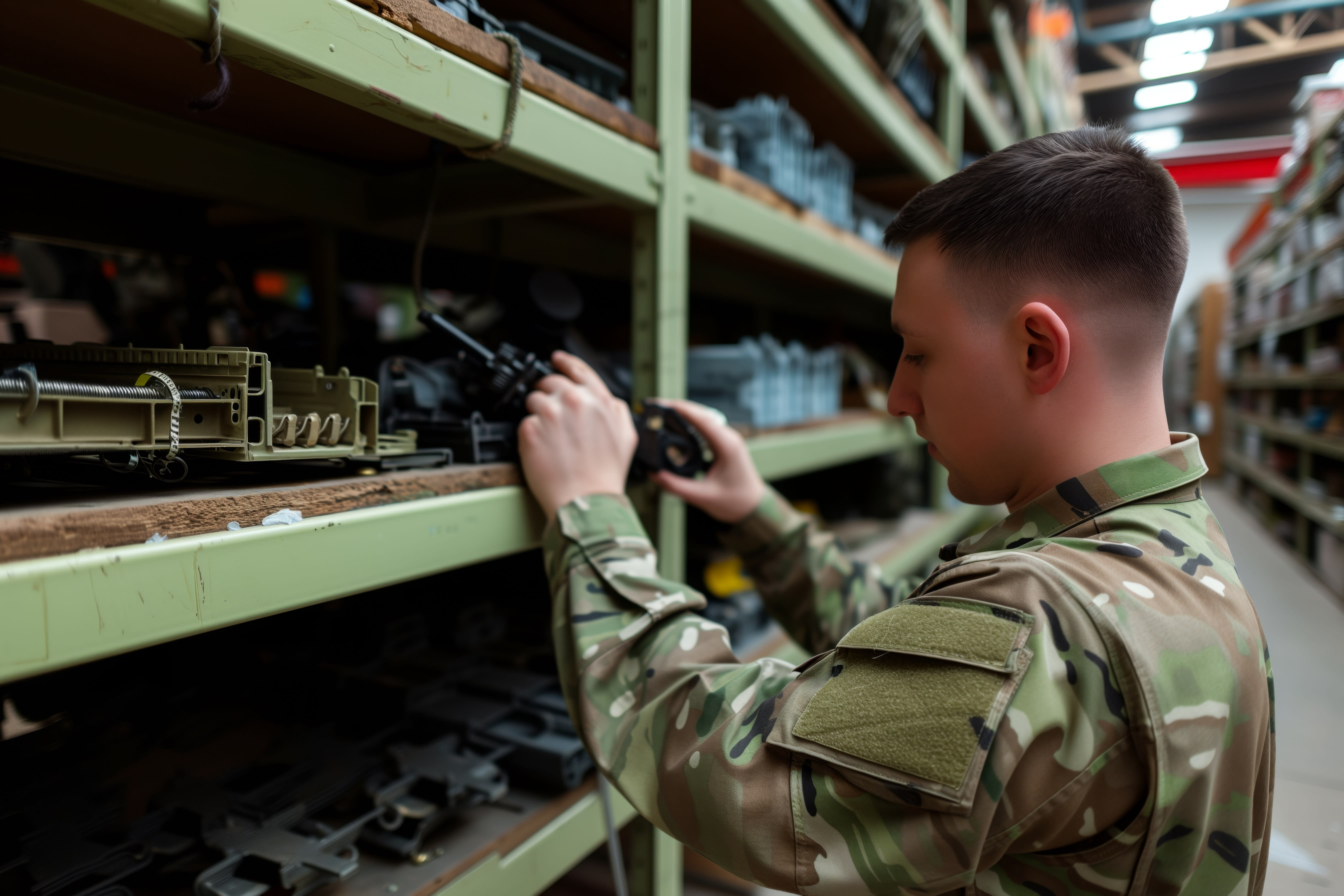
According to the U.S. Department of Defense, its Defense Logistics Agency (DLA) experienced a decline in its supplier community with a loss of 3,000 vendors , or about 22 percent of its total vendors between 2016-2022, resulting in supply delays and increased pricing. Some of the key factors that lead to that decline include clarity and understanding between different levels of the supply chain in sharing insights on lead times, parts availability, pricing, quality, and more.
In March 2024, the Air Force took a step toward addressing some of those supply chain issues by expanding its partnership with Spark Cognition Government Systems (SGS) under a contract awarded to them by the Ohio Aerospace Institute through the Digital, Research, Innovation and Experimentation (D.R.I.V.E.) Consortium. SGS is a subsidiary of SparkCognition, and describes itself as "the first artificial intelligence (AI) company devoted entirely to government and national defense."
The contract expands SGS’ partnership with the United States Air Force to deploy AI-powered solutions, in collaboration with Boeing. This aims to strengthen the Air Force’s supply chain health and create mitigation strategies for operational risks.
“Supply chain issues, like long lead times and information gaps, are undermining our military’s ability to be mission ready,” said Art Sellers, SGS President and General Manager. “With SGS’ AI-enabled solutions, actionable insights are generated to help the Air Force quickly identify and fix supply chain vulnerabilities and strengthen our national security posture.”
Sellers is the guest on this episode of the Aerospace & Defense Technology podcast to explain how the Air Force is leveraging generative AI, large language models and other new technologies to increase warfighting readiness, reduce expense, and enhance industrial-base resilience.
Subscribe to the Aerospace & Defense Technology podcast on Apple Podcasts or Spotify .
More From SAE Media Group
Podcasts
What Is Generative AI at the Edge?

Aerospace & Defense Tech Briefs
Quantifying Generative AI in Defense Applications
Aerospace INSIDER
Air Force Launches New NIPRGPT Generative AI Tool




Defense INSIDER
Department of Defense Establishes New Generative AI Task Force
Aerospace & Defense Tech Briefs
AIA Predicts Flying Air Taxis, Supersonic Air Travel, and Space Industry for 2050



Aerospace INSIDER
Northrop Grumman to Develop Prototype Artificial Intelligence Assistant




Aerospace INSIDER
Helsing Unveils New Autonomous Fighter Jet 'CA-1 Europa'


Aerospace Manufacturing and Machining INSIDER
Meeting the Demands of Defense Production and Sustainment Through Additive Manufacturing
Tech Briefs
The Future of AI for Aerospace Manufacturing
Aerospace Manufacturing and Machining INSIDER
OPINION: How Artificial Intelligence Eliminates Risk from Aerospace and Defense Quality Teams

Tech Briefs
My Opinion: How about HI?

Aerospace INSIDER
AI-Powered Radar Warning Receiver for Fourth Generation Aircraft
Top Stories
NewsRF & Microwave Electronics
 Microvision Aquires Luminar, Plans Relationship Restoration, Multi-industry Push
INSIDERAerospace
 A Next Generation Helmet System for Navy Pilots
INSIDERDesign
 New Raytheon and Lockheed Martin Agreements Expand Missile Defense Production
INSIDERMaterials
 How Airbus is Using w-DED to 3D Print Larger Titanium Airplane Parts
NewsPower
 Ford Announces 48-Volt Architecture for Future Electric Truck
ArticlesAR/AI

Webcasts
Electronics & Computers
 Cooling a New Generation of Aerospace and Defense Embedded...
Automotive
 Battery Abuse Testing: Pushing to Failure
Power
 A FREE Two-Day Event Dedicated to Connected Mobility
Unmanned Systems
 Quiet, Please: NVH Improvement Opportunities in the Early Design Cycle
Automotive
 Advantages of Smart Power Distribution Unit Design for Automotive &...
Energy
 Sesame Solar's Nanogrid Tech Promises Major Gains in Drone Endurance