




In-Memory Computing Chip Is a Processing Breakthrough for On-Device AI Applications

EnCharge AI, a California-based startup, recently launched the EnCharge EN100 artificial intelligence (AI) chip, developed with a scalable analog in-memory computing architecture.
The launch of EN100 came a year after EnCharge AI signed a partnership with the Defense Advanced Research Projects Agency (DARPA) to develop the new chip.
“EN100 represents a fundamental shift in AI computing architecture, rooted in hardware and software innovations that have been de-risked through fundamental research spanning multiple generations of silicon development," said Naveen Verma, CEO, EnCharge AI. "These innovations are now being made available as products for the industry to use, as scalable, programmable AI inference solutions that break through the energy efficiency limits of today’s digital solutions. This means advanced, secure, and personalized AI can run locally, without relying on cloud infrastructure. We hope this will radically expand what you can do with AI.”
Verma is the guest on this first episode of Season 10 of the Aerospace & Defense Technology podcast. He explains how the EN100 delivers up to 200+ TOPS of total processing power for edge computing applications, and why it represents a major breakthrough for on-device AI.
Subscribe to the Aerospace & Defense Technology podcast on Apple Podcasts or Spotify .
More From SAE Media Group



Aerospace INSIDER
The Future of Avionics: Machine-Learned and Certified
Podcasts
What Is Generative AI at the Edge?
Aerospace Manufacturing and Machining INSIDER
Army Launches CMOSS Prototyping Competition for Computer Chassis and Cards
Aerospace INSIDER
AI-Powered Radar Warning Receiver for Fourth Generation Aircraft


Photonics & Imaging Technology INSIDER
NVIDIA Includes Ethernet Photonics in New Six-Chip AI Rubin Platform
Tech Briefs
An AI Chip Runs Computations Directly in Memory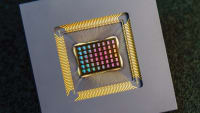


Aerospace & Defense Tech Briefs
The US Army’s New AI Supercomputer
Aerospace & Defense Tech Briefs
Evaluating Key Certification Aspects of Multicore Platforms for Safety Critical Avionics Applications

Aerospace & Defense Tech Briefs
Inside Story: The Role of the SFFs in Rugged HPEC Computing
Aerospace & Defense Tech Briefs
Artificial Intelligence and Autonomous Vehicles
Defense INSIDER
MIT Report Finds US Lead in Advanced Computing is Almost Gone

Aerospace & Defense Tech Briefs
New Products


Embedded Computing INSIDER
Neural Network Chip Can Perform Powerful Artificial-Intelligence Tasks
Electronics & Sensors INSIDER
Researchers Demonstrate Cutting-Edge Chip Technology for Ultra-Low Power AI Connected Devices
Defense INSIDER
The Army's New Supercomputer is Named After ENIAC Programmers
Top Stories
INSIDERRF & Microwave Electronics
 FAA to Replace Aging Network of Ground-Based Radars
INSIDERManned Systems
 F-22 Pilot Controls Drone With Tablet
Road ReadyTransportation
 2026 Toyota RAV4 Review: All Hybrid, All the Time
INSIDERSoftware
 Algorithms for Autonomous Marine Vehicles
INSIDERDefense
 L3Harris Starts Low Rate Production Of New F-16 Viper Shield
INSIDERMaterials
 New 3D-Printable Nanocomposite Prevents Overheating in Military Electronics
Webcasts
Energy
 Hydrogen Engines Are Heating Up for Heavy Duty
Energy
 SAE Automotive Podcast: Solid-State Batteries
Power
 SAE Automotive Engineering Podcast: Additive Manufacturing
Information Technology
 A New Approach to Manufacturing Machine Connectivity for the Air Force
Software
 Optimizing Production Processes with the Virtual Twin
