




Airbus Defence and Space Produces 2,000th Target Drone
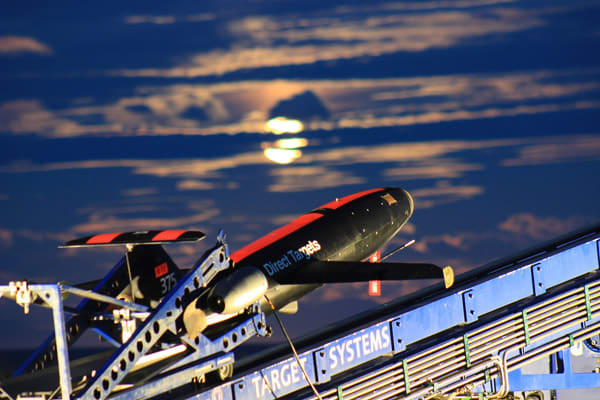
For more than 20 years, air defenders around the world have been training with Airbus Defence and Space target drones, ensuring that their countries' air defenses work when it counts. Airbus' Target Systems & Services has now produced its 2,000th drone in Friedrichshafen.
The unmanned aerial system with the serial number 2,000, a Do-DT45, will be used in a military exercise at the training ground of Airbus partner Andøya Space Defence in Norway. There, it will be launched by an Airbus team via ramp, accelerate to up to 440 knots (814 km/h) and climb to 25,000 feet (7,620 meters) depending on the requirements. In the air, the Do-DT45 can then simulate a range of threats such as: fighter jets, drones, or cruise missiles, which customers can engage with live fire. The operation does not pose any risk: Andøya Space Defence's training site is a restricted area; the remains of the target drone are disposed of properly.
"The current volatile world situation shows that a functioning air defense is more important than ever," said Frank Härtel, Head of Target Systems & Services at Airbus Defence and Space in Friedrichshafen. "In this respect, we make our contribution to a safer world out of deepest conviction: With our aerial target drones and services, air defenders can prepare themselves in case of threats and save lives."
In addition to the Do-DT45, the Target Systems & Services solution portfolio also includes the Do-DT55 (simulates anti-radar missiles), HT05 (simulates combat helicopters) and Do-DT25 (simulates fighter jets, drones, and cruise missiles). Customers are armed forces from all over the world who use the flight target display as a full service. The Target Systems & Services team brings material and personnel to the site, sets up launchers and ground control stations and gets the drones ready for take-off. The flights are planned and carried out according to the customer's requests.
Do-DT drones are not only useful as target drones. Equipped with sensors and data links, they can also be used to test the interaction of unmanned and manned aircraft for the Future Combat Air System (FCAS)or technologies for autonomous air-to-air refueling.
More From SAE Media Group
Aerospace & Defense Tech Briefs
The New Airbus Wingman Aircraft


Aerospace INSIDER
Airbus Achieves Autonomous In-Flight Control of Drone From Tanker
Aerospace & Defense Tech Briefs
Fighter Jet Armaments
Aerospace & Defense Tech Briefs
B-2 Spirit Modernization
Aerospace & Defense Tech Briefs
Electronic Warfare Weapon
Aerospace & Defense Tech Briefs
Next Generation C-UAS Missile
Aerospace & Defense Tech Briefs
F/A-18 Infrared Search and Rescue System
Defense INSIDER
Conference to Focus on Counter-Drone Technology
Aerospace INSIDER
ATHENA Sensor Brings Generational Leap to Airborne MANPAD Protection
Aerospace & Defense Tech Briefs
Advanced Airborne Defensive Laser for Incorporation on Strike Fighter Aircraft

Aerospace Manufacturing and Machining INSIDER
A New AI-Piloted VTOL Fighter Jet for Contested Environments
Aerospace INSIDER
US Marine Corps to Get MQ-9A Extended Range Unmanned Aircraft Systems
Aerospace INSIDER
Northrop Grumman Continues B-2 Spirit Modernization
Aerospace INSIDER
Barracuda: Anduril's New Software-Defined Autonomous Air Vehicles
Defense INSIDER
Patriot Missile Hits Target in Test of Upgraded ICBS Radar
Defense INSIDER
PAC-3 Missile Successfully Intercepts Cruise Missile Target
Aerospace & Defense Tech Briefs
Mobile Counter Unmanned Aircraft System

Aerospace INSIDER
GA-ASI Announces Gray Eagle 25M for Multi-Domain Operations
Aerospace & Defense Tech Briefs
Autonomous Collaborative Platform
Aerospace INSIDER
Radar and Weapons Upgrades for Netherlands Air Force MQ-9A Reapers
Aerospace & Defense Tech Briefs
Tactical Combat Missiles
Aerospace & Defense Tech Briefs
Navy Lasers, Railgun, and Hypervelocity Projectile: Background and Issues for Congress

Aerospace & Defense Tech Briefs
A400M DIRCM Upgrades
Aerospace & Defense Tech Briefs
Missile Protection System
Top Stories
INSIDERManufacturing & Prototyping
 How Airbus is Using w-DED to 3D Print Larger Titanium Airplane Parts
NewsAutomotive
 Microvision Aquires Luminar, Plans Relationship Restoration, Multi-industry Push
INSIDERAerospace
 A Next Generation Helmet System for Navy Pilots
INSIDERDesign
 New Raytheon and Lockheed Martin Agreements Expand Missile Defense Production
ArticlesAR/AI
 CES 2026: Bosch is Ready to Bring AI to Your (Likely ICE-powered) Vehicle
Road ReadyDesign

Webcasts
Semiconductors & ICs
 Advantages of Smart Power Distribution Unit Design for Automotive...
Unmanned Systems
 Quiet, Please: NVH Improvement Opportunities in the Early Design...
Electronics & Computers
 Cooling a New Generation of Aerospace and Defense Embedded...
Power
 Battery Abuse Testing: Pushing to Failure
AR/AI
 A FREE Two-Day Event Dedicated to Connected Mobility
