




Army Cross-Functional Team Tackles Modernization of Air and Missile Defense
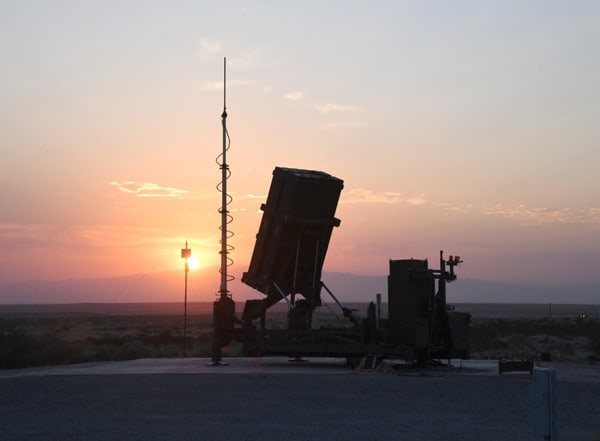
The U.S. Army Futures Command Air and Missile Defense Cross-Functional Team (AMD CFT) based in Fort Sill, Oklahoma, is coordinating and accelerating Army efforts to outpace strategic competitors who have invested heavily in indirect fire and missile capabilities. The Army's development of new air and missile defense technologies, which is the largest modernization undertaking of its kind since the Cold War, will serve to defend ground forces against air attacks, as well as protect the infrastructure of U.S. and allied forces against a host of adversary air and missile threats.
While a number of stakeholders are involved in the development, testing and eventual fielding of new air and missile defense systems, the AMD CFT’s specific focus is on strengthening the integration and synchronization of requirements and acquisition processes and resources.
The AMD CFT is currently working on multiple projects that harness leading-edge technologies to protect military personnel and resources, as well as civilian populations. These efforts include Army Integrated Air and Missile Defense (AIAMD) and its materiel solution, the Integrated Air and Missile Defense Battle Command System (IBCS); Maneuver Short-Range Air Defense (M-SHORAD); Integrated Fire Protection Capabilities (IFPC); and the Lower Tier Air and Missile Defense Sensor (LTAMDS).
AIAMD is a command-and-control program that integrates sensors, weapons and a common mission command capability across an integrated fire control network to provide a single air picture — bringing together many essential layers and systems that are currently functioning disparately. AIAMD will be enabled by the development of IBCS, a keystone system that will provide a decisive battlefield advantage through weapon and sensor integration and a common mission-command system across all domains. Once developed, IBCS will deliver integrated fires capability to the warfighter while improving battle space awareness, decision timing and protection against threats in complex integrated attack scenarios.
In December 2021, the U.S. Army’s Integrated Fires Mission Command Project Office awarded a competitive, best-value contract for the low-rate initial production and full rate production of IBCS over the next five years. The contracted organization, Northrop Grumman, will deliver up to 160 systems to support air and missile defense modernization for the Army and foreign partners. Following a full-rate production decision in FY 2023, the contract will enable the program to seamlessly ramp up production to meet fielding priorities.
M-SHORAD, which is on track to be fielded to four battalions by fiscal year 2024, is designed to provide soldiers with a more nimble, safe, survivable and durable mobile air defense system. The system expertly integrates guns, missiles, rockets and sensors onto a Stryker A1 vehicle to defend maneuvering forces against unmanned aircraft systems and rotary-wing and residual fixed-wing threats. Initial field assessments of M-SHORAD prototypes enabled by the AMD CFT and its partners have informed improvements, hardware modifications and system upgrades.
IFPC is a mobile, ground-based weapon system that is capable of defending against fixed and semi-fixed assets, subsonic cruise missiles, and unmanned aerial threats, in addition to fixed and rotary-wing aircraft. IFPC fills a crucial gap by bridging the space in between short-range and high-altitude air defense, providing the Army with additional options for sensing, targeting and destroying threats.
In September 2021, the Army announced another transaction agreement award of approximately $237 million to Dynetics for the development of 16 launchers and 60 interceptors as part of an IFPC Increment 2 Prototype. Also included in the IFPC category is the Army’s Iron Dome Defense System, an interim cruise missile defense capability. Iron Dome was tested during a live-fire exercise in June 2021 and will undergo further testing during a missile flight test scheduled to take place by the end of 2022.
LTAMDS is an expeditionary, networked radar developed to be compatible with AIAMD. It provides network sensing, interrogation and uplinking to interceptors in the lower-tier portion of the air and missile defense battlespace in support of IBCS tactical functions. The enhanced capabilities offered by LTAMDS will improve the Army’s ability to defend against complex integrated attacks and advanced electronic threats. The Army plans to begin development testing of LTAMDS prototypes at White Sands Missile Range, New Mexico, in late 2022 and is on track to achieve initial operational capability of LTAMDS by late 2023.
More From SAE Media Group
Defense INSIDER
Patriot Missile Hits Target in Test of Upgraded ICBS Radar
Aerospace & Defense Tech Briefs
Missile Defense System
Aerospace & Defense Tech Briefs
Missile Defense Battle Manager
Defense INSIDER
Army Receives First Next Generation Precision Strike Missile
Defense INSIDER
Raytheon Pairs Laser Weapon with NASAMS Air Defense System

Defense INSIDER
Conference to Focus on Counter-Drone Technology
Defense INSIDER
PAC-3 Missile Successfully Intercepts Cruise Missile Target
Aerospace & Defense Tech Briefs
S-Band Radar Systems
Aerospace INSIDER
ATHENA Sensor Brings Generational Leap to Airborne MANPAD Protection
Aerospace & Defense Tech Briefs
Next Generation C-UAS Missile
Aerospace & Defense Tech Briefs
Battle Command System
Aerospace & Defense Tech Briefs
Next Generation Air and Missile Defense Radar
Aerospace & Defense Tech Briefs
Advanced Airborne Defensive Laser for Incorporation on Strike Fighter Aircraft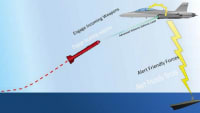


Aerospace & Defense Tech Briefs
Missile Protection System

Aerospace & Defense Tech Briefs
Integrated Short-Range Air Defense
Aerospace & Defense Tech Briefs
Aircraft Protection Systems
Aerospace & Defense Tech Briefs
H4 Palletized Laser Weapon
Aerospace & Defense Tech Briefs
Integrated Remote Weapons Systems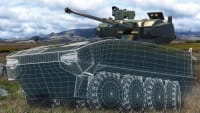
Aerospace & Defense Tech Briefs
Long-Range Anti-Ship Missile Flight Test
Aerospace INSIDER
EA-37B Compass Call: The US Air Force's New Electronic Attack Aircraft


Defense INSIDER
Navy Proves Cold-Gas Approach in Hypersonic Launch Test
Defense INSIDER
Airbus Defence and Space Produces 2,000th Target Drone
Aerospace & Defense Tech Briefs
B-2 Spirit Modernization
Top Stories
NewsRF & Microwave Electronics
 Microvision Aquires Luminar, Plans Relationship Restoration, Multi-industry Push
INSIDERAerospace
 A Next Generation Helmet System for Navy Pilots
INSIDERDesign
 New Raytheon and Lockheed Martin Agreements Expand Missile Defense Production
INSIDERMaterials
 How Airbus is Using w-DED to 3D Print Larger Titanium Airplane Parts
NewsPower
 Ford Announces 48-Volt Architecture for Future Electric Truck
ArticlesAR/AI

Webcasts
Electronics & Computers
 Cooling a New Generation of Aerospace and Defense Embedded...
Automotive
 Battery Abuse Testing: Pushing to Failure
Power
 A FREE Two-Day Event Dedicated to Connected Mobility
Unmanned Systems
 Quiet, Please: NVH Improvement Opportunities in the Early Design Cycle
Automotive
 Advantages of Smart Power Distribution Unit Design for Automotive &...
Energy
 Sesame Solar's Nanogrid Tech Promises Major Gains in Drone Endurance