




Army Receives First Next Generation Precision Strike Missile

The U.S. Army has received the first delivery of its new Precision Strike Missiles (PrSM) from Lockheed Martin following the completion of production qualification testing at White Sands Missile Range, New Mexico in November.
The PrSM is the Army’s next-generation Long Range Precision Fires weapon. Launched from M142 High Mobility Artillery Rocket Systems and M270A2 Multiple Launch Rocket Systems, it is capable of neutralizing targets at standoffs greater than 400 kilometers. The PrSM features an open-systems architecture design to accommodate future growth.
To meet the Army’s PrSM Early Operational Capability (EOC), Lockheed Martin is using digital tools such as augmented reality, ARISE™ advanced modeling and simulation, data analytics, and software factory to advance development and improve production quality and performance.
“The Precision Strike Missile will provide Joint Force commanders with a 24/7, all-weather capability that will counter the enemy’s ability to conduct combat maneuver and air defense operations,” said Doug Bush, Assistant Secretary of the Army for Acquisition, Logistics and Technology. “The rapid development and delivery of this capability is a prime example of the Army’s aggressive use of new acquisition authorities from Congress that allow us to move at much greater speed to get improved equipment to Soldiers.”
Subsequent deliveries of PrSM will continue as Lockheed Martin ramps manufacturing efforts and produces additional EOC missiles to fulfill current contracts supporting the Army’s modernization priorities.
“Thanks to the close collaboration between Army and Lockheed Martin teams, we accelerated PrSM’s development program on an aggressive schedule to deliver this next-generation missile faster than ever before,” said Jay Price, vice president of Precision Fires at Lockheed Martin Missiles and Fire Control. “We’re proud to help the Army achieve this top modernization priority for long-range deterrent capability.”
More From SAE Media Group


Defense INSIDER
Army to Test-Fire Tactical Missile System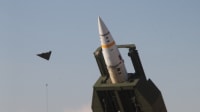



Aerospace & Defense Tech Briefs
Precision Strike Missile Increment 1 Achieves Milestone C Approval
Defense INSIDER
Army Tests Improved Multiple Launch Rocket System
Defense INSIDER
Patriot Missile Hits Target in Test of Upgraded ICBS Radar
Aerospace & Defense Tech Briefs
H4 Palletized Laser Weapon
Aerospace INSIDER
Navy Selects Lockheed Martin and Raytheon to Develop Hypersonic Missile
Defense INSIDER
PAC-3 Missile Successfully Intercepts Cruise Missile Target
Aerospace & Defense Tech Briefs
BlueHalo Completes Test of Next Generation C-UAS Missile
Defense INSIDER
Navy Proves Cold-Gas Approach in Hypersonic Launch Test
Aerospace & Defense Tech Briefs
Missile Defense System
Aerospace & Defense Tech Briefs
Tactical Combat Missiles
Aerospace INSIDER
ATHENA Sensor Brings Generational Leap to Airborne MANPAD Protection
Aerospace Manufacturing and Machining INSIDER
Northrop Grumman Is Building Poland's WISLA Engagement Operations Centers


Aerospace & Defense Tech Briefs
Next Generation C-UAS Missile
Defense INSIDER
Army Aviation Team Achieves Software Success in Live Fire Test
Aerospace & Defense Tech Briefs
Integrated Remote Weapons Systems
Defense INSIDER
Raytheon Pairs Laser Weapon with NASAMS Air Defense System

Aerospace & Defense Tech Briefs
Loitering Munition
Aerospace & Defense Tech Briefs
Aircraft Protection Systems
Tech Briefs
See Marine HIRAIN in Action
Defense INSIDER
Kauai Test Facility Launches Its Largest Missile

Top Stories
INSIDERDefense
 New Raytheon and Lockheed Martin Agreements Expand Missile Defense Production
NewsAutomotive
 Ford Announces 48-Volt Architecture for Future Electric Truck
INSIDERManufacturing & Prototyping
 Active Strake System Cuts Cruise Drag, Boosts Flight Efficiency
ArticlesTransportation
 Accelerating Down the Road to Autonomy
INSIDERMaterials
 How Airbus is Using w-DED to 3D Print Larger Titanium Airplane Parts
Road ReadyTransportation

Webcasts
Electronics & Computers
 Cooling a New Generation of Aerospace and Defense Embedded...
Power
 Battery Abuse Testing: Pushing to Failure
Connectivity
 A FREE Two-Day Event Dedicated to Connected Mobility
Automotive
 Quiet, Please: NVH Improvement Opportunities in the Early Design Cycle
Transportation
 Advantages of Smart Power Distribution Unit Design for Automotive &...
Aerospace
 Sesame Solar's Nanogrid Tech Promises Major Gains in Drone Endurance