




Long-Range Anti-Ship Missile Flight Test
Lockheed Martin
Orlando, FL
407-284-9248
www.lockheedmartin.com

The U.S. Navy in partnership with Lockheed Martin conducted a “historic” Long-Range Anti-Ship Missile (LRASM) flight test with four missiles simultaneously in flight.
During the 12th Integrated Test Event (ITE-12), the U.S. Navy was able to demonstrate the weapon’s inherent high-end lethality from mission planning through kill chain integration and its effects on the target. All mission objectives were met, reinforcing high confidence in the weapon’s capabilities and superior firepower.
“We have continued to invest in the design and development of LRASM’s anti-surface warfare capabilities to ensure that warfighters have the 21st century security solutions they need to complete their missions and come home safely,” said Lisbeth Vogelpohl, LRASM Program Director at Lockheed Martin Missiles and Fire Control. “This event was a testament to our commitment to deliver reliable products that work each and every time, ensuring those who serve stay ahead of ready.”
The Navy describes LRASM as a defined near-term solution for the Offensive Anti-Surface Warfare (OASuW) air-launch capability gap that will provide flexible, long-range, advanced, anti-surface capability against high-threat maritime targets.
The weapon reduces dependency on intelligence, surveillance and reconnaissance (ISR) platforms, network links, and GPS navigation in electronic warfare environments. Semi-autonomous guidance algorithms will allow it to use less-precise target cueing data to pinpoint specific targets in the contested domain.
ITE-12 was the next ‘big-step’ in LRASM’s evolution. The successful test was a graduation exercise for the missiles’ latest configuration and lays the foundation for increased capabilities to come.
As a member of the AGM-158 family of cruise missiles, LRASM delivers long-range, highly survivable and lethal capability against highly defended surface combatants.
Visit Here
More From SAE Media Group
Aerospace & Defense Tech Briefs
Advanced Airborne Defensive Laser for Incorporation on Strike Fighter Aircraft
Aerospace & Defense Tech Briefs
Electronic Warfare Weapon
Aerospace & Defense Tech Briefs
Fighter Jet Armaments
Aerospace & Defense Tech Briefs
B-2 Spirit Modernization
Aerospace & Defense Tech Briefs
Northrop Grumman Will Fit Its Scramjet Combustors to Raytheon’s Hypersonic Missile
Aerospace & Defense Tech Briefs
Next Generation C-UAS Missile
Aerospace & Defense Tech Briefs
Electronic Warfare Combat Training Pod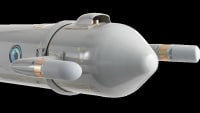
Aerospace & Defense Tech Briefs
Report on Human Factors Issues Likely to Affect Air-Launched Effects
Aerospace & Defense Tech Briefs
AIM-120D-3 Air-to-Air Missile
Aerospace & Defense Tech Briefs
F/A-18 Infrared Search and Rescue System
Aerospace & Defense Tech Briefs
Integrated Short-Range Air Defense
Aerospace & Defense Tech Briefs
Optical Seeker for Munitions Systems
Aerospace & Defense Tech Briefs
Electronic Warfare System
Aerospace & Defense Tech Briefs
Autonomous Air Defense Production
Aerospace & Defense Tech Briefs
Missile Protection System
Aerospace & Defense Tech Briefs
Battle Command System
Aerospace INSIDER
Navy Selects Lockheed Martin and Raytheon to Develop Hypersonic Missile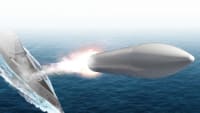
Aerospace & Defense Tech Briefs
Navy Lasers, Railgun, and Hypervelocity Projectile: Background and Issues for Congress
Aerospace & Defense Tech Briefs
Ministry of Defense of Qatar Orders 28 NHIndustries NH90 Multirole Military Helicopters
Aerospace INSIDER
Northrop Grumman Continues B-2 Spirit Modernization
Aerospace & Defense Tech Briefs
Lockheed Martin Announces Latest Hypersonic Progress at Le Bourget
Aerospace & Defense Tech Briefs
Game-Based Naval Training
Aerospace & Defense Tech Briefs
Loitering Munition
Aerospace & Defense Tech Briefs
Northrop Grumman Acquires Orbital ATK, Adds Solid Rocket Motors to Space Portfolio
Aerospace & Defense Tech Briefs
Reconfigurable Integrated-Weapons Platform
Aerospace & Defense Tech Briefs
Raytheon, DARPA Push Forward with Hypersonic Weapon Design
Aerospace & Defense Tech Briefs
Surface to Surface Missile
Aerospace & Defense Tech Briefs
Loitering Munitions Systems
Aerospace INSIDER
ATHENA Sensor Brings Generational Leap to Airborne MANPAD Protection
Aerospace & Defense Tech Briefs
Loitering Precision Strike Missile
Top Stories
INSIDERManufacturing & Prototyping
 How Airbus is Using w-DED to 3D Print Larger Titanium Airplane Parts
INSIDERManned Systems
 FAA to Replace Aging Network of Ground-Based Radars
NewsTransportation
 CES 2026: Bosch is Ready to Bring AI to Your (Likely ICE-powered) Vehicle
NewsSoftware
 Accelerating Down the Road to Autonomy
EditorialDesign
 DarkSky One Wants to Make the World a Darker Place
INSIDERMaterials
 Can This Self-Healing Composite Make Airplane and Spacecraft Components Last...
Webcasts
Defense
 How Sift's Unified Observability Platform Accelerates Drone Innovation
Automotive
 E/E Architecture Redefined: Building Smarter, Safer, and Scalable...
Power
 Hydrogen Engines Are Heating Up for Heavy Duty
Electronics & Computers
 Advantages of Smart Power Distribution Unit Design for Automotive...
Unmanned Systems
 Quiet, Please: NVH Improvement Opportunities in the Early Design...
