




Automotive Engineering - September 2014
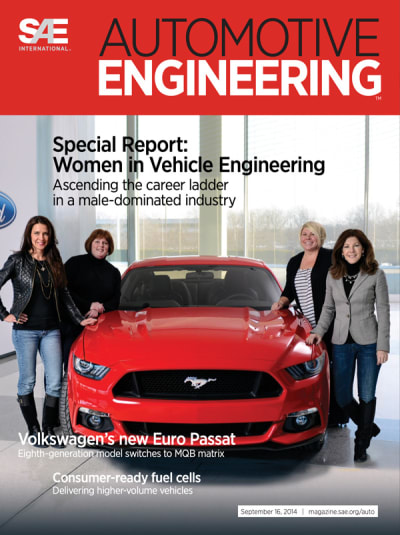
Inside this issue
Overview
The September 2014 issue of Automotive Engineering presents a comprehensive overview of current trends and advancements in the automotive industry, focusing on technology, diversity, and innovation.
Key Highlights:
-
Emerging Technologies: The issue opens with a technology report on the use of time-of-flight cameras, which are being developed to detect driver gestures. This technology is a significant step towards enhancing vehicle autonomy, allowing for more intuitive interactions between drivers and their vehicles.
-
Materials Innovation: A special feature discusses the development of bimetal brake drums, which improve heat dissipation and reduce weight. This innovation is crucial for enhancing vehicle performance and efficiency, addressing the industry's ongoing challenge of balancing safety and fuel economy.
-
Women in Engineering: A prominent article titled "Women in Vehicle Engineering" explores the progress women have made in the traditionally male-dominated field of automotive engineering. The article highlights the achievements of female engineers who have risen to significant positions, including chief engineers and vice presidents. Despite these advancements, the article raises questions about the persistent gender gap in the industry and discusses the factors contributing to the underrepresentation of women in engineering roles.
-
Fuel Cell Technology: The issue also features an energy report on the rising interest in fuel cells among automakers. As companies prepare for 2015 and beyond, the industry is responding to the challenge of producing higher volumes of consumer-ready fuel cell vehicles. This shift reflects a broader trend towards sustainable energy solutions in the automotive sector.
Global Vehicles: The magazine provides insights into Volkswagen's new Euro Passat, which has transitioned to the MQB (Modular Transverse Matrix) platform. This change allows for greater flexibility in manufacturing and design, enabling Volkswagen to streamline production while offering a range of models that cater to diverse consumer needs.
-
Industry Resources: The issue includes a section dedicated to SAE International resources, such as the 2014 Mobility Engineers’ Professional Salary Survey, which provides valuable data on compensation trends in the engineering field. This resource is particularly beneficial for professionals seeking to benchmark their salaries and understand industry standards.
-
Upcoming Events and Publications: The magazine outlines upcoming publications and events, including newsletters focused on emerging trends in lightweighting technology and powertrain technology. These resources aim to keep industry professionals informed about the latest developments and innovations.
-
Editorial Insights: The editorial section, led by Thomas J. Drozda and Kevin Jost, emphasizes the importance of staying updated with industry trends and the role of SAE International in providing members with access to the latest content and career tools. The editorial team encourages readers to engage with the resources available to them through SAE membership.
-
Diversity and Inclusion: The issue underscores the importance of diversity in engineering, not only as a matter of equity but also as a driver of innovation. By fostering an inclusive environment, the automotive industry can benefit from a wider range of perspectives and ideas, ultimately leading to better products and solutions.
-
Conclusion: Overall, the September 2014 issue of Automotive Engineering serves as a vital resource for professionals in the automotive industry. It highlights significant technological advancements, addresses critical issues related to diversity and inclusion, and provides insights into the future of automotive engineering. As the industry continues to evolve, staying informed about these trends will be essential for engineers, manufacturers, and stakeholders alike.
This issue encapsulates the dynamic nature of the automotive sector, showcasing how innovation, diversity, and sustainability are shaping the future of vehicle engineering.
Features
Regulars
-
Global Vehicles
-
Technology Reports
Time-Of-Flight Cameras Detect Driver’s Gestures, Aid in Autonomy
-
Product Briefs
Closed-Cell Silicone Sponge Sheeting
Visteon First with Wireless Device Charger Compatible with Multiple Standards (Video)
New E-Motor for DCT Use Has No Rare-Earth Metals
Stories
-
News
Testing Audi’s New E-Booster Reveals Turbocharging's Future
Air Catcher Headlamp Feeds 2015 Challenger SRT's Hellcat V8
Kia Announces New Interior Features for 3rd-Gen Sorento
JLR Sheds Light on R&D Projects in Advanced HMI, Automated Driving
From Road to Racecar: A Five-Door, Front-Wheel-Drive SEAT
Honda's New 8-Speed DCT Uses a Torque Converter
Formulating a Winning Motor Oil
Sportier TLX All About Proportion and Performance
Chrysler Creates Vehicle-Safety Unit
Johnson Controls Opens Crash Test Facility for Seat Safety
New Materials for Power Electronics Key in Lowering Cost of Plug-Ins
Brothers Win Eaton's Top Innovation Awards for Advanced Technologies
The Science of Eliminating EV “Whine Cellars”
New Axial-Piston Engine Aimed at Range Extenders, Military Applications
SAE Releases Mobility Engineering Professional Salary Study
NHTSA Seeks Answers as It Plans to Mandate V2V Technologies
New Continental Unit to Focus on ITS
Inside Continental's New Aluminum Turbocharger
Powertrain Sensors Add Functions, Help Reduce Wiring
Semiconductor Maker Infineon Buys Rival International Rectifier
SAE Eye on Engineering Quick Take: Telsa Model S Troubles
Several World Firsts Highlight Volvo XC90 (Video)
Bosch Adding Engineers, Expanding Tech Center
New SAE International Standards Enhance Ambulance Safety
Trimming Wiring Harnesses Becomes Design Focus
J.D. Power Loud and Clear About Voice Recognition Technology's Flaws
Driver Still Has a Seat in Delphi's Automated-Driving Vision
Researching the Green Zone of Plug-In Hybrid Electric Driving
Google, Apple Join Battle for Infotainment Management
VW Deploys MQB Strategy on New Golf and GTI amid Launch Issues
Top Stories
INSIDERManufacturing & Prototyping
 How Airbus is Using w-DED to 3D Print Larger Titanium Airplane Parts
INSIDERManned Systems
 FAA to Replace Aging Network of Ground-Based Radars
NewsTransportation
 CES 2026: Bosch is Ready to Bring AI to Your (Likely ICE-powered) Vehicle
NewsSoftware
 Accelerating Down the Road to Autonomy
EditorialDesign
 DarkSky One Wants to Make the World a Darker Place
INSIDERMaterials
 Can This Self-Healing Composite Make Airplane and Spacecraft Components Last...
Webcasts
Defense
 How Sift's Unified Observability Platform Accelerates Drone Innovation
Automotive
 E/E Architecture Redefined: Building Smarter, Safer, and Scalable...
Power
 Hydrogen Engines Are Heating Up for Heavy Duty
Electronics & Computers
 Advantages of Smart Power Distribution Unit Design for Automotive...
Unmanned Systems
 Quiet, Please: NVH Improvement Opportunities in the Early Design...
