




New SAE International Standards Enhance Ambulance Safety

With the recent publishing of four technical reports, SAE International now offers a series of recommended practices designed to enhance overall ambulance safety in several areas, including patient compartments and occupant restraint. The four newly published recommended practices include:

- “J3026–Ambulance Patient Compartment Seating Integrity and Occupant Restraint”—This SAE Recommended Practice describes the testing procedures that may be used to evaluate the integrity of ground ambulance-based occupant seating and occupant restraint systems for workers and civilians transported in the patient compartment of an ambulance when exposed to frontal or side impact.
- “J3027–Ambulance Litter Integrity, Retention, and Patient Restraint”—This SAE Recommended Practice describes the testing procedures required to evaluate the integrity of a ground ambulance-based patient litter, litter retention system, and patient restraint when exposed to a frontal or side impact.
- “J3043–Ambulance Equipment Mount Device or Systems”—This SAE Recommended Practice describes the dynamic and static testing procedures required to evaluate the integrity of an equipment mount device or system when exposed to a frontal or side impact.
- “J3044–Occupant Restraint and Equipment Mounting Integrity—Rear Impact System-Level Ambulance Patient Compartment”—This SAE Recommended Practice describes the test procedures for conducting rear impact occupant restraint and equipment mounting integrity tests for ambulance patient compartment applications.
Steve Spata, Technical Services Manager with NTEA, contributed to the new documents. “We are extremely pleased to be able to work with SAE International to create a home for this family of test methods," he said. "These cutting-edge product validations represent the work of a multi-year government-industry partnership to improve the safety of ambulances and save the lives of our nation’s EMS workers and their patients."
Jim Green, who works in the Division of Safety Research for the National Institute for Occupational Safety and Health and also contributed to the documents, echoed the importance of safety: "The development of this family of SAE Recommended Practices exemplifies the value of industry and government combining resources and talent with a singular goal in mind; to improve worker and patient safety in a cost-efficient and timely manner. By publishing through SAE and the Truck Crashworthiness Committee, we tapped into decades of experience that both improved these documents and strategically placed them in a forum that can be easily accessed worldwide."
These recommended practices join two existing ones:
- “J2917–Occupant Restraint and Equipment Mounting Integrity—Frontal Impact System-Level Ambulance Patient Compartment”
- “J2956–Occupant Restraint and Equipment Mounting Integrity—Side Impact System-Level Ambulance Patient Compartment.”
All six recommended practices were developed and issued by SAE International’s Truck Crashworthiness Committee in conjunction with NIOSH and the Ambulance Manufacturers Division (AMD) of the NTEA.
More From SAE Media Group
Medical Design Briefs
Four Critical Challenges of Prehospital Infusion
Medical Design Briefs INSIDER
Consortium to Advance Digital Twins in Healthcare
Podcasts
Human Factors in Drug Delivery
Medical Design Briefs
Improving Quality of Life Through Medical Advancements

Tech Briefs
Microneedle Technology Leads to Painless Tattoos
Medical Design Briefs
Active Implantables: Put Design at the Heart of the Process
Tech Briefs
Smart Bandage Aims to Facilitate Recovery
Motion Design INSIDER
Eldercare Robot Helps People Sit and Stand, and Catches Them If They Fall
Medical Design Briefs
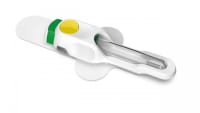
Hybrid Mask Allows ENT Doctors to See More Patients
Medical Design Briefs
Producing a Magic Wand for Pain-Free Dental Treatments

Medical Design Briefs
How Nature Inspires the Future of Health
Medical Design Briefs
Show Preview: Evolving to MedDev 2021
NASA Spinoff
NASA’s VITAL Contribution to Global Pandemic Relief
Medical Design Briefs
MD&M East: 2019 MDEA Winners Announced
Medical Design Briefs
Technology Responds Swiftly to Worldwide Pandemics
Tech Briefs
Virginia Tech College of Engineering
Tech Briefs
More Powerful RNA Vaccines
Medical Design Briefs
The Journey Toward Intelligent Catheters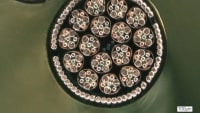
Medical Design Briefs
From the Editor: Rebuilding Trust in Medical Devices
Medical Design Briefs
Device Strengthens Rotator Cuff Repair
Tech Briefs
2024 Award Finalists
Medical Design Briefs
Creating Robust Reprocessing Instructions for Reusable Device IFUs

Aerospace & Defense Tech Briefs
SAE International Extends Call for Abstracts, Seeks Submissions for AeroTech Conference
Medical Design Briefs
Making a Great Cardio Product Even Better: The Next-Generation Zio Heart Patch
Medical Design Briefs
Improving Cancer Screening by Design
Top Stories
INSIDERManufacturing & Prototyping
 How Airbus is Using w-DED to 3D Print Larger Titanium Airplane Parts
INSIDERManned Systems
 FAA to Replace Aging Network of Ground-Based Radars
NewsTransportation
 CES 2026: Bosch is Ready to Bring AI to Your (Likely ICE-powered) Vehicle
NewsSoftware
 Accelerating Down the Road to Autonomy
EditorialDesign
 DarkSky One Wants to Make the World a Darker Place
INSIDERMaterials
 Can This Self-Healing Composite Make Airplane and Spacecraft Components Last...
Webcasts
Defense
 How Sift's Unified Observability Platform Accelerates Drone Innovation
Automotive
 E/E Architecture Redefined: Building Smarter, Safer, and Scalable...
Power
 Hydrogen Engines Are Heating Up for Heavy Duty
Electronics & Computers
 Advantages of Smart Power Distribution Unit Design for Automotive...
Unmanned Systems
 Quiet, Please: NVH Improvement Opportunities in the Early Design...
