




Fuel Cells on the Upswing
As those automakers with active fuel-cell programs look to 2015 and beyond, the industry is responding to the challenge of delivering higher volumes of consumer-ready vehicles.
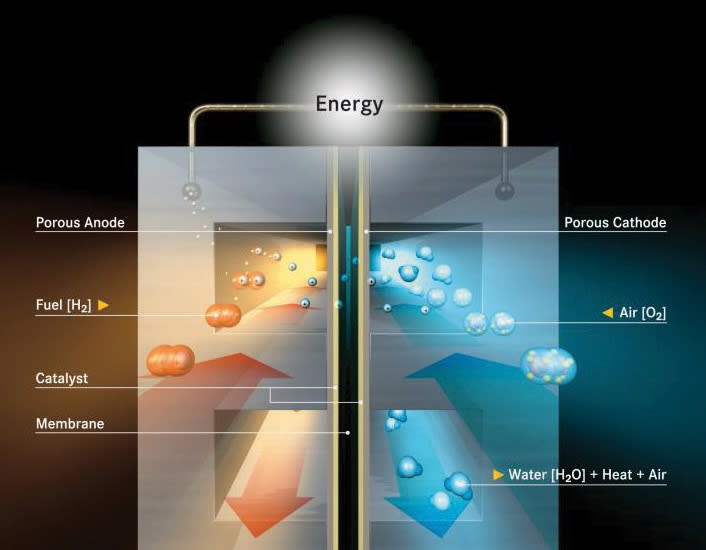
2015 could be at the start of something bigger for hydrogen fuel cell electric vehicles (FCEVs). Hyundai recently announced the arrival for lease of a fleet of Tucson FCEVs for the southern California market, leasing them for $499 a month and including free hydrogen fuel fill-ups in the deal. Toyota released some surprising details about its hydrogen fuel-cell sedan, which it plans to launch in 2015 in various markets around the world. Others are to follow, including Daimler and Honda.
With regulatory requirements for zero emissions vehicles (ZEVs) kicking in soon, automakers are looking to the FCEV as a no-compromise solution that doesn’t rely on fossil fuels. Powered by hydrogen, their only tailpipe emission is pure water vapor. Unlike battery-electric vehicles, they refuel within a few minutes and offer a driving range similar to today’s conventionally powered cars.
But big challenges remain, both with FCEVs and, more importantly, the refueling infrastructure. With few hydrogen stations available, it was impossible to field FCEVs in quantities beyond a few hundred. What makes the year 2015 special is the imminent construction of networks of new hydrogen stations in California, Japan, Korea, and Germany.
Real cars, real people
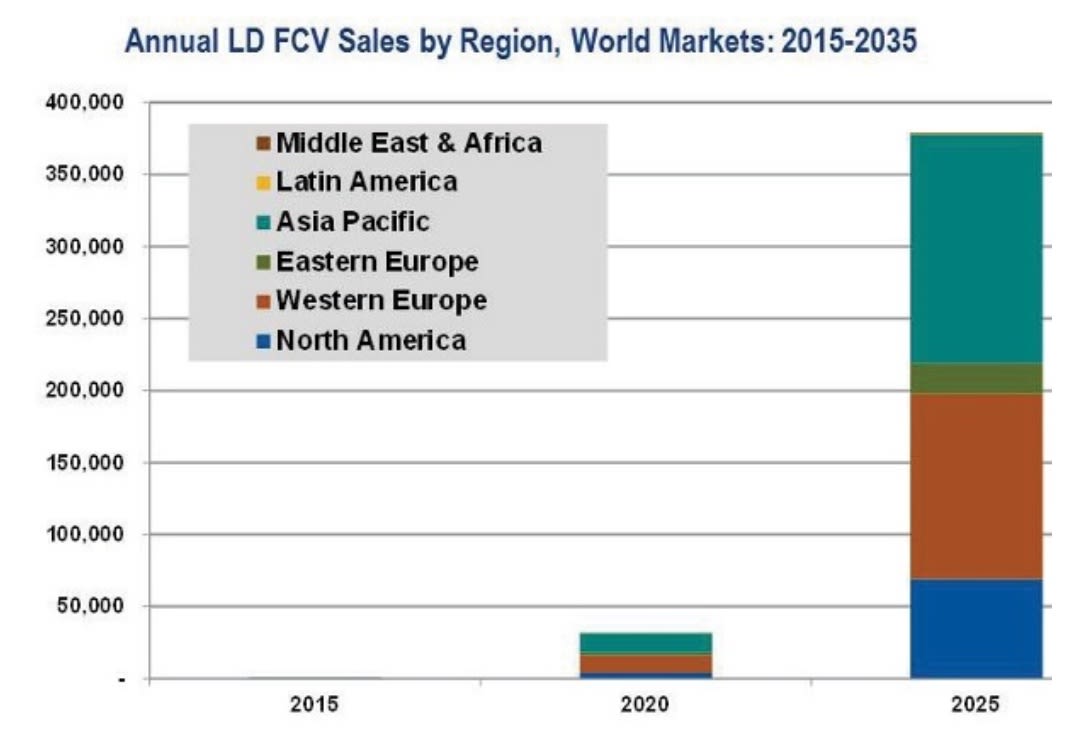
With the introduction of more refueling stations, the era of the prototype FCEV is over. “[For example], the California program is clearly designed to put cars in the hands of real consumers, not through a test fleet. They want people to use it as a normal car, without constraints,” explained Lisa Jerram, an industry analyst with Navigant Consulting.
That means durable, reliable cars built and sold at an affordable price. Mass-volume production using proven technology is the formula for low prices. However, mass production has not yet arrived. Even tens of thousands of vehicles — a figure that seems feasible within a few years — hardly qualifies for automotive-grade mass production.
“Up to now, with small demo fleets, OEMs cannot take advantage of a low-cost supply chain, and some fuel cell components have had to be built in-house,” explained Jerram. She pointed to the recent trend of OEMs forming partnerships as a way to tame costs, citing ones involving Daimler, Ford, and Nissan; General Motors and Honda; and BMW and Toyota (to develop the fuel cell stack and system, as well as the hydrogen tank).
“OEMs are likely to use these relationships in part so that they can maximize the component orders and try to lower costs,” she said.
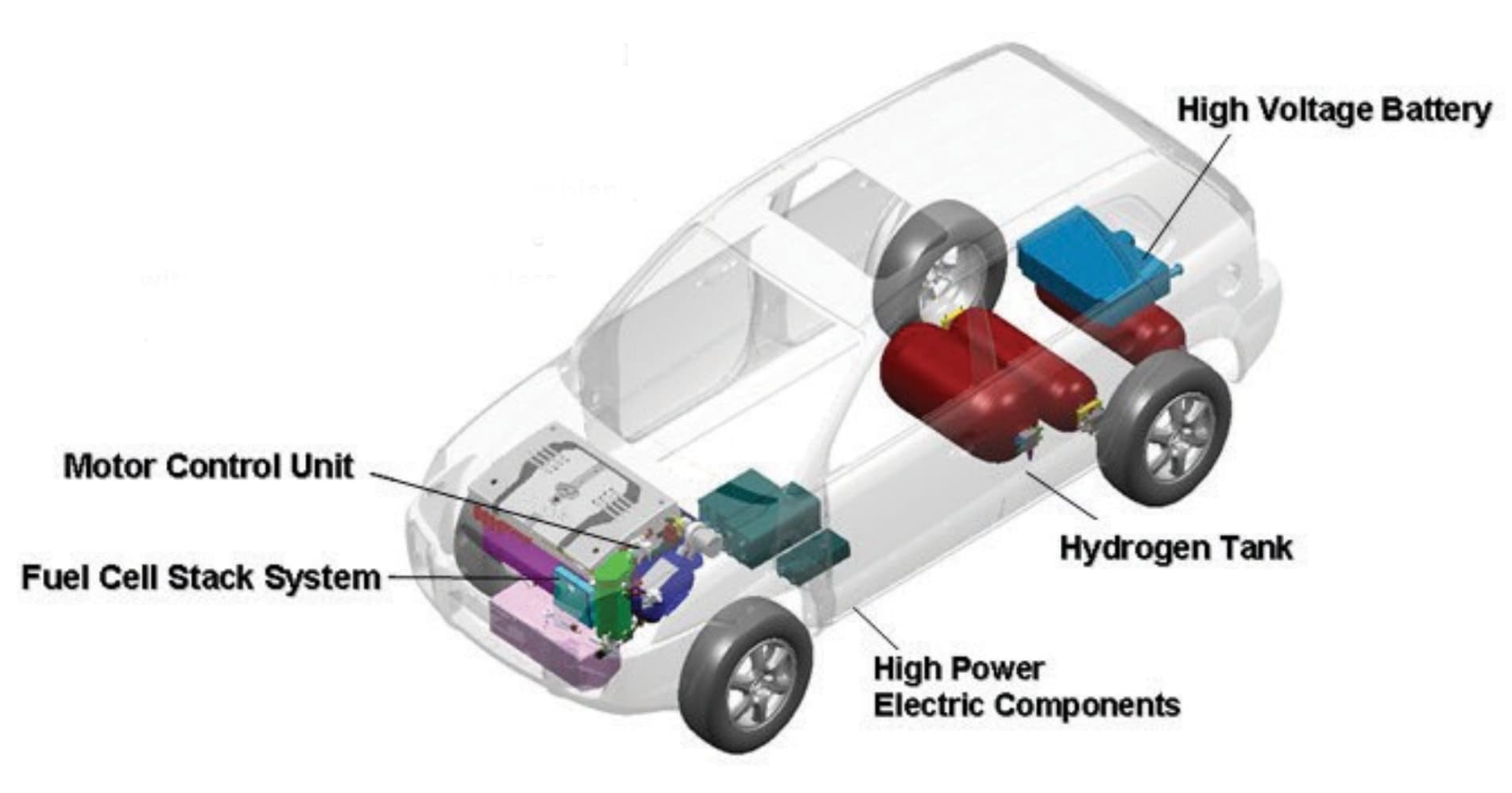
Toyota announced recently some specifications about the FCEV it plans to launch in 2015, making it clearly consumer-ready. Justin Ward, General Manager, Powertrain System Control Department, Toyota North America, in August revealed more details about the car at the Center for Automotive Research’s Management Briefing Seminars in Traverse City, MI.
A key element of cost was improved by re-using a high-voltage power motor as a carryover from the Toyota Hybrid System, replacing the low-voltage motor used in previous Toyota FCEVs. This posed a problem: The existing fuel-cell stack design was low-voltage to keep its size small (a small stack means low voltage, and vice versa). The problem was matching a low-voltage source with a high-voltage motor. Engineers found the solution by inventing a dc-dc converter to boost the voltage to the motor.
“We learned we could be more aggressive with the operating control, utilizing our experience from our hybrid engineering,” Ward said.
Suppliers and partnerships
Ward offered words of caution in engaging suppliers needed for the new world of consumer FCEVs. He provided his insight as it relates to onboard hydrogen storage, which was once a serious issue. But new 70-MPa tanks on the just-announced Toyota FCEV store 20% more than Toyota’s previous fuel cell car, he said. They also store hydrogen 5.7% more efficiently, measured as a ratio of hydrogen and tank mass.
“We reached out to many different tank suppliers,” said Ward. “Costs were much higher than we would like on a production vehicle, with lots of variability from batch to batch. It was very strange for us to see so much variability.”
Reaching back to Toyota’s roots as a loom manufacturer, Toyota created its own process to produce carbon-fiber-reinforced tanks six times faster with much better product yield, according to Ward.
The do-it-yourself lesson was taken across practically all technologies.
“Most of our work is done in-house or in Toyota group companies,” said Ward. “We are competent in fuel cells, and when it is introduced, it needs to come out fully in our control. Once we have confidence in it, understand every equation... then we can reach out to suppliers that can help.”
Developing a competitive group of suppliers is very important, according to Dr. Christian Mohrdieck, Director, Drive Development Fuel Cell Systems, Daimler AG.
“If you have only one supplier for one component each, then you run into a difficult business situation, especially if this one supplier is a non-automotive, smaller supplier” — typical of start-up companies and those involved in new technologies, he explained.
“For example,” Mohrdieck continued, “the fuel cell needs an air supply system or air compressor. There are many types out there — screw compressors, or electro-turbo chargers. Many companies have ideas about them, such as Tier 1 automotive suppliers who know the automotive processes as well.”
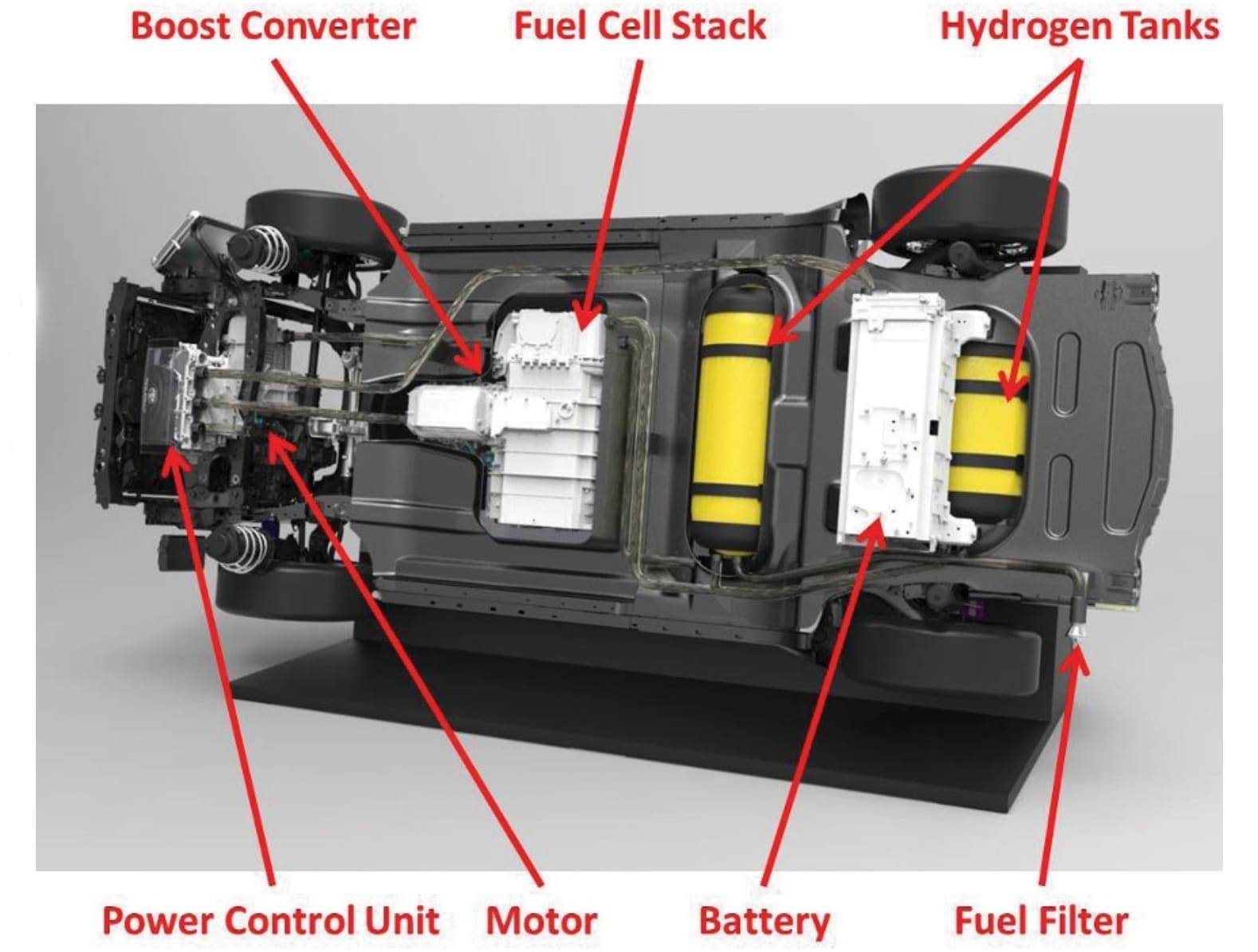
There are also a number of components that could easily be shared by competitors since they are commodities. Examples include hydrogen sensors and hydrogen tank valves, which could be standardized to get quality components at a better price for all FCEV OEMs.
Context of costs and new developments
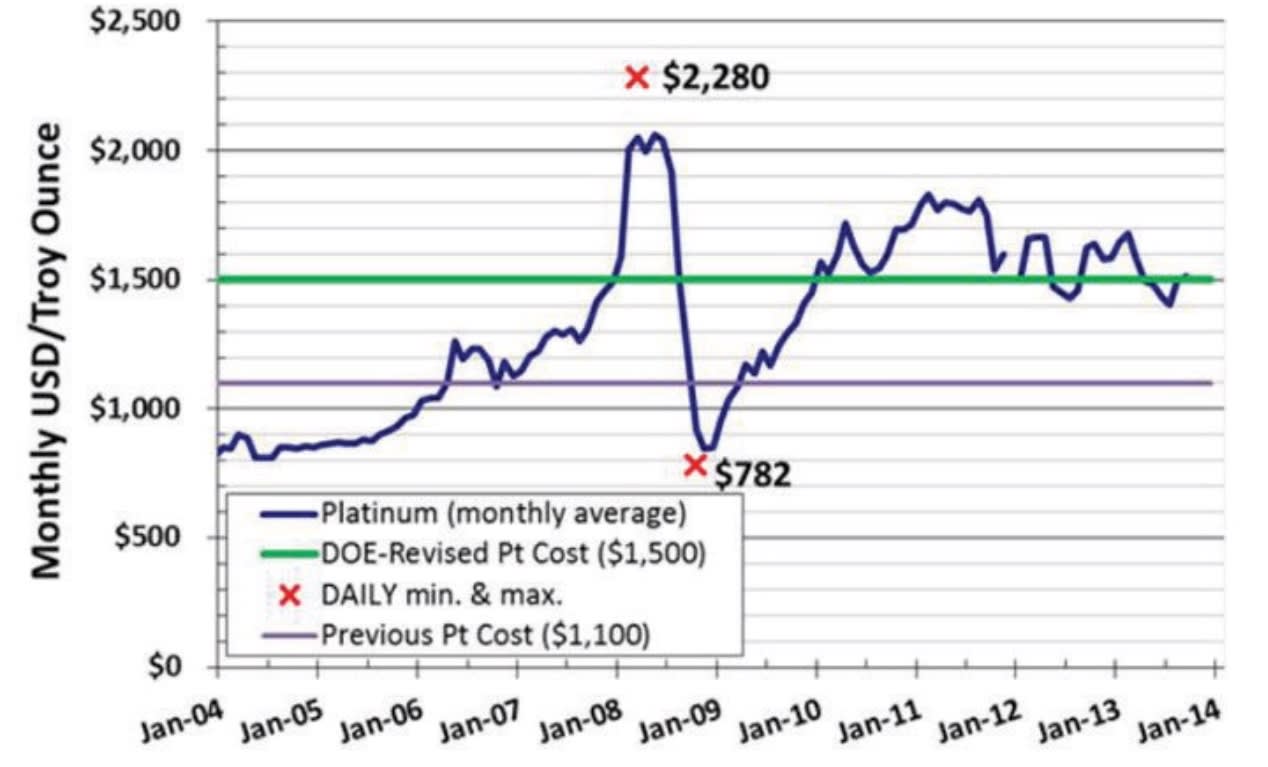
One of the key drivers of cost for fuel cells commonly used in automotive applications — polymer electrolyte membrane (PEM) fuel cells — is platinum used as a catalyst. A standard refrain throughout the industry are the twin challenges of high cost and low durability of fuel cells used for transport.
For comparison, gasoline internal-combustion engines manufactured in high volumes cost about $25-$35/kW, so ideally PEM fuel cells should be about the same. The U.S. Department of Energy’s Fuel Cells Technologies Office has targeted the ultimate cost of a fuel cell at $30/kW and durability at 5000 h, according to information presented at the 2014 Annual Merit Review and Peer Evaluation Meeting held in June 2014. Analysis by the DOE projects catalyst cost using platinum as the single largest-cost component.

Since the DOE projections are based on a conventional design for PEM fuel cells, it might be time to take another look. ACAL Energy, an independent energy company, tackled the problem of platinum loading by re-thinking the basic architecture of a transport fuel cell.
“You need a new chemistry because the current chemistry solutions cannot meet the cost, performance, and durability targets that are required for a mass market product,” said Brendan Bilton, the Chief Commercial Officer. The company’s FlowCath technology reduces platinum usage by eliminating all platinum on the cathode. The company announced that it tested a FlowCath fuel cell that reached 10,000 h on a third-party automotive industry durability test without any significant signs of degradation.
He claims cost projections are favorable as well.
“We base our cost per kW projections on the data used by the auto OEMs, which are different from the DOE’s,” explained Bilton. “They need to get the platinum loading down to 10 g for a 100-kW stack — currently they use 30 g. At 10 g loading, we can provide a double-digit percentage lower cost than [traditional PEM cells] using a platinum catalyst.”
He also said the company believes it can increase power density and efficiency by 50%, depending on the stack design.
Ward from Toyota identified platinum loading as a key element in the Toyota design as well. Without giving specifics today, he projects that “when we are able to talk about it, people will be surprised at how little platinum we are using.”
More From SAE Media Group
Tech Briefs
Rising Star Awards 2025 Judges

Off-Highway Engineering
Electrification’s Impact on Commercial-Vehicle Chassis Design
Automotive Engineering
Welcome to the Automotive Engineering Podcast

Tech Briefs
EVs Are Growing Up—and Getting Practical
Automotive Engineering
A Peek at Electrify America’s Charging Station Future
Autonomous Vehicle Engineering
Safety, Standards Crucial to AVs’ Advance
Aerospace & Defense Tech Briefs
SAE International Extends Call for Abstracts, Seeks Submissions for AeroTech Conference

Battery Technology
Advancing Battery Technology: THE 2021 BATTERY SHOW Preview
Tech Briefs
2025 Rising Star Awards Winners
Tech Briefs
2025 Award Finalists
Off-Highway Engineering
Thor Lets Campers Go Further Off Grid With Electric Embark RV
Battery & Electrification Technology
Ultracapacitor Solutions to Address Energy-Storage Needs of Vehicles
Off-Highway Engineering
Hyundai CE Debuts Hydrogen and Electric Excavators at Bauma 2022
Power Electronics INSIDER
Highway Segment Charges Electric Vehicles
Automotive Engineering
Transforming Propulsion with Tula’s Digital-Control Magic
Automotive Engineering
Uhnder Dives Into the Ocean With Digital Radar
Automotive Engineering
2022 SAE President Sri Srinath: Engineer, Leader, Mentor

Tech Briefs
3D-Printed Lab on Wheels
Tech Briefs
RISING STAR AWARDS 2024
Tech Briefs
RISING STAR AWARDS 2024 JUDGES
Tech Briefs
RISING STAR AWARD RULES
Tech Briefs
When to Expect a Hydrogen Fuel Cell Truck
Battery & Electrification Technology
Can Solid-State Batteries Commercialize by 2030?
Tech Briefs
High-Power Direct Borohydride Fuel Cells
Power Electronics INSIDER
Polyphase Wireless Power Transfer System
Off-Highway Engineering
Iveco Pursues Natural Gas in Stralis NP Models
Top Stories
NewsSensors/Data Acquisition
 Microvision Aquires Luminar, Plans Relationship Restoration, Multi-industry Push
INSIDERRF & Microwave Electronics
 A Next Generation Helmet System for Navy Pilots
INSIDERWeapons Systems
 New Raytheon and Lockheed Martin Agreements Expand Missile Defense Production
NewsAutomotive
 Ford Announces 48-Volt Architecture for Future Electric Truck
INSIDERAerospace
 Active Strake System Cuts Cruise Drag, Boosts Flight Efficiency
ArticlesTransportation

Webcasts
Aerospace
 Cooling a New Generation of Aerospace and Defense Embedded...
Energy
 Battery Abuse Testing: Pushing to Failure
Power
 A FREE Two-Day Event Dedicated to Connected Mobility
Automotive
 Quiet, Please: NVH Improvement Opportunities in the Early Design Cycle
Electronics & Computers
 Advantages of Smart Power Distribution Unit Design for Automotive &...
Unmanned Systems
 Sesame Solar's Nanogrid Tech Promises Major Gains in Drone Endurance