




Early Growing Pains Have Not Stopped Pratt & Whitney’s GTF Engine Orders
China’s Qingdao Airlines takes delivery of first GTF-powered A320neo, while Greece’s Aegean Airlines places order for up to 124 engines.

Qingdao Airlines , a Chinese airline startup based out of Qingdao Liuting International Airport , is the latest airline to received aircraft powered by Pratt & Whitney PW1000G high-bypass Geared Turbofan (GTF) engines. The airline took possession of its first single-aisle, medium-range, GTF-powered Airbus A320neo aircraft this week.
The GTF engine, developed by Hartford, Conn.-based Pratt & Whitney , a division of United Technologies Corp. , is designed for modern, highly-efficient, medium-rage, narrow-body airliners. Compared to its competitor designs, like the CFM International LEAP , it has demonstrated a 16 percent reduction in fuel burn, a 50 percent reduction in nitrogen oxide (NOx) emissions to meet current regulatory standards, and a 75 percent reduction in noise footprint.
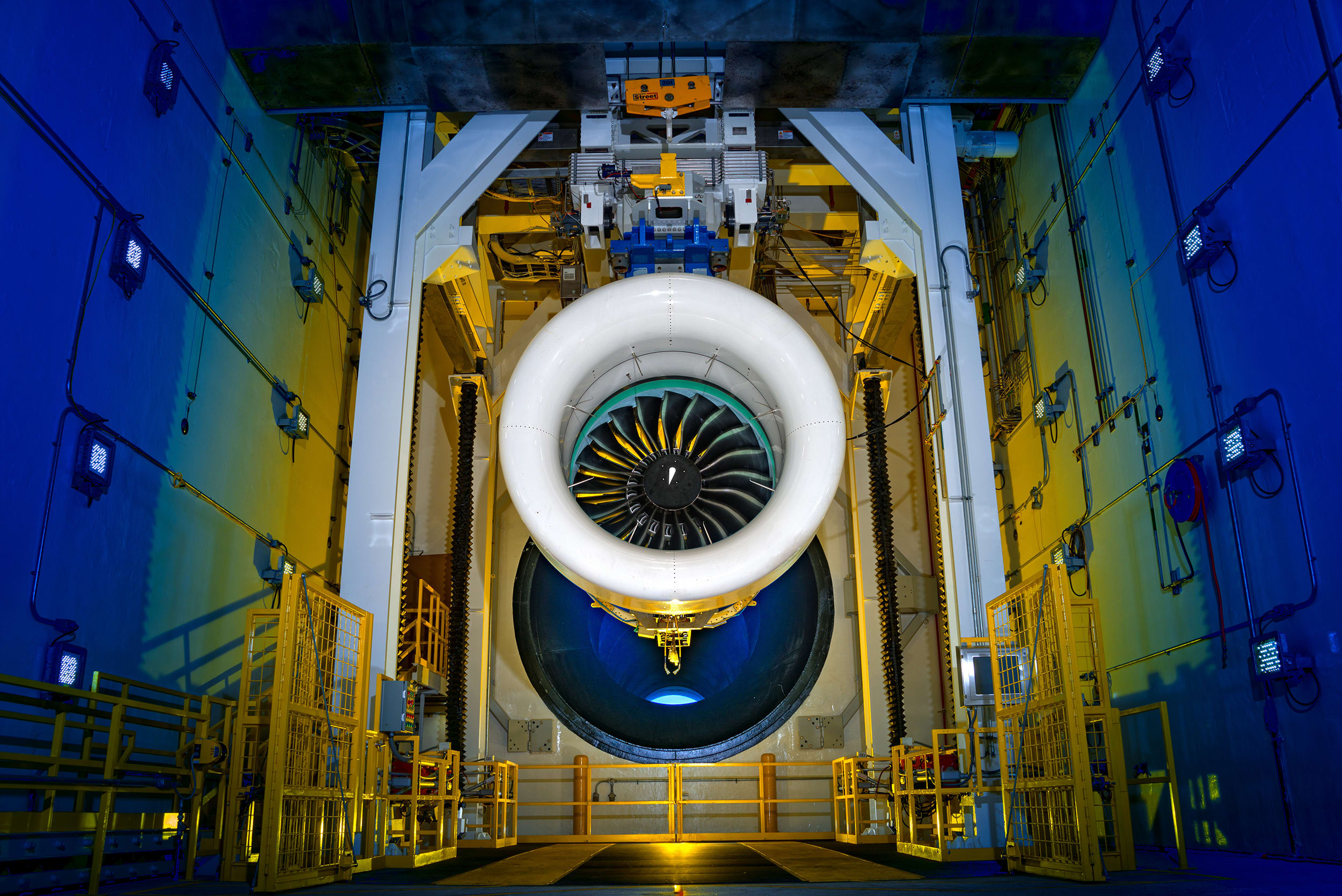
Read more: Maintaining the data-rich Pratt & Whitney GTF engine
Pratt & Whitney will also provide Qingdao Airlines with engine maintenance through a long-term EngineWise comprehensive service agreement. The EngineWise platform includes Advanced Diagnostics and Engine Monitoring (ADEM), an engine health management service that uses a suite of web-enabled software tools to provide analysis of engine health data for more than 8,000 in-service engines. With that data, Pratt & Whitney and engine operators, like Qingdao Airlines, can use predictive artificial intelligence to make functional recommendations that increase aircraft fuel economy and reduce operational disruptions.
Beyond backlogged deliveries and issues with component suppliers, there have been operational disruptions.
Qatar Airways based out of Doha, Qatar switched an order of 50 GTF-equipped Airbus A320neo aircraft to the same number of Airbus A321neo aircraft with CFM International LEAP-1A engines in 2017 after experiencing uneven cooling with the initial GTF engines.
In India, low-cost airline IndiGo announced that it replaced 69 GTF engines in 18 months. Later, the Directorate General of Civil Aviation , India’s aviation authority grounded 11 GTF-equipped A320neo aircraft after three midflight engine failures the occurred over a two-week period. The midflight issues also prompted the European Air Safety Agency issued an emergency airworthiness directive.
As for, Qingdao Airlines, its selection of the GTF engine to power an order of 18 A320neo family aircraft dates back to November 2016 – the same year that the GTF first entered commercial use.
“Today is an exciting milestone for Qingdao Airlines as we take delivery of our first A320neo aircraft,” says Wu LongXue, president of Qingdao Airlines and the Nanshan Aviation Industry Group. “We believe the GTF engines will deliver the fuel savings, reduced environmental footprint, and quieter flight experience for our passengers that we have been looking forward to.”
The airline, which offers domestic and international flight services to destinations across China and Northeast Asia, is the eighth GTF engine operator in China.
In July, Pratt & Whitney announced that orders for the GTF engine, which has garnered buy-in from Airbus , Bombardier , Embraer , Irkut , and Mitsubishi , have more than 2,000 units within a 12-month period. Regardless of early technical issues and delays, the orders keep coming.
Earlier this week, Athens-based Aegean Airlines S.A. – Greece’s largest airline – selected the Pratt & Whitney GTF as the powerplant for up to 62 Airbus A320neo aircraft: 30 firm, 12 option, and up to 20 leased aircraft. Aegean Airlines also entered into a service comprehensive service agreement with Pratt & Whitney for EngineWise maintenance and support.
“The GTF's strong order book over the past year is a reflection of the tremendous value the engine provides to operators,” says Chris Calio, president of commercial engines at Pratt & Whitney. “This engine architecture is allowing customers to realize fuel burn and environmental benefits that are unmatched in the industry. We are very excited about the future of the GTF engine.”
William Kucinski is content editor at SAE International, Aerospace Products Group in Warrendale, Pa. Previously, he worked as a writer at the NASA Safety Center in Cleveland, Ohio and was responsible for writing the agency’s System Failure Case Studies. His interests include literally anything that has to do with space, past and present military aircraft, and propulsion technology.
Contact him regarding any article or collaboration ideas by e-mail at
More From SAE Media Group
Aerospace & Defense Tech Briefs
Maintaining the Data-Rich Pratt & Whitney GTF Engine
Aerospace & Defense Tech Briefs
Mitsubishi Heavy Industries Aero Engines Completes Assembly of First Pratt & Whitney GTF PW1200G Engine
Aerospace & Defense Tech Briefs
Boeing Completes Assembly of the First 777X
Aerospace & Defense Tech Briefs
Parker Aerospace and GKN Aerospace to Develop Passive Cooling Solutions for Next-Generation Aircraft Engines
Aerospace & Defense Tech Briefs
Pratt & Whitney Receives $437M for Continued Adaptive Engine Development
Aerospace & Defense Tech Briefs
Connected Aircraft Technologies Benefit Manufacturers, Airlines, and Travelers
Aerospace & Defense Tech Briefs
New Boeing, Safran Joint Venture Dedicated to Developing Aircraft Auxiliary Power Units
Aerospace & Defense Tech Briefs
Maintainers Design a $400 Maintenance Fixture to save the U.S. Air Force $500k per Year
Aerospace & Defense Tech Briefs
Boeing’s 777X Finally Gets Its Engines
Aerospace & Defense Tech Briefs
Safran and MTU Aero Engines to Co-Develop Engine for Sixth-Generation FCAS Fighter
Aerospace & Defense Tech Briefs
Ceramic Matrix Composites in Aircraft Engines Projected to Double over Five Years, Stratview Research Predicts
Aerospace & Defense Tech Briefs
Aerion AS2 Supersonic Bizjet on Track for Trans-Atlantic Crossing in 2023
Aerospace & Defense Tech Briefs
J-10B Fighter Demonstrates Thrust-Vectoring Supermaneuverability at Airshow China
Aerospace & Defense Tech Briefs
GE Aviation Debuts Affinity, First Civil Supersonic Engine in 55 Years
Aerospace & Defense Tech Briefs
Boeing Debuts First Hypersonic Passenger Aircraft Concept
Aerospace & Defense Tech Briefs
AVIC Subsidiary Continental Aerospace Will Power the Upcoming Diamond DA50, Expands into Electric Propulsion
Aerospace & Defense Tech Briefs
Stratos Aircraft Evolves Carbon-Fiber Very Light Jet, Offers Limited Number of Kit Aircraft
Aerospace & Defense Tech Briefs
Collins Aerospace Will Provide Avionics and Synthetic Vision for the Supersonic X-59 QueSST
Aerospace & Defense Tech Briefs
Aircraft, Engine Orders Reach $98B, Focus on Flying Farther, Faster, Greener at Farnborough Airshow
Aerospace & Defense Tech Briefs
Parker Aerospace Wins Cessna Denali Bleed Air Control System Contract
Aerospace & Defense Tech Briefs
GE Aviation and DM3D to Ramp up 3D-Printed Fan Blade Production for GE9X Engine
Aerospace & Defense Tech Briefs
UTC’s Project 804 Hybrid-Electric Demonstrator May Increase Regional Jet Efficiency by 30 Percent
Aerospace & Defense Tech Briefs
FAA, SAE International Focus on Engine Fire Protection System Standards for Aerospace
Aerospace & Defense Tech Briefs
2050 Aircraft Engine Designs Go Radical, Part 1
Aerospace & Defense Tech Briefs
Future of British Air Power: The Next-Gen Tempest
Aerospace & Defense Tech Briefs
United Technologies Completes Acquisition of Rockwell Collins, Sheds Non-Aero Business Units
Aerospace & Defense Tech Briefs
NASA’s Next X-Plane Passes Major Review
Aerospace & Defense Tech Briefs
Boeing and NASA Unveil Lightweight, Ultra-Thin, More Aerodynamic Transonic Truss-Braced Wing Concept
Aerospace & Defense Tech Briefs
Rolls-Royce’s Race to Develop the World’s Fastest All-Electric Aircraft
Aerospace & Defense Tech Briefs
Fanjet Evolution — the Next Steps
Transcript
00:00:03 a conventional jet engine Burns fuel in the combuster to provide energy to drive its turbine and run the fan the fan creates bypass air running around the engine core which delivers most of the thrust for commercial aircraft the higher the bypass ratio the better while a conventional engine runs its fan and turbines at the same speed on a direct
00:00:29 drive shaft the pw1000g engine varies the speeds of the fan and turbines with a highly efficient gearbox a simple idea that allows these modules to operate at optimal speed and efficiency the fan runs more slowly delivering more thrust from less work for an impressive bypass ratio of 12 to1 the low pressure compressor and low pressure turbine rotate faster than the
00:00:58 fan achieving top performance with fewer stages and fewer Parts there are so many benefits to this approach we had to make a special section to talk about them all in brief the PW 1000g engine delivers higher thermal efficiency and higher propulsive efficiency with fewer parts for better fuel burn lower greenhouse gas emissions less maintenance cost and much lower noise to catch up to that
00:01:26 propulsive efficiency a conventional engine would have to add several veral stages and hundreds of air foils driving up part counts costs and maintenance and it would have to run the engine hotter which will require expensive exotic materials and challenge overall reliability so while conventional engine design is being stretched to its limits the Pratt and Whitney PW 1000g engine
00:01:52 has Room to Grow expanding its substantial lead as the quietest most fuele efficient power plant in the world with vast L simpler maintenance than competing engines power in the single aisle Market is ready for a change ready for a new generation of Dependable engines
Top Stories
NewsRF & Microwave Electronics
 Microvision Aquires Luminar, Plans Relationship Restoration, Multi-industry Push
INSIDERAerospace
 A Next Generation Helmet System for Navy Pilots
INSIDERDesign
 New Raytheon and Lockheed Martin Agreements Expand Missile Defense Production
INSIDERMaterials
 How Airbus is Using w-DED to 3D Print Larger Titanium Airplane Parts
NewsPower
 Ford Announces 48-Volt Architecture for Future Electric Truck
ArticlesAR/AI

Webcasts
Electronics & Computers
 Cooling a New Generation of Aerospace and Defense Embedded...
Automotive
 Battery Abuse Testing: Pushing to Failure
Power
 A FREE Two-Day Event Dedicated to Connected Mobility
Unmanned Systems
 Quiet, Please: NVH Improvement Opportunities in the Early Design Cycle
Automotive
 Advantages of Smart Power Distribution Unit Design for Automotive &...
Energy
 Sesame Solar's Nanogrid Tech Promises Major Gains in Drone Endurance