




GE Aviation and DM3D to Ramp up 3D-Printed Fan Blade Production for GE9X Engine
Using direct metal deposition, DM3D can create near-net shape fan blades and more closely monitor the height and temperature of the melt pool while manufacturing them. GE Aviation is working with DM3D to develop this process for full scale GE9X production in 2020.
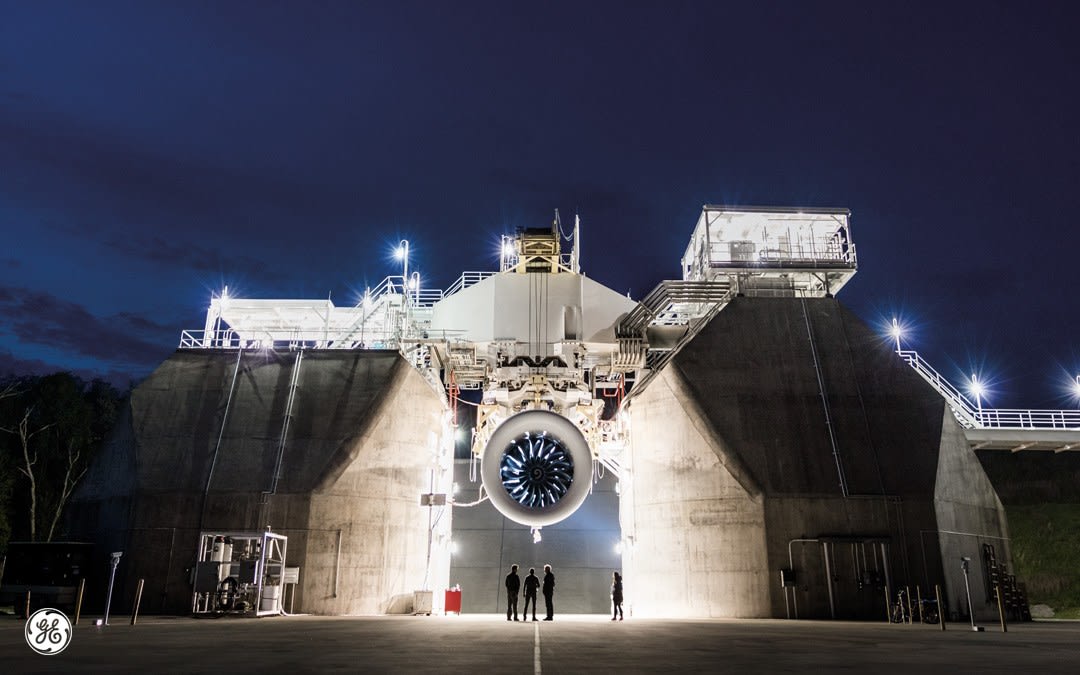
GE Aviation ’s next-gen GE9X high-bypass turbofan engine is poised to be the most fuel-efficient jet engine ever produced by the company. Designed to power Boeing ’s new 777X long-range, wide-body airliner, the GE9X builds on GE Aviation’s previous GE90 , but will incorporate a larger fan, higher bypass and compression ratios, and components made from advanced manufacturing processes, such as fan blades produced using direct metal deposition (DMD).
GE Aviation, the Evendale, Ohio-based subsidiary of General Electric has been working with DM3D Technology, LLC. of Auburn Hills, Michigan and Windsor, Connecticut-based Barnes Aerospace to develop DM3D’s proprietary DMD technology for a ramp-up to full-scale production of 3D-printed GE9X fan blades in 2020.
Read more: S.S. White Technologies lending flexibility to new GE9X, 777X
Read more from SAE International on manufacturing and propulsion .
The advantages of DMD are that it creates near-net shape and controls heat input, which reduces post processing of the product. DMD also allows for monitoring and control of the height and temperature of the melt pool and even the dilution of substrate material, which may have a very different melting temperature than the deposited material. According to DM3d, this provides a significant advantage over other additive metal manufacturing technologies such as direct metal laser sintering (DMLS) and electron beam melting (EBM).
“The complex geometry of these components is an ideal application for the multi-axis deposition capability of DM3D’s additive process,” says Tod Davis, principal engineer for GE Aviation.
William Kucinski is content editor at SAE International, Aerospace Products Group in Warrendale, Pa. Previously, he worked as a writer at the NASA Safety Center in Cleveland, Ohio and was responsible for writing the agency’s System Failure Case Studies. His interests include literally anything that has to do with space, past and present military aircraft, and propulsion technology.
Contact him regarding any article or collaboration ideas by e-mail at
More From SAE Media Group
Aerospace & Defense Tech Briefs
Lifting 3D Printing to New Heights
Aerospace & Defense Tech Briefs
Ceramic Matrix Composites in Aircraft Engines Projected to Double over Five Years, Stratview Research Predicts
Aerospace & Defense Tech Briefs
Boeing’s 777X Finally Gets Its Engines
Aerospace & Defense Tech Briefs
Parker Aerospace and GKN Aerospace to Develop Passive Cooling Solutions for Next-Generation Aircraft Engines
Tech Briefs
Using 3D Printing to Strengthen Jet Engines
Aerospace & Defense Tech Briefs
SAE International Issues, Revises Technical Reports for Aerospace Engineering
Aerospace & Defense Tech Briefs
Mitsubishi Heavy Industries Aero Engines Completes Assembly of First Pratt & Whitney GTF PW1200G Engine
Aerospace & Defense Tech Briefs
Additive Manufacturing
Aerospace & Defense Tech Briefs
Arconic Unveils Advanced Titanium Alloy for Higher Temperature Aerospace Applications
Aerospace & Defense Tech Briefs
SAE International Issues First Technical Standards for Aerospace Additive Manufacturing
Aerospace & Defense Tech Briefs
Boeing Completes Assembly of the First 777X
Aerospace & Defense Tech Briefs
Maintaining the Data-Rich Pratt & Whitney GTF Engine
Aerospace & Defense Tech Briefs
Etihad and Eos Partner to Develop 3D-Printed Cabin Interiors
Aerospace & Defense Tech Briefs
GE Aviation Delivers Improved Turbine Engine During U.S. Army Preliminary Design Review
Aerospace & Defense Tech Briefs
Additive Manufacturing Adoption Up, Growing Rapidly in Aerospace
Aerospace & Defense Tech Briefs
Additive Manufacturing, Composites Help Grow Global Electric Aircraft Market
Aerospace & Defense Tech Briefs
Government, Industry Invest $450M to Advance U.K. Civil Aerospace Research, Technology, Manufacturing
Aerospace & Defense Tech Briefs
GE Aviation Debuts Affinity, First Civil Supersonic Engine in 55 Years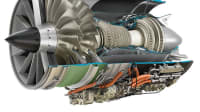
Aerospace & Defense Tech Briefs
2050 Aircraft Engine Designs Go Radical, Part 1
Aerospace & Defense Tech Briefs
Pratt & Whitney Receives $437M for Continued Adaptive Engine Development

Aerospace & Defense Tech Briefs
Early Growing Pains Have Not Stopped Pratt & Whitney’s GTF Engine Orders
Aerospace & Defense Tech Briefs
Designing Composite Engine Cowling for Improved Heat Resistance
Aerospace & Defense Tech Briefs
Lifting 3D Printing to New Heights
Aerospace & Defense Tech Briefs
Industry Invited to Participate in AeroTech Aerospace and Defense Technical Program
Aerospace & Defense Tech Briefs
Safran and MTU Aero Engines to Co-Develop Engine for Sixth-Generation FCAS Fighter
Off-Highway Engineering
Mahle Advances 3D Printing Capabilities
Off-Highway Engineering
Bosch Invested in Large-Scale Metal 3D Printing
Aerospace & Defense Tech Briefs
Maintainers Design a $400 Maintenance Fixture to save the U.S. Air Force $500k per Year
Transcript
00:00:06 in 1995 GE forever changed Long Haul travel with a record-breaking ge90 engine and its carbon fiber composite fan blades then we redefined what was possible with groundbreaking technologies that took propulsion and fuel efficiency to the next level in the G
00:00:37 NX and now we're doing it again the ge9x will feature just 16 fourth generation carbon fiber composite fan blades that are thinner stronger and more efficient than any fan blade we've ever produced a compressor with a pressure r ratio of 27 to1 the highest in the
00:01:32 history of Aviation a Next Generation lean burning combuster capable of handling some of the highest pressures and temperatures ever seen in an aircraft engine you'll also use Advanced manufacturing techniques like 3D printing to build components that were quite simply impossible to make until now and cuttingedge new materials including
00:01:55 ceramic Matrix composits which are twice the strength and a third the weight of metal the ge9x will deliver 10% better fuel efficiency than its predecessor with noise and nox emissions well below regulatory standards all with a worldclass reliability our customers have come to expect from us it's this level of imagination and
00:02:19 Engineering that's helping us build the world's next great engine to power the world's next great airplane the Boeing 7 x the ge9 X isn't a culmination of invention it's a starting point of where we're going next
Top Stories
NewsSensors/Data Acquisition
 Microvision Aquires Luminar, Plans Relationship Restoration, Multi-industry Push
INSIDERRF & Microwave Electronics
 A Next Generation Helmet System for Navy Pilots
INSIDERWeapons Systems
 New Raytheon and Lockheed Martin Agreements Expand Missile Defense Production
NewsAutomotive
 Ford Announces 48-Volt Architecture for Future Electric Truck
INSIDERAerospace
 Active Strake System Cuts Cruise Drag, Boosts Flight Efficiency
ArticlesTransportation

Webcasts
Aerospace
 Cooling a New Generation of Aerospace and Defense Embedded...
Energy
 Battery Abuse Testing: Pushing to Failure
Power
 A FREE Two-Day Event Dedicated to Connected Mobility
Automotive
 Quiet, Please: NVH Improvement Opportunities in the Early Design Cycle
Electronics & Computers
 Advantages of Smart Power Distribution Unit Design for Automotive &...
Unmanned Systems
 Sesame Solar's Nanogrid Tech Promises Major Gains in Drone Endurance