




Parker Aerospace Wins Cessna Denali Bleed Air Control System Contract
Parker’s new system design integrates technology innovations to bring greater efficiency and reliability.

Parker Aerospace , a business segment of Cleveland-based Parker Hannifin Corporation , was awarded the bleed air control system (BACS), a major component of the environmental control system, for Textron Aviation ’s Cessna Denali turboprop aircraft. The Denali BACS controls the flow and temperature of bleed air from the aircraft’s engine that serves to pressurize the cabin. The system – designed by the Parker Aerospace Fluid Systems Division – includes four valves and an electronic controller.
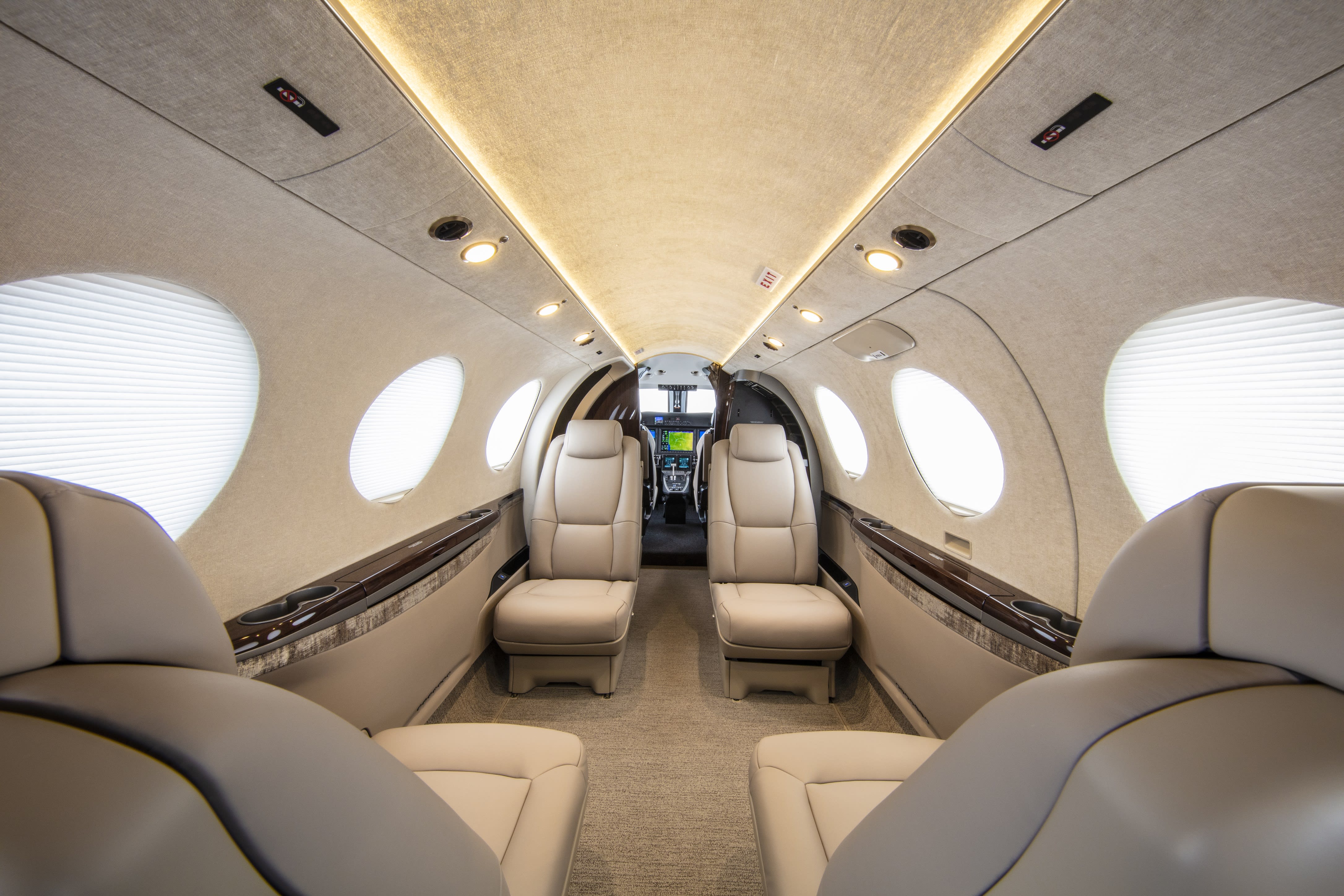
Having successfully completed the development-testing phase, Parker Aerospace’s BACS modulates high-pressure bleed air from the engine, which is used to draw cool ambient air from outside the aircraft as it takes off. Once the outside air pressure is too low to draw in and the bleed air temperatures are cooler, the BACS will transition to use only low-pressure bleed air to pressurize the cabin. At very high altitudes, the BACS will also supplement the low-pressure air with additional high-pressure air as required to meet flow requirements.
The system’s ability to measure and respond to constantly changing variables is what sets it apart. To enable Parker’s controller software to make decisions about which air sources to draw upon in a given flight scenario, special sensors were engineered that measure the mass air flow rate and the temperature of the air.
Another challenge was using electronically actuated valves in a hot environment. To keep heat away from the electronics, the valves use standoffs made of a unique ceramic material to hold the actuators. This ceramic has a thermal conductivity one-third that of titanium, a thermal expansion rate similar to stainless steel, and a tensile strength similar to aluminum and so proved to be an ideal candidate for the standoffs at a lower cost than titanium or mica alternatives.
In addition to its in-house design and manufacturing activities, Parker is working closely with its suppliers to optimize other system components, such as the efficient and reliable high-temperature stepper motor used to drive the flow control valves.
“The Cessna Denali is expanding the envelope in turboprop aircraft design and performance, and Parker’s bleed air control system reflects that commitment to innovation,” says Joe Stilla, pneumatics project engineer, for the Parker Aerospace Fluid Systems Division. “We invested significantly in the up-front design of the system and were able to demonstrate the effectiveness of our solution to Cessna. The Denali program will be a significant piece of business for us, and we believe the win can lead to additional opportunities for Parker.”
The Cessna Denali single engine turboprop aircraft was first announced at EAA AirVenture Oshkosh in 2015. It is currently in development and is expected to fly in late 2018. The Denali will use the GE Aviation Catalyst engine – the first clean-sheet turboprop engine in more than 30 years – which incorporates 3D-printed components, digital full authority digital engine control (FADEC), and advanced multistage turbine blades.
William Kucinski is content editor at SAE International, Aerospace Products Group in Warrendale, Pa. Previously, he worked as a writer at the NASA Safety Center in Cleveland, Ohio and was responsible for writing the agency’s System Failure Case Studies. His interests include 'literally anything that has to do with space,' past and present military aircraft, and propulsion technology. And also sportscars.
Contact him regarding any article or collaboration ideas by e-mail at
More From SAE Media Group
Aerospace & Defense Tech Briefs
Parker Aerospace and GKN Aerospace to Develop Passive Cooling Solutions for Next-Generation Aircraft Engines
Aerospace & Defense Tech Briefs
UAV Turbines Designs Purpose-Built Microturbine Engine for Class 3 and 4 UAVs
Aerospace & Defense Tech Briefs
AVIC Subsidiary Continental Aerospace Will Power the Upcoming Diamond DA50, Expands into Electric Propulsion
Aerospace & Defense Tech Briefs
Connected Aircraft Technologies Benefit Manufacturers, Airlines, and Travelers
Aerospace & Defense Tech Briefs
Boeing’s 777X Finally Gets Its Engines
Automotive Engineering
Pratt & Whitney Develops Digitally Curated Maintenance Solutions for General Aviation
Aerospace & Defense Tech Briefs
2050 Aircraft Engine Designs Go Radical, Part 1
Aerospace & Defense Tech Briefs
Early Growing Pains Have Not Stopped Pratt & Whitney’s GTF Engine Orders
Aerospace & Defense Tech Briefs
Industry Invited to Participate in AeroTech Aerospace and Defense Technical Program
Aerospace & Defense Tech Briefs
Safran and MTU Aero Engines to Co-Develop Engine for Sixth-Generation FCAS Fighter
Aerospace & Defense Tech Briefs
Rolls-Royce’s Race to Develop the World’s Fastest All-Electric Aircraft
Aerospace & Defense Tech Briefs
GE Aviation Debuts Affinity, First Civil Supersonic Engine in 55 Years
Aerospace & Defense Tech Briefs
GE Aviation and DM3D to Ramp up 3D-Printed Fan Blade Production for GE9X Engine
Aerospace & Defense Tech Briefs
GE Aviation Delivers Improved Turbine Engine During U.S. Army Preliminary Design Review
Aerospace & Defense Tech Briefs
Maintainers Design a $400 Maintenance Fixture to save the U.S. Air Force $500k per Year
Automotive Engineering
SAE International Releases New Process for Measuring Aerosols in Aircraft Exhaust
Aerospace & Defense Tech Briefs
Collins Aerospace Will Provide Avionics and Synthetic Vision for the Supersonic X-59 QueSST
Aerospace & Defense Tech Briefs
Maintaining the Data-Rich Pratt & Whitney GTF Engine
Aerospace & Defense Tech Briefs
Jetoptera, GE Aviation Collaborate On, Demonstrate Hover with Fluidic Propulsion
Aerospace & Defense Tech Briefs
2050 Aircraft Engine Designs Go Radical, Part 2
Aerospace & Defense Tech Briefs
Rolls-Royce to Work with Airframe Manufacturers, Seek Partners for EVTOL Project
Aerospace & Defense Tech Briefs
Pratt & Whitney Receives $437M for Continued Adaptive Engine Development
Aerospace & Defense Tech Briefs
Mitsubishi Heavy Industries Aero Engines Completes Assembly of First Pratt & Whitney GTF PW1200G Engine
Automotive Engineering
New Four-Chamber Rotary Engine Could Supplant Wankel and Piston Engines for UAV Applications
Aerospace & Defense Tech Briefs
Stratos Aircraft Evolves Carbon-Fiber Very Light Jet, Offers Limited Number of Kit Aircraft
Aerospace & Defense Tech Briefs
Aircraft, Engine Orders Reach $98B, Focus on Flying Farther, Faster, Greener at Farnborough Airshow
Aerospace & Defense Tech Briefs
SAE International Issues, Revises Technical Reports for Aerospace Engineering
Aerospace & Defense Tech Briefs
Aerion AS2 Supersonic Bizjet on Track for Trans-Atlantic Crossing in 2023
Aerospace & Defense Tech Briefs
Safran Completes First Ground Test of Distributed Hybrid Electric Propulsion System
Aerospace & Defense Tech Briefs
Ceramic Matrix Composites in Aircraft Engines Projected to Double over Five Years, Stratview Research Predicts
Transcript
00:00:05 when Textron Aviation looked at the turbo prop Market we found the single engine segment of that market quite appealing it was a segment of the market we weren't currently serving and when we looked more deeply we saw that there hadn't been significant innovation in many years customers told us they wanted a versatile allnew efficient product in this category and that was the Genesis
00:00:26 for the Cessna Denali GE has produced over 100,000 jet engines including the largest commercial engine in the world they bring that Innovation and proven reliability to the Denali the partnership between GE and Texon Aviation has been a big deal for us the engine's power and efficiency really set the groundwork for the overall aircraft design having this engine to work with
00:00:49 allowed our Engineers additional flexibility to focus on cabin Comfort while maintaining range speed and payload objectives we have optimized the airframe propeller interaction propeller design and engine and operating parameters this collaboration generates a product that is quieter more efficient and with greater performance I represent over 6,000
00:01:09 engineers in GE Aviation together with 3,000 scientists at our GE Global Research Center we're hard at work developing new applications bringing new technologies and new capabilities to the Aviation Space we have over 38,000 engines out flying each and every day at any given time 300 th000 people aoft being powered by our engines every 2 seconds a GE engine somewhere in the
00:01:36 world lifts an airframe off the ground we will continue this 99-year Legacy leveraging the learning from our installed Fleet and bringing new technologies each and every day to create value for our customers the ATP is really unique in this Marketplace because it combines Technologies from ge's larger commercial transport engines that are used on on Boeing and Airbus
00:02:01 aircraft and brings those Technologies into the business general aviation Market segment some of the unique aspects of the ATP in the Denali is a single lever control the propeller pitch propeller speed and throttle are all in one lever the engine starts with a fadec it's a full Authority digital engine control just like we have on our large commercial transport engines providing
00:02:28 improved performance less workload in the cockpit longer time between overhauls it really changes the piloting experience we know the DNA of your engine we know how you flew it and we can monitor it to make sure that it is performing properly and if there's any service that's required we can be there before the service is required to ensure that you have a great flight experience
00:02:54 and that your aircraft is ready to go whenever you want it it will provide a customer experience like no other turbo prop in history G additive is a new business new technology when we designed the advanced turbo prop we took 855 parts and we reduced them to 12 so automatically you eliminating a lot of probability of mistakes and handoffs
00:03:24 when you reduce the number of components we started using additive in 2010 so additive really makes the product better it makes the product lighter it combines several parts to one it reduces the cost of the product it helps with eliminating the weak links because you take many parts that previously you would weld or you fasten together all of that goes away that's why the product becomes
00:03:53 better more durable and more reliable what the Denali really brings to this Market is a luxurious and larger cabin and to push that cabin through the air at the right speed and at the right range requires a more powerful more fuel efficient engine and the ATP can deliver on all of these so the engine is designed to have 4,000 hours with no intermediate overhaul which is about 30%
00:04:19 more than the Benchmark in the fleet today what's really exciting about the Denali is it's a chance for two companies that are really the best at what they do to work together on a new product Textron Aviation is clearly the world leader in the general aviation space and GE is the world leader in the aircraft engine space and so this is a chance for us to work together and bring
00:04:39 the best of what we do to a new product of Denali which I know will really change the expectations of customers in this market the Denali is hands down the best-in-class single engine turbo prop aircraft and GE is the perfect fit we're confident and excited to get the aircraft in the hands of our customers
Top Stories
NewsSensors/Data Acquisition
 Microvision Aquires Luminar, Plans Relationship Restoration, Multi-industry Push
INSIDERRF & Microwave Electronics
 A Next Generation Helmet System for Navy Pilots
INSIDERWeapons Systems
 New Raytheon and Lockheed Martin Agreements Expand Missile Defense Production
NewsAutomotive
 Ford Announces 48-Volt Architecture for Future Electric Truck
INSIDERAerospace
 Active Strake System Cuts Cruise Drag, Boosts Flight Efficiency
ArticlesTransportation

Webcasts
Aerospace
 Cooling a New Generation of Aerospace and Defense Embedded...
Energy
 Battery Abuse Testing: Pushing to Failure
Power
 A FREE Two-Day Event Dedicated to Connected Mobility
Automotive
 Quiet, Please: NVH Improvement Opportunities in the Early Design Cycle
Electronics & Computers
 Advantages of Smart Power Distribution Unit Design for Automotive &...
Unmanned Systems
 Sesame Solar's Nanogrid Tech Promises Major Gains in Drone Endurance