




New Four-Chamber Rotary Engine Could Supplant Wankel and Piston Engines for UAV Applications
The Szorenyi rotary engine prototype uses a hinged rhombus rotor instead of the three-sided rotor found in traditional Wankel rotary engines.
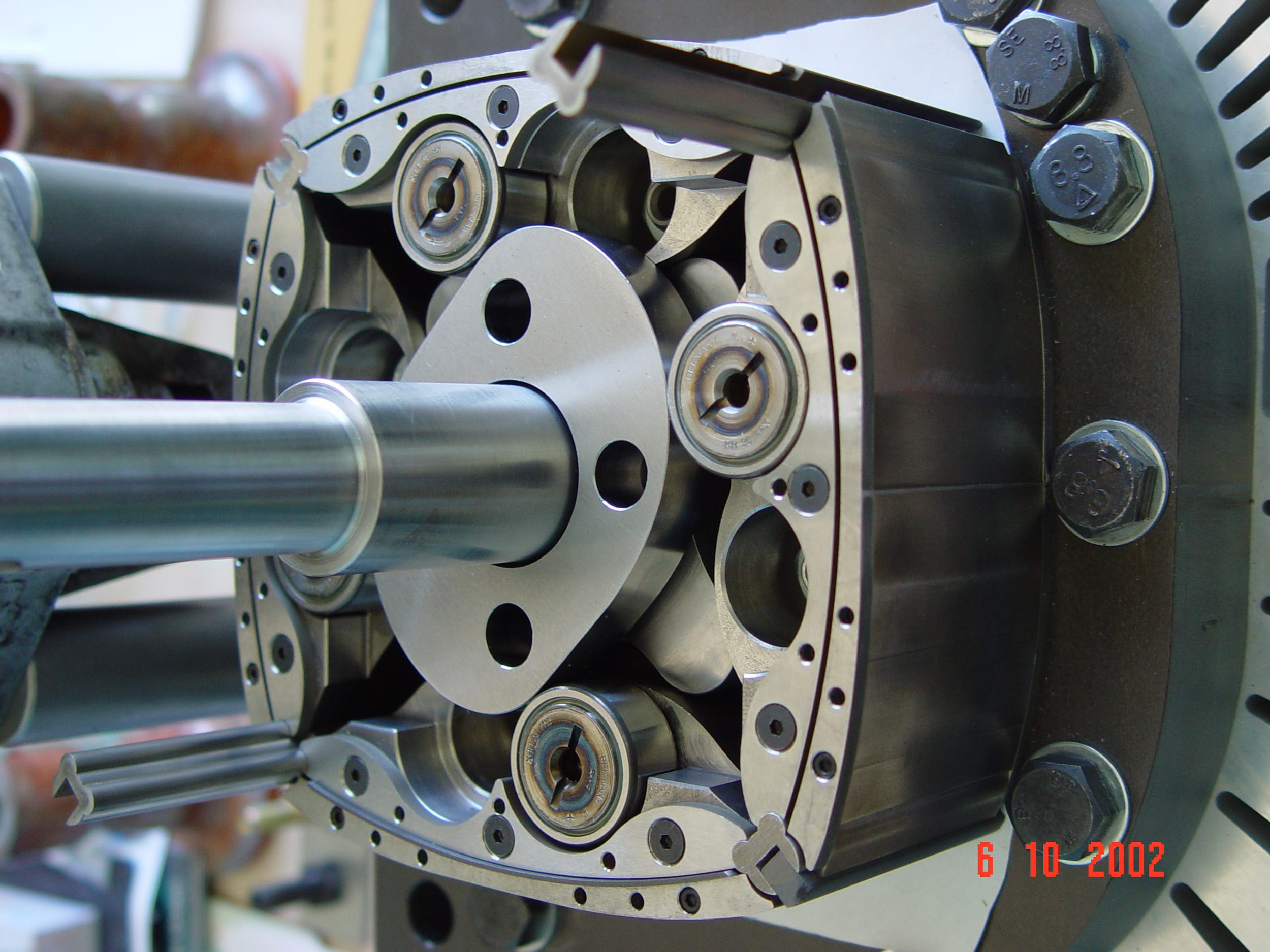
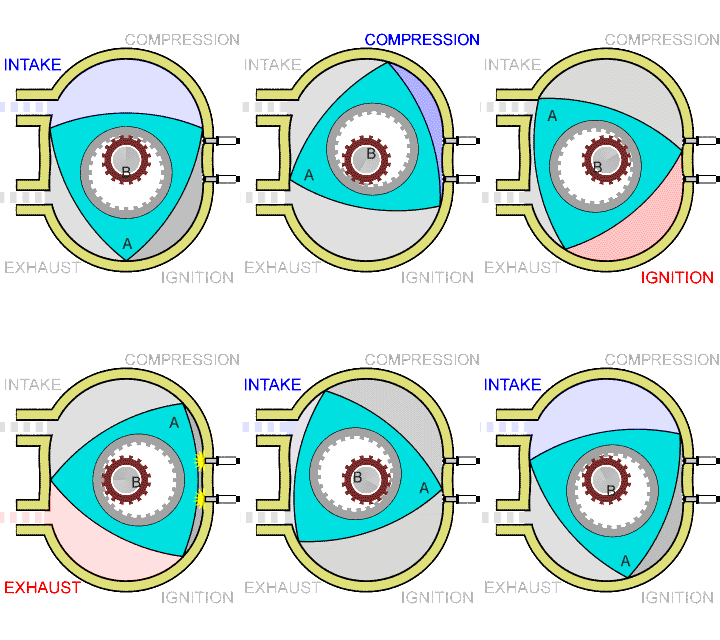
The Wankel rotary engine has been an ideal choice for many owners and operators of small, propeller-driven aircraft. Compared to conventional piston engines, Wankel rotaries are small, lightweight, and has a high power-to-weight ratio. They’re nearly vibrationless, they can’t seize or knock, and they have fewer moving parts (to break). At this point, it’s difficult to improve on the Wankel design; that is, unless you’re considering changing the shape of the rotor… into a changing shape.
A new configuration of a rotary engine – the Szorenyi rotary engine – has been developed by the Melbourne-based Rotary Engine Development Agency (REDA). While the stator, or stationary part of the Szorenyi engine is similar to that of a Wankel engine, the geometric shape of the engine rotor is a rhombus, which deforms as it rotates inside the contour of the stator.
Szorenyi rotary engine cycle
This geometry translates to a rotary engine with four combustion chambers as opposed to a traditional Wankel rotary’s three. Each revolution of the crankshaft produces one revolution of the rotor and a complete engine cycle in each of the four chambers: or four power strokes. In contrast, the Wankel engine produces one power stroke per crankshaft revolution.
Wankel rotary engine cycle
According to REDA, each four-stroke Szorenyi rotary module is equivalent to an eight-cylinder reciprocating or opposed piston engine.
The Szorenyi engine is also more optimized for multi-rotor configuration than a Wankel rotary due to the use of peripheral ports when compared to the Wankel engine’s use of complex side ports. The ability to easily configure multi-rotor, four-stroke engines could result in rotary powerplants that generate power equivalent to 8-, 16-, or 24-cylinder reciprocating engines. Furthermore, the development of standardized modules could reduce the manufacturing and life-cycle maintenance costs.
Free to speed
Typically, Wankel engines are limited to a rotor speed of 3,000 revolutions per minute (rpm) because of the excessive crankshaft bending caused by the centrifugal forces of the eccentric rotor. The Szorenyi engine is not rev-limited in this regard, as it used a balanced rotor.
Higher potential rpm limits mean the Szorenyi engine has a higher power density than the Wankel engine, which could translate into greater aircraft range, endurance, and payload capacity. Furthermore, the Szorenyi engine has more space for internal cooling of the rotor and no need for a reduction gear in aircraft and unmanned aerial vehicles (UAVs) with large propellers.
According to the paper, the Szorenyi engine could be made to run on gasoline, aviation gasoline (avgas), butane, or hydrogen (as the inlet and exhaust ports are well separated).
REDA also noted that if a pre-compression phase was introduced, the engine could use diesel fuel – aligning with the U.S. military “one fuel” concept and making the engine a potential consideration for military applications.
Full details concerning the design and testing of REDA’s new engine, are available in the SAE International Technical Paper, The Development of the Szorenyi Four-Chamber Rotary Engine .
An abridged version of The Development of the Szorenyi Four-Chamber Rotary Engine and other SAE Technical Papers concerning small aircraft and UAV engines are available in the latest book in SAE International’s So You Want to Design series, So You Want to Design Engines: UAV Propulsion Systems .
The book covers several UAV propulsion technologies such as traditional heavy-fuel engines, hybrid-electric architectures, distributed hydrogen-fueled fans, the aforementioned Szorenyi rotary engine, and experimental plasma propulsion – or dielectric barrier discharge.
William Kucinski is content editor at SAE International, Aerospace Products Group in Warrendale, PA. Previously, he worked as a writer at the NASA Safety Center in Cleveland, OH, and was responsible for writing the agency’s System Failure Case Studies. His interests include literally anything that has to do with space, past and present military aircraft, and propulsion technology.
Contact him regarding any article or collaboration ideas by e-mail at
More From SAE Media Group
Aerospace & Defense Tech Briefs
X Marks the Spot
Off-Highway Engineering
Could This Infinitely Variable Compression Mechanism Be the Next Piston Engine Game-Changer?
Automotive Engineering
Extending a Wankel Future on Hydrogen Fuel
Automotive Engineering
UAV Turbines to Tackle 200-Hp Class UAV Engines for U.S. Army
Off-Highway Engineering
Caterpillar Unveils New C13D Off-Highway Engine Platform
Off-Highway Engineering
Westport Awarded LNG Development Program
Aerospace & Defense Tech Briefs
AVIC Subsidiary Continental Aerospace Will Power the Upcoming Diamond DA50, Expands into Electric Propulsion
Off-Highway Engineering
GM Hydrotec Boss Readies Fuel Cells for Commercial Deployment
Automotive Engineering
SAE International Releases New Process for Measuring Aerosols in Aircraft Exhaust
Aerospace & Defense Tech Briefs
UAV Turbines Designs Purpose-Built Microturbine Engine for Class 3 and 4 UAVs
Automotive Engineering
Reconsidering CNG as an Alt-Fuel Solution
Off-Highway Engineering
Mahle, Liebherr Develop Active Pre-Chamber for Hydrogen ICE
Off-Highway Engineering
Deutz Takes Open Approach to Propulsion
Off-Highway Engineering
Cummins, Tula Test ‘Dynamic’ Cylinder Deactivation for Diesels
Automotive Engineering
Keeping Combustion in the Conversation
Automotive Engineering
New Axial-Piston Engine Aimed at Range Extenders, Military Applications
Off-Highway Engineering
Hexagon Bullish on CNG for Long-Haul Trucks
Off-Highway Engineering
Isuzu Simplifies Fuel Changeovers
Automotive Engineering
Engine Researchers: 50% Gasoline-Engine Efficiency in Sight
Aerospace & Defense Tech Briefs
SAE International Extends Call for Abstracts, Seeks Submissions for AeroTech Conference
Aerospace & Defense Tech Briefs
Alakai Technologies Unveils the World’s First Hydrogen-Powered Urban Air Mobility Vehicle
Automotive Engineering
2020 Ford Super Duty Debuts All-New 7.3-Liter Pushrod V8, 10-Speed Automatic
Automotive Engineering
Extending the ICE Age: Hyundai Optimizing Engines and Fuels
Aerospace & Defense Tech Briefs
Industry Invited to Participate in AeroTech Aerospace and Defense Technical Program
Aerospace & Defense Tech Briefs
2050 Aircraft Engine Designs Go Radical, Part 2
Off-Highway Engineering
Perkins Bets Big on Smaller Engine for Off-Highway Machines
Off-Highway Engineering
FPT Tech Day Reveals Cursor X Concept, Other 4.0 Innovations
Off-Highway Engineering
Kohler Doubles down on ICE Development
Aerospace & Defense Tech Briefs
SAE International Issues, Revises Technical Reports for Aerospace Engineering
Aerospace & Defense Tech Briefs
Rolls-Royce Starts Lean-Burn Combustion Engine Icing Tests
Transcript
No transcript is available for this video.
Top Stories
NewsSensors/Data Acquisition
 Microvision Aquires Luminar, Plans Relationship Restoration, Multi-industry Push
INSIDERRF & Microwave Electronics
 A Next Generation Helmet System for Navy Pilots
INSIDERWeapons Systems
 New Raytheon and Lockheed Martin Agreements Expand Missile Defense Production
NewsAutomotive
 Ford Announces 48-Volt Architecture for Future Electric Truck
INSIDERAerospace
 Active Strake System Cuts Cruise Drag, Boosts Flight Efficiency
ArticlesTransportation

Webcasts
Aerospace
 Cooling a New Generation of Aerospace and Defense Embedded...
Energy
 Battery Abuse Testing: Pushing to Failure
Power
 A FREE Two-Day Event Dedicated to Connected Mobility
Automotive
 Quiet, Please: NVH Improvement Opportunities in the Early Design Cycle
Electronics & Computers
 Advantages of Smart Power Distribution Unit Design for Automotive &...
Unmanned Systems
 Sesame Solar's Nanogrid Tech Promises Major Gains in Drone Endurance