




Reconsidering CNG as an Alt-Fuel Solution
Compressed natural gas has much to offer as a clean IC-engine fuel, as Mahle Powertrain is demonstrating.
As CO2 emission standards continue to tighten, the future of the IC engine may be inexorably tied to alternative fuels. As automakers seek propulsion solutions delivering convenience and performance similar to gasoline or diesel, without radical changes to infrastructure, some experts say it’s time to re-consider the gaseous-fuel alternative.

OEMs and markets have largely rejected CNG (compressed natural gas) and LNG (liquified natural gas), preferring hybridization as a steppingstone to full electrification. Those fuels did not enter mainstream use “because their benefits have been compromised by dual-fuel installations that require the engine to also operate on gasoline,” argues Mike Bassett, chief engineer for Research at Mahle Powertrain.
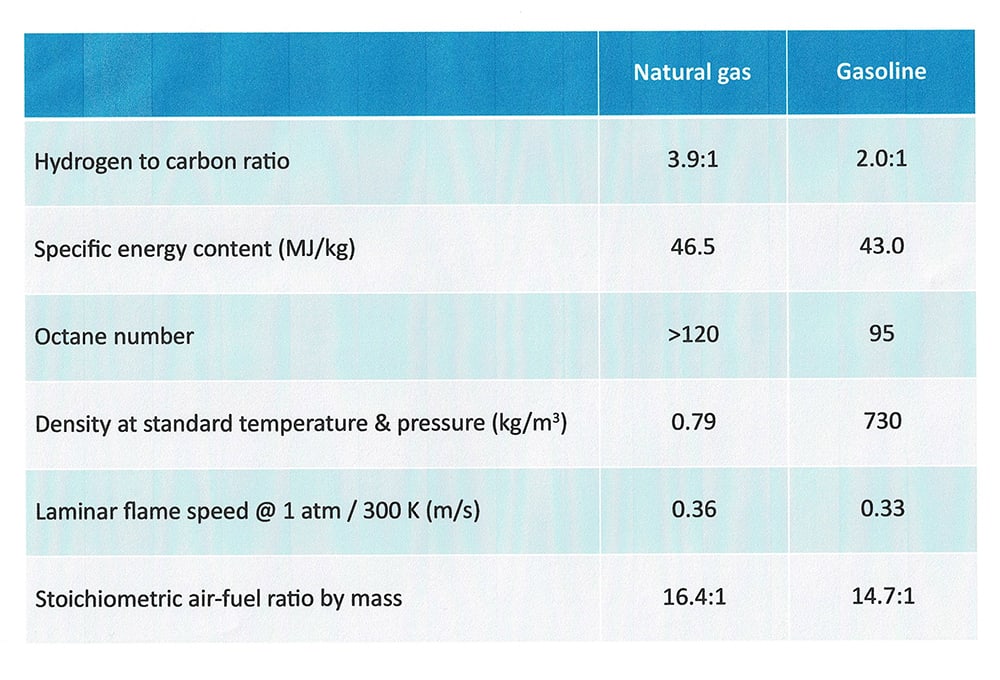
To unbridle CNG’s full potential, Bassett’s team has developed a demonstrator vehicle running on CNG exclusively. Test data shows a 50% reduction in CO2 emissions at peak power and 20-40% in the RDE (real driving emissions) range. The combustion chemistry of an ultra-short carbon chain directly reduces the CO2 produced by CNG, and its higher knock resistance rating (over 120 RON) permits very high compression ratios, above 13:1 on Mahle’s turbocharged Di3 direct-injected, 3-cylinder concept engine.
CNG it is also better able to meet the requirements of today’s more demanding emissions test protocols, including RDE, Bassett said. “The higher load cases used in RDE testing expose inefficient gasoline engine practices such as over-fueling to reduce exhaust temperatures; CNG doesn’t resort to this measure,” he explained. Particulate emissions that require costly aftertreatment on both diesel and DI gasoline engines are largely eliminated, he said, because a gaseous fuel mixes more homogeneously with intake air.
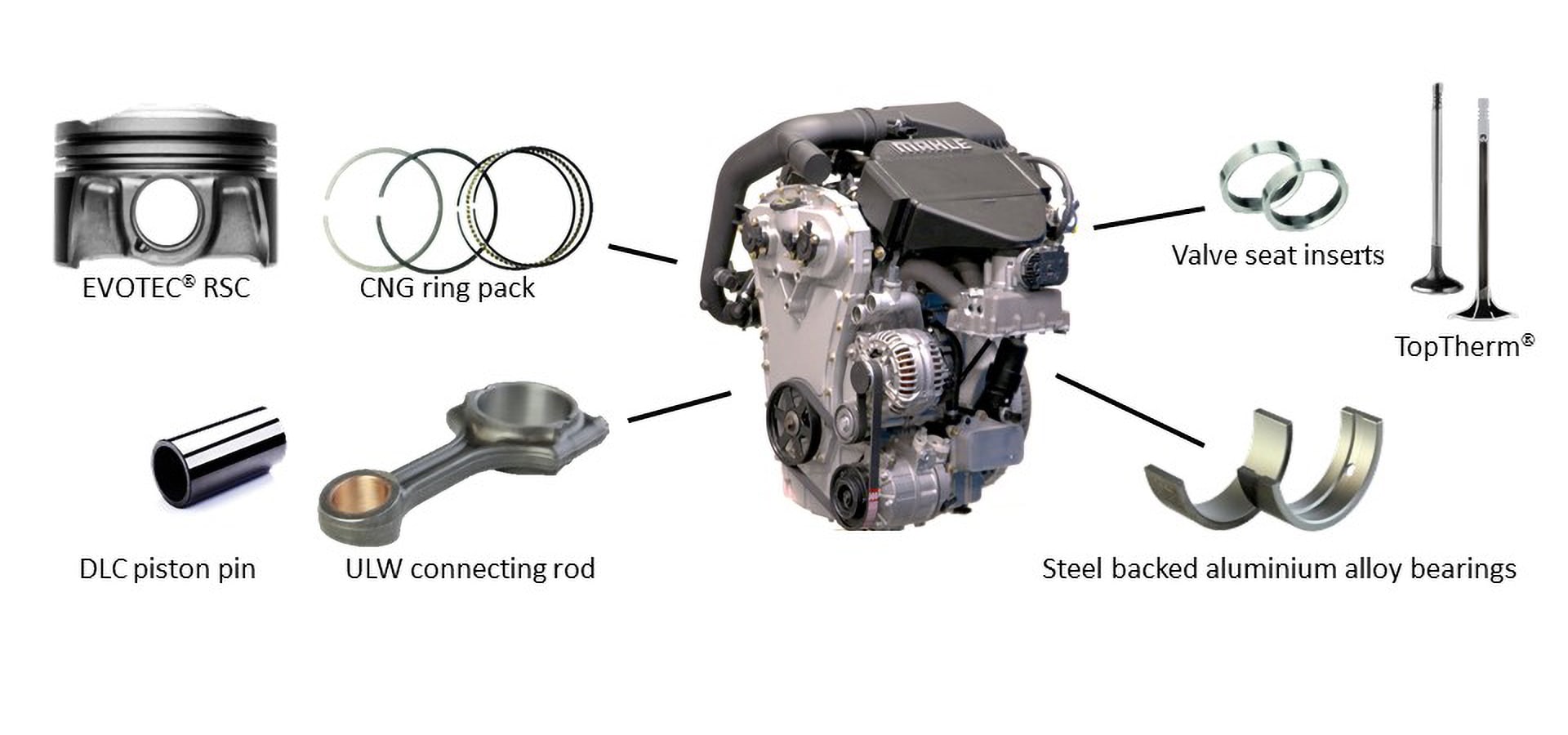
An engine designed specifically for CNG operation requires the robustness typically found in a diesel, combined with the rev limit of a gasoline engine because higher cylinder pressures (180 bar/2611 psi on the Mahle Di3) can be generated operating on natural gas than gasoline. And combustion speed does not limit engine revs in the way it does for a diesel, Bassett explained. Detail design changes would be required to the CNG engine’s pistons, piston pins, connecting rods and bearing shells to accommodate higher loads, and alternative valve and seat insert materials to cope with reduced lubricity.
Current hardware for direct injection must be specifically optimized for CNG operation, all this underlining why dual fuel engines are compromised. Compared to the infrastructure investment required to switch the private vehicle parc over to electric propulsion, the change to CNG as an interim fuel solution would be “relatively straightforward” in countries with an existing national gas distribution network, Bassett noted.
More From SAE Media Group
Off-Highway Engineering
Westport Awarded LNG Development Program
Off-Highway Engineering
Caterpillar Unveils New C13D Off-Highway Engine Platform
Off-Highway Engineering
New Biodiesel Strains Offer Measurable Gains
Automotive Engineering
2020 Ford Super Duty Debuts All-New 7.3-Liter Pushrod V8, 10-Speed Automatic
Off-Highway Engineering
Detroit DD15 Gen 5 Showcases Durability of New Diesel Tech
Automotive Engineering
Extending the ICE Age: Hyundai Optimizing Engines and Fuels
Off-Highway Engineering
Cummins New X15 Engine Meets Upcoming Regs While Boosting Efficiency
Off-Highway Engineering
SwRI Rolls out Hydrogen Demonstration Truck
Off-Highway Engineering
Isuzu Simplifies Fuel Changeovers
Off-Highway Engineering
Could This Infinitely Variable Compression Mechanism Be the Next Piston Engine Game-Changer?
Automotive Engineering
Eaton Goes Internal with Its Next-Generation EGR Solution
Off-Highway Engineering
Cummins, Tula Test ‘Dynamic’ Cylinder Deactivation for Diesels
Automotive Engineering
Why JLR Is Giving Its Newest Range Rover Straight-6 Power
Off-Highway Engineering
Kohler Doubles down on ICE Development
Off-Highway Engineering
Scania Adapts On-Highway Diesel for New Off-Highway Engine Platform
Automotive Engineering
The Electrofuels That Reduce Amazon’s Fleet Emissions
Off-Highway Engineering
Cummins’ New Mid-Displacement Turbos Quieter and More Efficient
Off-Highway Engineering
Global Emissions Regs Demand Differing Engine Strategies
Automotive Engineering
Engine Researchers: 50% Gasoline-Engine Efficiency in Sight
Automotive Engineering
How Higher-Quality Gasoline Keeps Modern Engines Clean and Efficient
Off-Highway Engineering
Propane Powers Ahead for Medium Duty Sector
Automotive Engineering
Charting the ICE Future with Mahle’s Martin Berger
Automotive Engineering
Extending a Wankel Future on Hydrogen Fuel
Off-Highway Engineering
Hydrogen ‘Inevitable’ for Commercial Vehicles
Automotive Engineering
Mahle’s Pre-Chamber MJI Technology Is Sparking Ignition Advances
Automotive Engineering
Mahle Reveals ‘Fits All’ Modular and Scalable Integrated Hybrid Powertrain
Off-Highway Engineering
Off-Highway Emissions Set to Get Stricter
Off-Highway Engineering
Combustion Engines Carry on in Construction
Off-Highway Engineering
Insights into Heavy-Duty Engine Design
Off-Highway Engineering
Hyliion, Cummins Collaborate on Electric and NG Range-Extender
Top Stories
NewsSensors/Data Acquisition
 Microvision Aquires Luminar, Plans Relationship Restoration, Multi-industry Push
INSIDERRF & Microwave Electronics
 A Next Generation Helmet System for Navy Pilots
INSIDERWeapons Systems
 New Raytheon and Lockheed Martin Agreements Expand Missile Defense Production
NewsAutomotive
 Ford Announces 48-Volt Architecture for Future Electric Truck
INSIDERAerospace
 Active Strake System Cuts Cruise Drag, Boosts Flight Efficiency
ArticlesTransportation

Webcasts
Aerospace
 Cooling a New Generation of Aerospace and Defense Embedded...
Energy
 Battery Abuse Testing: Pushing to Failure
Power
 A FREE Two-Day Event Dedicated to Connected Mobility
Automotive
 Quiet, Please: NVH Improvement Opportunities in the Early Design Cycle
Electronics & Computers
 Advantages of Smart Power Distribution Unit Design for Automotive &...
Unmanned Systems
 Sesame Solar's Nanogrid Tech Promises Major Gains in Drone Endurance