




Uber, Toyota Suspend AV Testing After Arizona Fatality
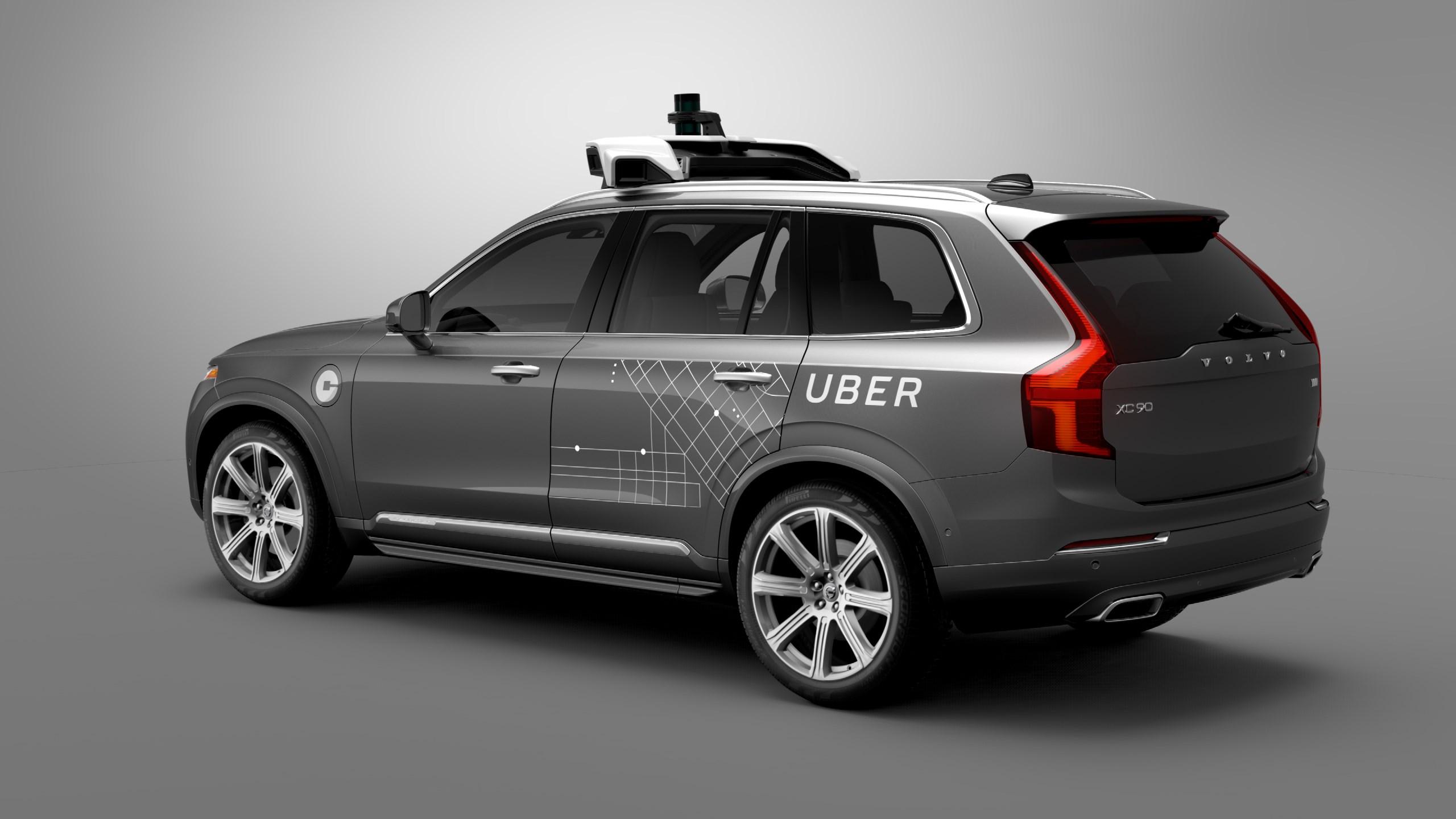
In the immediate aftermath of what is believed to be the first fatal collision between an autonomous vehicle (AV) and a pedestrian, Uber suspended public-road testing of its autonomous-vehicle fleet. Not long after, Toyota confirmed in a response from Japan that it also was temporarily halting testing of autonomous vehicles on public roads in the United States.
The incident reverberated through the automotive and technology industries as they await details from the accident investigation in Tempe, Arizona, where an Uber autonomous test vehicle struck and killed a woman walking a bicycle across a road. A human driver was in the Uber vehicle as Arizona law dictates but apparently was unable to override the autonomous-driving system in time to avoid the collision. Investigating bodies included Tempe police, the National Highway Traffic Safety Admin. and the National Transportation Safety Board.
Early reports cited the Tempe police chief Sylvia Moir as saying video evidence extracted from the front-facing camera made it appear the Uber vehicle “would likely not be at fault in this accident,” but it seemed inevitable the incident would impact the evolving AV sector—and public perception of autonomous-driving technology.
Initial reports appeared to confirm that the pedestrian stepped abruptly and without warning into the path of Uber’s autonomous Volvo XC90. “It’s very clear it would have been difficult to avoid this collision in any kind of mode based on how she came from the shadows right into the roadway,” Moir was quoted as adding the day after the incident.
Sam Abuelsamid, senior research analyst for mobility research service at Navigant Research, said the accident likely won’t slow AV development and engineering—but may prompt more scrutiny regarding autonomous vehicles’ readiness for public-road testing.
I don’t think this will have an impact on the overall pace of development of AVs but I think the more responsible companies will go back and revisit the policies for their “safety drivers, he said. “This incident may also be an indicator of the folly of relying on human drivers to take over from automation in SAE Level 2 or 3 systems.”
Another analyst envisions a setback for the perception of AV safety. Jason Levine, executive director of the Center for Auto Safety, told Bloomberg, “It will set consumer confidence in the technology back years, if not decades.”
Toyota also takes action
Shortly after the Arizona incident, Toyota announced its U.S.-based Toyota Research Institute would suspend all public-road AV testing of its “Chauffer” SAE Level 4 system.
"We cannot speculate on the cause of the incident or what it may mean to the automated driving industry going forward. Because we feel the incident may have an emotional effect on our test drivers, we have decided to temporarily pause our Chauffeur mode testing on public roads,” Toyota said in a statement.
“Ideally, in a different political climate, this would be the time for NHTSA to pause or slow public road testing in autonomous mode and develop some performance standards for the perception systems on these vehicles,” Navigant’s Abuelsamid suggested. “Those standards need to be testable but not technology-specific—for example be able to detect a pedestrian or a cyclist at a certain distance in various lighting conditions. These standards would form the basis of a federal motor vehicle safety standard. We already require human drivers to take a vision test when getting a license—this would be the technological equivalent. Any vehicle not able to pass these baseline requirements wouldn’t be allowed to test in autonomous mode on public roads.”
More From SAE Media Group
Automotive Engineering
SAE Rolls out Introduction to Automated Vehicle Safety in Shanghai
Automotive Engineering
Department of Transportation Asks for Public Input Regarding Relaxing AV Regulations

Off-Highway Engineering
Arctic Autonomy
Automotive Engineering
SAE International, Ford, General Motors, and Toyota Form Automated Vehicle Safety Consortium
Autonomous Vehicle Engineering
AV and ADAS Testing from out of the Box
Autonomous Vehicle Engineering
GM Announces Door-To-Door Ultra Cruise ADAS
Automotive Engineering
Mercedes Reveals Its Experimental Safety Vehicle 2019 – Mobile Robot Included
Off-Highway Engineering
Fiat-Chrysler Will Deploy Aurora Self-Driving Technology on It Commercial Vehicles
Off-Highway Engineering
Peloton CEO Talks Level 4 ‘Automated Following’
Automotive Engineering
ACM President and Michigan DOT Director Steudle Keynote Kicks off SAE ADAS Event
Automotive Engineering
Autonomous Vehicles Present Passive-Safety Challenges
Automotive Engineering
AVSC Develops Best Practices for Traceable AV Safety Inspection Protocols
Automotive Engineering
Lights Communicate Hella's Autonomous Vehicle Messages
Autonomous Vehicle Engineering
'Level 2+': Making Automated Driving Profitable, Mainstream
Automotive Engineering
Automated Vehicle Safety Series Addresses Design, Testing, Verification, and Validation

Off-Highway Engineering
Revolutionizing ADAS with Forward-Looking Lidar, Part I
Automotive Engineering
WCX 2019: Regulators Grapple with Autonomous Challenges
Autonomous Vehicle Engineering
Safety Testing for AVs Is Just Beginning
Autonomous Vehicle Engineering
Aptiv’s Autonomous-Vehicle ‘Air-Traffic Control’
Automotive Engineering
Regulatory Framework Emerging as Autonomy Becomes Reality
Automotive Engineering
SAE WCX 2022: OEM Learnings from Level 2 ADAS
Automotive Engineering
Soft Tests for Autonomous Vehicles
Automotive Engineering
Uber ATG Joins SAE ITC’s Automated Vehicle Safety Consortium
Automotive Engineering
New-Mobility Visionary Burns: Automated Driving ‘Getting Close’
Autonomous Vehicle Engineering
Hot New ‘Hands-On’ Turn in ADAS Safety Research
Off-Highway Engineering
USPS Tests Autonomous Semi-Trailers for Long-Haul Mail Logistics
Aerospace & Defense Tech Briefs
Adapting US Army Acquisition to Ensure the Reliability and Safety of Autonomous Vehicles
Top Stories
NewsRF & Microwave Electronics
 Microvision Aquires Luminar, Plans Relationship Restoration, Multi-industry Push
INSIDERAerospace
 A Next Generation Helmet System for Navy Pilots
INSIDERDesign
 New Raytheon and Lockheed Martin Agreements Expand Missile Defense Production
INSIDERMaterials
 How Airbus is Using w-DED to 3D Print Larger Titanium Airplane Parts
NewsPower
 Ford Announces 48-Volt Architecture for Future Electric Truck
ArticlesAR/AI

Webcasts
Electronics & Computers
 Cooling a New Generation of Aerospace and Defense Embedded...
Automotive
 Battery Abuse Testing: Pushing to Failure
Power
 A FREE Two-Day Event Dedicated to Connected Mobility
Unmanned Systems
 Quiet, Please: NVH Improvement Opportunities in the Early Design Cycle
Automotive
 Advantages of Smart Power Distribution Unit Design for Automotive &...
Energy
 Sesame Solar's Nanogrid Tech Promises Major Gains in Drone Endurance