




Autonomous Vehicles Present Passive-Safety Challenges
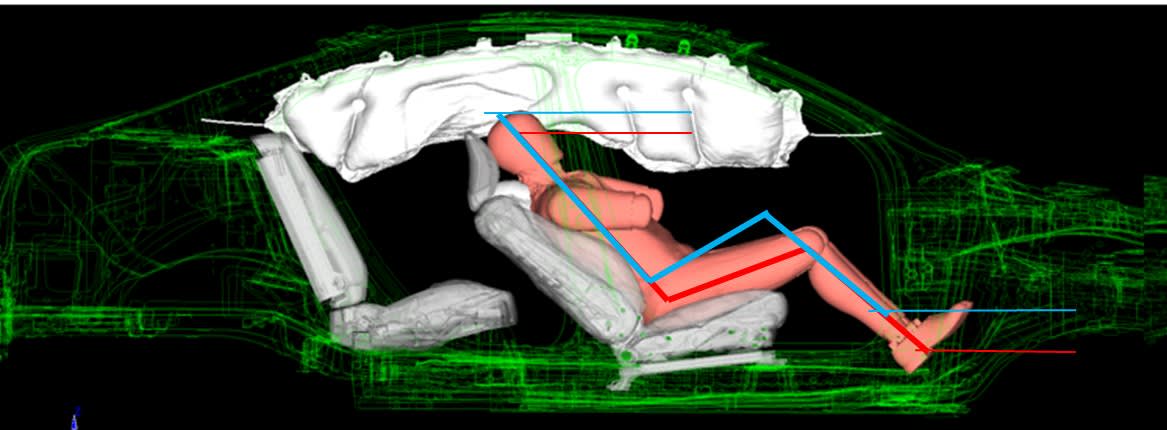
Reclined and rotated seating positions are commonly depicted for autonomously driven vehicles. But for the Autoliv engineers tasked with developing occupant safety for tomorrow’s self-driving vehicles, those previously improbable seating positions dictate innovative new passive safety protections.
“Passive safety for autonomous vehicles is a pretty complicated problem to solve, which is why we’re starting out with the simplest scenario: a frontal crash with a front occupant in a partial-recline position,” E. Scott Dershem, Autoliv’s Vice President of Product Development, said in an interview with Automotive Engineering at the safety supplier’s Auburn Hills, Michigan technical center.
Safety engineers know occupants in self-driving vehicles might be seated in unconventional positions. “For us, it’s not really about a particular level of autonomy; it’s more about the level of seating flexibility inside the vehicle,” he said.
That’s why "seat-centric" safety is vital. “There are laws and regulations now as to where seatbelt anchors have to be. But as seats rotate and recline, today’s anchor points aren’t in the optimum location. That issue could be solved with a change in the anchor point, such as moving it further forward to get the seatbelt off the abdomen area,” he offered.
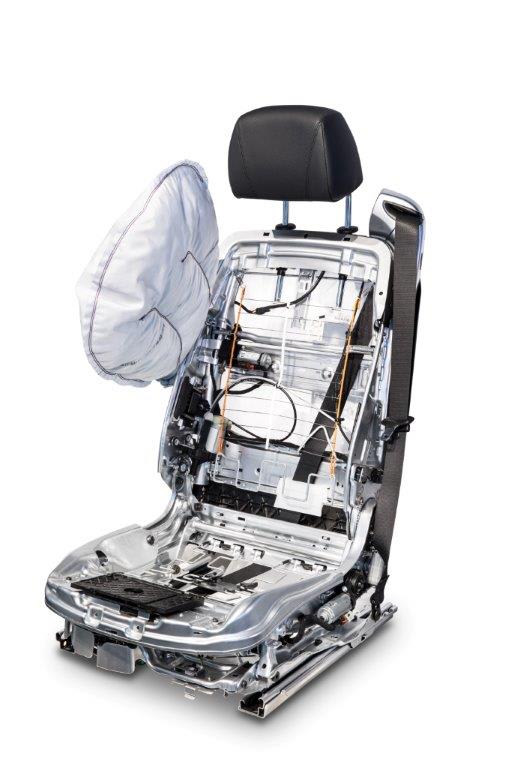
In-cabin features heavily influence the packaging of airbags. But if a self-driving vehicle is without a conventional instrument panel or other traditional cabin fixtures, the seats are the prime packaging locale for airbags.
“We’ve been working on our Life Cell concept since 2014. It’s a curtain airbag with two inflators,” said Dershem. The Life Cell airbag deploys from the seat and when fully deployed essentially envelopes the occupant’s head and shoulders. “The product has evolved. Our first-generation version didn’t go over the occupant’s head,” he said.
Researchers and engineers are looking for ways to address what happens during a so-called ‘normal-recline seating position.’ Computer simulations and testing with crash dummies show that the occupant’s head won’t be within the curtain airbag’s protection zone when seated in the ‘normal recline’ position.
“We’ve been talking about raising the seat up as you recline. That does two things: It gets the head back into the curtain area during a side impact. It also puts the head above the vehicle’s belt line and back into the window area so the occupant doesn’t get motion sickness,” he said, referring to a malady that’s possible when riding in an autonomously-driven vehicle.
Simlulation first
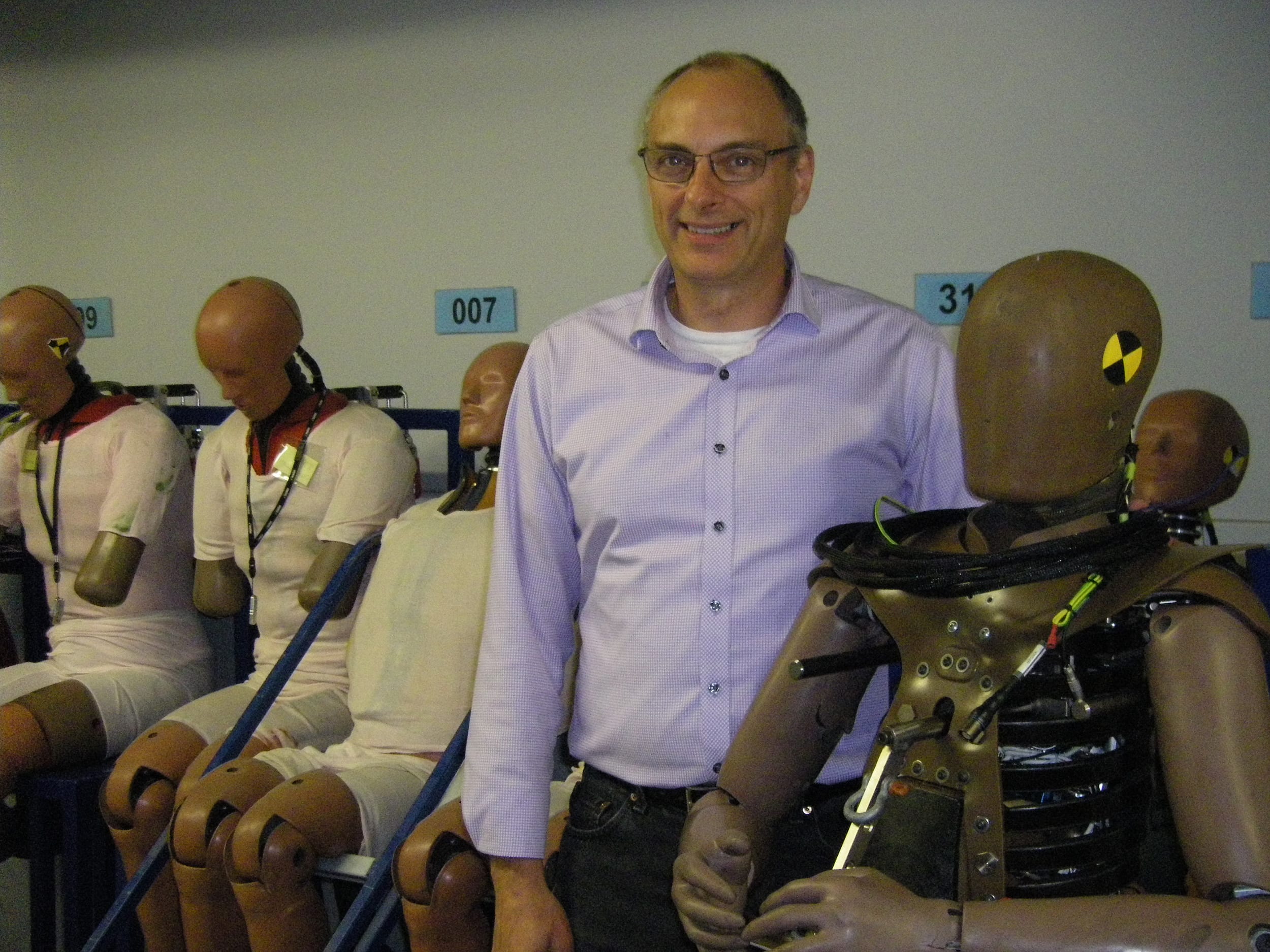
Autoliv’s typical testing process for passive safety systems starts with computer simulations. That’s followed by static testing to determine what happens to crash test dummies when airbags deploy and sled crashes with crash-test dummies into fixed barriers. “It’s not uncommon to go back to the beginning if we want to tweak an under-development technology,” he said. The final testing stage involves actual vehicles.
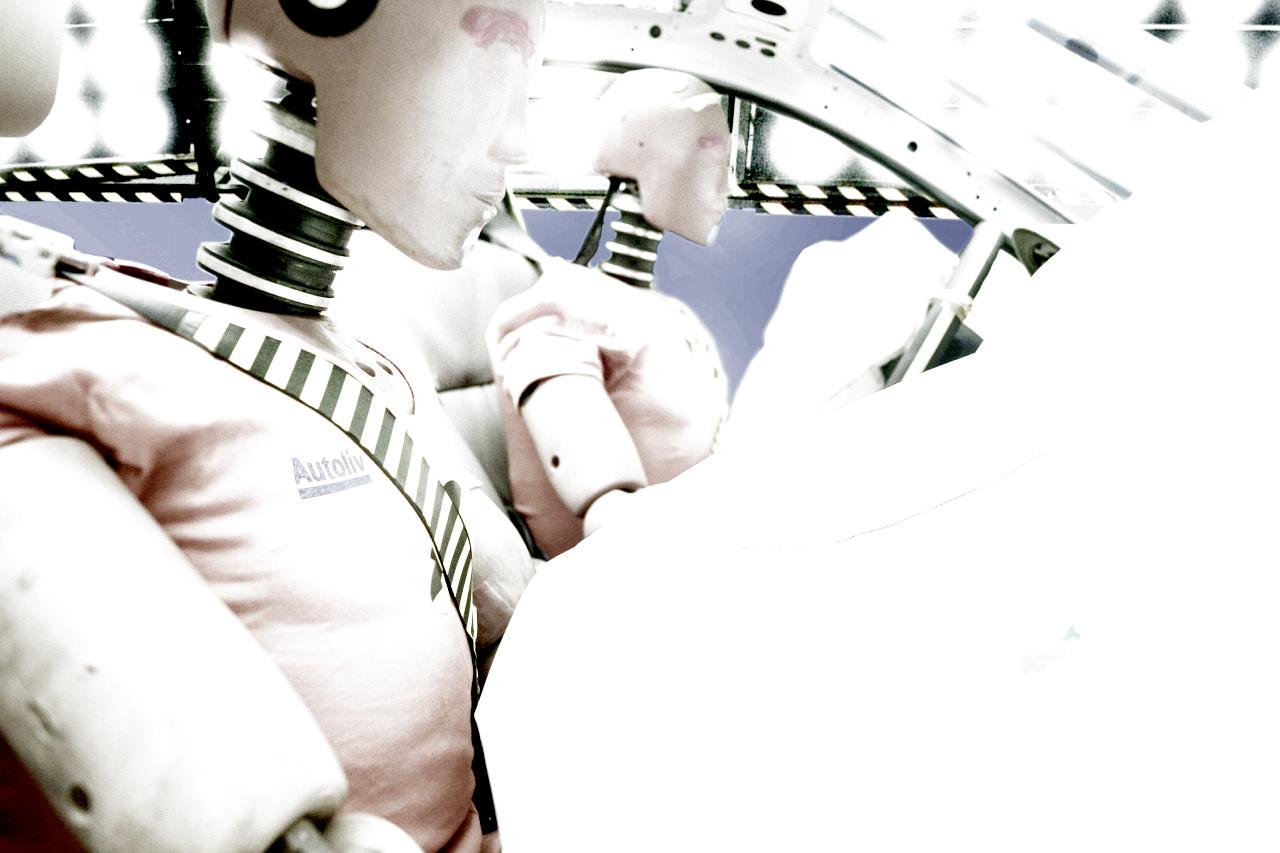
Autoliv technicians likely won’t conduct crash tests with dummies inside physical vehicles before the 2020 timeframe. “Some vehicle manufacturers are looking to do autonomous mobility as a delivery service, so those are likely to be first in-line for actual vehicle testing,” he said.
Passive safety systems offer protection during a vehicle crash, but those same technologies could be vital in instances of accident avoidance.
“There will be evasive maneuvers by autonomously driven vehicles that prompt a quick lane change or emergency braking to avoid a collision with another vehicle, pedestrian, bicyclist, deer, or some other object,” said Dershem. “Imagine if the occupants are in ‘living room’ seating position and the vehicle does 1G braking and no one is belted. It’s going to get ornery inside that vehicle.”
More From SAE Media Group
Autonomous Vehicle Engineering
Safety Testing for AVs Is Just Beginning
Automotive Engineering
Honda Ready with New Injury-Reducing Airbag
Automotive Engineering
Mercedes Reveals Its Experimental Safety Vehicle 2019 – Mobile Robot Included
Automotive Engineering
SAE Rolls out Introduction to Automated Vehicle Safety in Shanghai
Automotive Engineering
Volvo Safety Guru Lotta Jakobsson on AV Crash Tech
Automotive Engineering
ZF’s Latest Safety Advances Open Up, Tighten up and Double Down
Autonomous Vehicle Engineering
Origin of the Species
Automotive Engineering
Hyundai Breaks Ground for Safety Test and Investigation Lab
Autonomous Vehicle Engineering
'Level 2+': Making Automated Driving Profitable, Mainstream
ADAS & Autonomous Vehicle Engineering
The Road to Zero Prototypes
Off-Highway Engineering
Cloud Simulation Assists Active-Safety Development for Electric Refuse Truck
Imaging Technology
High-Speed Cameras Assist in Crash Sled Testing
Autonomous Vehicle Engineering
'Road Race' for AV Testing May Be Slowing
Automotive Engineering
Automated Vehicle Safety Series Addresses Design, Testing, Verification, and Validation

Automotive Engineering
Preview: SAE 2021 WCX
Motion Control Technology
Data Management Speeds Up Simulation of Crash Test Dummy Models
Automotive Engineering
AV Testing is for DUMMIES
Autonomous Vehicle Engineering
BMW 7-Series Drives Itself Through Own Assembly
Automotive Engineering
Uber, Toyota Suspend AV Testing After Arizona Fatality
Automotive Engineering
Nissan Opens New Vehicle-Safety Lab in Michigan
Automotive Engineering
Hyundai’s ‘Edgy’ New Ideas for Safety Testing
Automotive Engineering
Systems-engineering a New 4x4 Benchmark
Automotive Engineering
CES 2025 Preview: All the Tech That’s Fit to Print
Off-Highway Engineering
Commercial Vehicle ADAS: Testing, Testing and More Testing
Off-Highway Engineering
Arctic Autonomy
Autonomous Vehicle Engineering
Making the Strategic Move into AV Testing
Autonomous Vehicle Engineering
Purpose, Perceptions for Driver-Assist Tech Solidify
Automotive Engineering
Full Speed Ahead for Second-Generation Indy Autonomous Racers
Off-Highway Engineering
Euro NCAP Details New Testing for Heavy-Truck Safety Rating
Top Stories
NewsRF & Microwave Electronics
 Microvision Aquires Luminar, Plans Relationship Restoration, Multi-industry Push
INSIDERAerospace
 A Next Generation Helmet System for Navy Pilots
INSIDERDesign
 New Raytheon and Lockheed Martin Agreements Expand Missile Defense Production
INSIDERMaterials
 How Airbus is Using w-DED to 3D Print Larger Titanium Airplane Parts
NewsPower
 Ford Announces 48-Volt Architecture for Future Electric Truck
ArticlesAR/AI

Webcasts
Electronics & Computers
 Cooling a New Generation of Aerospace and Defense Embedded...
Automotive
 Battery Abuse Testing: Pushing to Failure
Power
 A FREE Two-Day Event Dedicated to Connected Mobility
Unmanned Systems
 Quiet, Please: NVH Improvement Opportunities in the Early Design Cycle
Automotive
 Advantages of Smart Power Distribution Unit Design for Automotive &...
Energy
 Sesame Solar's Nanogrid Tech Promises Major Gains in Drone Endurance