




Adapting US Army Acquisition to Ensure the Reliability and Safety of Autonomous Vehicles
This report presents several challenges that the U.S. Army will face in the transition to autonomous vehicles, challenges that are only magnified in the current acquisition environment with limited testing. Artificial intelligence algorithms introduce additional complexity, resulting in systems with a complex combination of human, machine, and autonomous controllers.
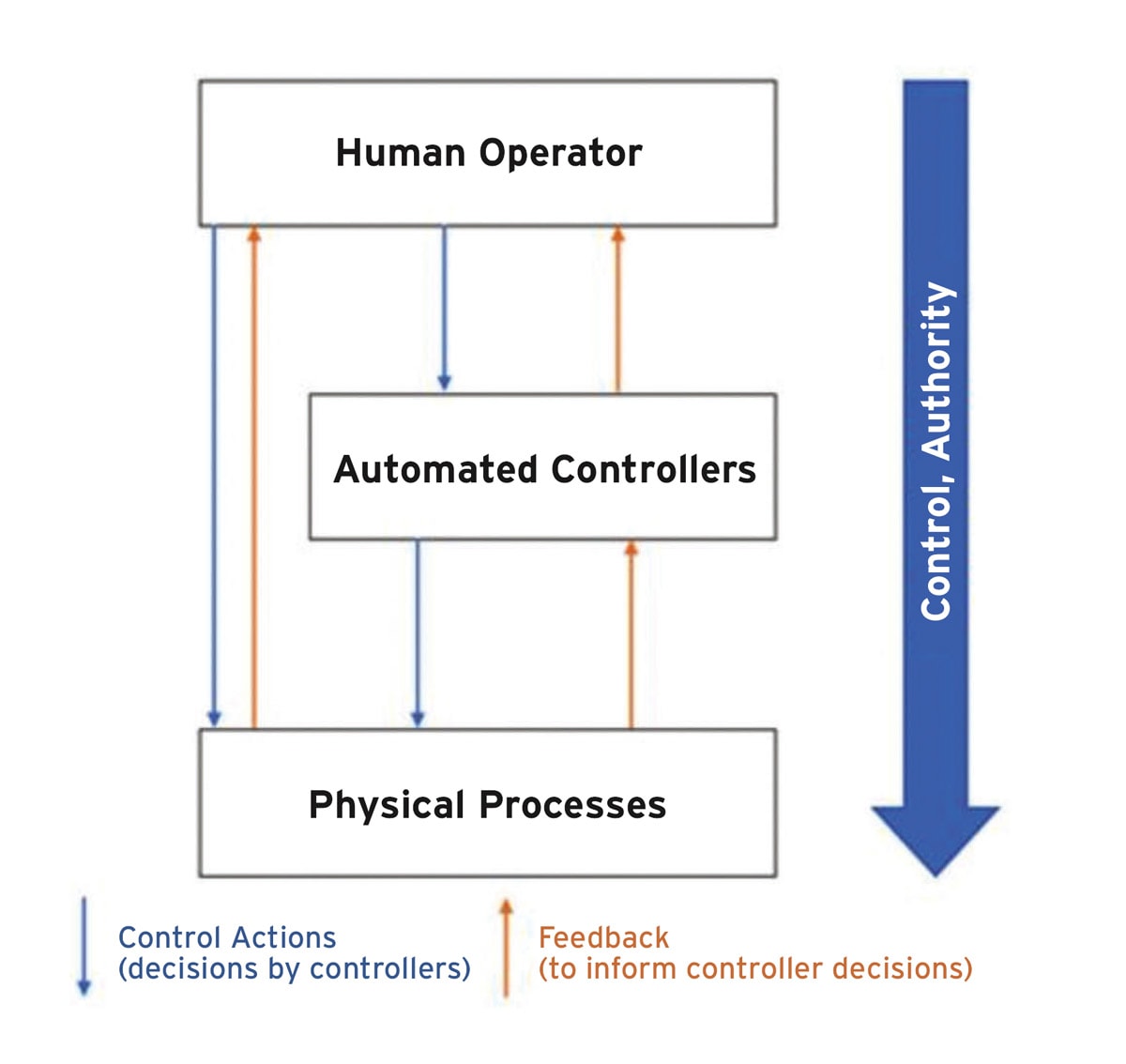
Artificial intelligence (AI) has become prevalent in many fields in the modern world, ranging from vacuum cleaners to lawn mowers and commercial automobiles. These capabilities are continuing to evolve and become a part of more products and systems every day, with numerous potential benefits to humans. AI is of particular interest in autonomous vehicles (AVs), where the benefits include reduced cognitive workload, increased efficiency, and improved safety for human operators. Numerous investments from academia and industry have been made recently with the intent of improving the enabling technologies for AVs. Google and Tesla are two of the more well-known examples in industry, with Google developing a self-driving car and Tesla providing its Full Self-Driving (FSD) autopilot system. Ford and BMW are also working on their own AVs.
These systems continue to remain a challenge despite these investments. Recent National Highway Traffic Safety Administration (NHTSA) investigations involving Tesla highlight the importance and difficulty of these technologies. NHTSA Campaign Number 23V085000 (NHSTA, 2023a) involves the recall of over 300,000 vehicles equipped with the FSD Beta system. The recall summary states that the FSD Beta system may result in unsafe actions with the vehicle. These unsafe actions include traveling straight through an intersection while in a turn-only lane, entering a STOP sign-controlled intersection without coming to a complete stop, and proceeding without caution into an intersection during a steady yellow traffic signal. The recall also states that the system may fail to respond to changes in posted speed limits and not account for the driver’s adjustment of the vehicle’s speed beyond these limits.
NHTSA Campaign Number 23V037000 (NHSTA, 2023b) was an earlier recall involving approximately 53,000 vehicles that also discusses issues with the FSB Beta system. The system included a “rolling stop” functionality in the software that could allow the vehicle to travel through an all-way stop intersection without stopping. Both recalls were able to be addressed through remote Over-the-Air software updates, which is actually an important benefit that AVs will likely have. A recent survey of deep learning methods for AVs also recognized the difficulties that remain for widespread use of AVs. The work identified 10 challenges that must be resolved: 1) Complexity of Autonomous Driving (AD) Systems; 2) Dynamicity of Road Environment; 3) Big Data and Real-Time Processing; 4) Intelligent Data Prioritization; 5) Robustness and Adaptability; 6) Integration/Fusion of Sensory Data for Dynamic Decision Making; 7) Fairness, Accountability, and Transparency in deep learning for AD; 8) Online Learning Capabilities in AD; 9) Robustness Against Adversarial Attacks; and 10) Variability of Traffic Sign Boards (Muhammad et al., 2021).
According to NHTSA guidance, the overall safety of AVs is left to the companies that build them. Each company must comply with Federal Motor Vehicle Safety Standards while also certifying that their vehicles do not have inherent safety risks. While many companies are currently testing vehicles with higher levels of automation to ensure that they operate as intended, the NHSTA indicates that numerous experts state that more work remains to be done by vehicle developers to ensure their safe operation before they are available commercially (NHSTA, n.d.). Detailed studies on the algorithmic methods for safe autonomous driving have not yet been completed. These studies should be considered the backbone of the safety of AVs, including those developed for use by the Army.
This work was performed by Patiana Theragene, Martin Wayne, and Nathan Herbert for the U.S. Army DEVCOM Analysis Center. For more information, download the Technical Support Package (free white paper) below.
This Brief includes a Technical Support Package (TSP).
Adapting US Army Acquisition to Ensure the Reliability and Safety of Autonomous Vehicles
(reference DEVCOM-2023048) is currently available for download from the TSP library.
Don't have an account?
More From SAE Media Group
Photonics & Imaging Technology
AI-Based Machine Vision & the Future of Automotive In-Cabin Technologies
Autonomous Vehicle Engineering
The Navigator: Mapping the Way to Safe Automated Driving
Autonomous Vehicle Engineering
Making Safety Standard
Automotive Engineering
Inside Tesla's Cybercab Future
ADAS & Autonomous Vehicle Engineering
Automated Driving’s Journey: One Step Forward…
Autonomous Vehicle Engineering
Dial ‘M’ for Mobility: Smartphone as Steering Wheel
Automotive Engineering
Nvidia’s New Level 2+ Autonomy Platform Is Making Cars Safer Today
ADAS & Autonomous Vehicle Engineering
Tesla’s FSD Recall Impacts AV Industry
Automotive Engineering
Volvo EX90 Uses AI, NVIDIA SoC to Make Automated Driving Safer

Automotive Engineering
Uber, Toyota Suspend AV Testing After Arizona Fatality
Autonomous Vehicle Engineering
AV and ADAS Testing from out of the Box
Tech Briefs
How Mercedes and NVIDIA Handle City Driving
Off-Highway Engineering
USPS Tests Autonomous Semi-Trailers for Long-Haul Mail Logistics
Tech Briefs
Autonomous Vehicles and the Burden of Testing

Automotive Engineering
SAE WCX 2022: OEM Learnings from Level 2 ADAS
Autonomous Vehicle Engineering
BMW 7-Series Drives Itself Through Own Assembly
Off-Highway Engineering
Artificial Intelligence Being Schooled for Mining Applications
Automotive Engineering
JLR Pavement Signals Throw New Light on AV Trust Levels
Autonomous Vehicle Engineering
Building Geofences to Speed AV Adoption
Automotive Engineering
CASE Struggles to Fulfil Expectations
ADAS & Autonomous Vehicle Engineering
AV Life After Argo AI
Autonomous Vehicle Engineering
The Swedish Word for AV Tech
Tech Briefs
Smart Cars Driving on Smart Pavement
Motion Design INSIDER
Autonomous Bus Sounds: It’s All About When, Not How
Off-Highway Engineering
Meeting Truck Autonomy Hurdles Head-on
Photonics & Imaging Technology
Bringing Human-Like Reasoning to Driverless Car Navigation
Autonomous Vehicle Engineering
Mapping Canada — Centimeter by Centimeter
Autonomous Vehicle Engineering
Hopeful but Closer Scrutiny for SAE Level 4 Automation
Overview
The report titled "Adapting U.S. Army Acquisition to Ensure the Reliability and Safety of Autonomous Vehicles," authored by Patiana Theragene, Martin Wayne, and Nathan Herbert, addresses the challenges the U.S. Army faces in transitioning to autonomous vehicle technology. Released in June 2023, the document outlines the complexities introduced by artificial intelligence (AI) and the need for a revised acquisition process to ensure the safety and reliability of these systems.
The report begins by discussing the current state of testing within the Army, highlighting limitations in the existing acquisition environment that hinder effective evaluation of autonomous vehicles. It emphasizes that the integration of AI algorithms complicates the interaction between human operators, machines, and autonomous systems, necessitating a more sophisticated approach to testing and evaluation.
A key focus of the report is the need for a "systems view" in the acquisition process. This perspective encourages consideration of the intricate interactions among various components of autonomous systems, which is crucial for understanding their behavior and ensuring their reliability. The authors argue that employing a combination of available tools and techniques early in the development phase is vital for the successful acquisition of autonomous capabilities.
The report also outlines several specific challenges the Army will encounter, including the need for rigorous risk assessment and the development of new testing methodologies that can accommodate the unique characteristics of AI-driven systems. The authors stress that traditional testing approaches may not be sufficient to address the complexities of these technologies, and therefore, innovative strategies must be developed.
In conclusion, the report calls for a paradigm shift in how the Army approaches the acquisition of autonomous vehicles. By adopting a comprehensive and systems-oriented approach, the Army can better navigate the challenges posed by AI and ensure that autonomous systems are safe, reliable, and effective in operational contexts. The findings underscore the importance of adapting acquisition processes to keep pace with technological advancements, ultimately enabling the Army to efficiently integrate autonomous capabilities into its operations while maintaining high standards of safety and reliability.
Top Stories
NewsSensors/Data Acquisition
 Microvision Aquires Luminar, Plans Relationship Restoration, Multi-industry Push
INSIDERRF & Microwave Electronics
 A Next Generation Helmet System for Navy Pilots
INSIDERWeapons Systems
 New Raytheon and Lockheed Martin Agreements Expand Missile Defense Production
NewsAutomotive
 Ford Announces 48-Volt Architecture for Future Electric Truck
INSIDERAerospace
 Active Strake System Cuts Cruise Drag, Boosts Flight Efficiency
ArticlesTransportation

Webcasts
Aerospace
 Cooling a New Generation of Aerospace and Defense Embedded...
Energy
 Battery Abuse Testing: Pushing to Failure
Power
 A FREE Two-Day Event Dedicated to Connected Mobility
Automotive
 Quiet, Please: NVH Improvement Opportunities in the Early Design Cycle
Electronics & Computers
 Advantages of Smart Power Distribution Unit Design for Automotive &...
Unmanned Systems
 Sesame Solar's Nanogrid Tech Promises Major Gains in Drone Endurance