




Hardide Coatings to Construct Two Additional U.S.-Based Reactors
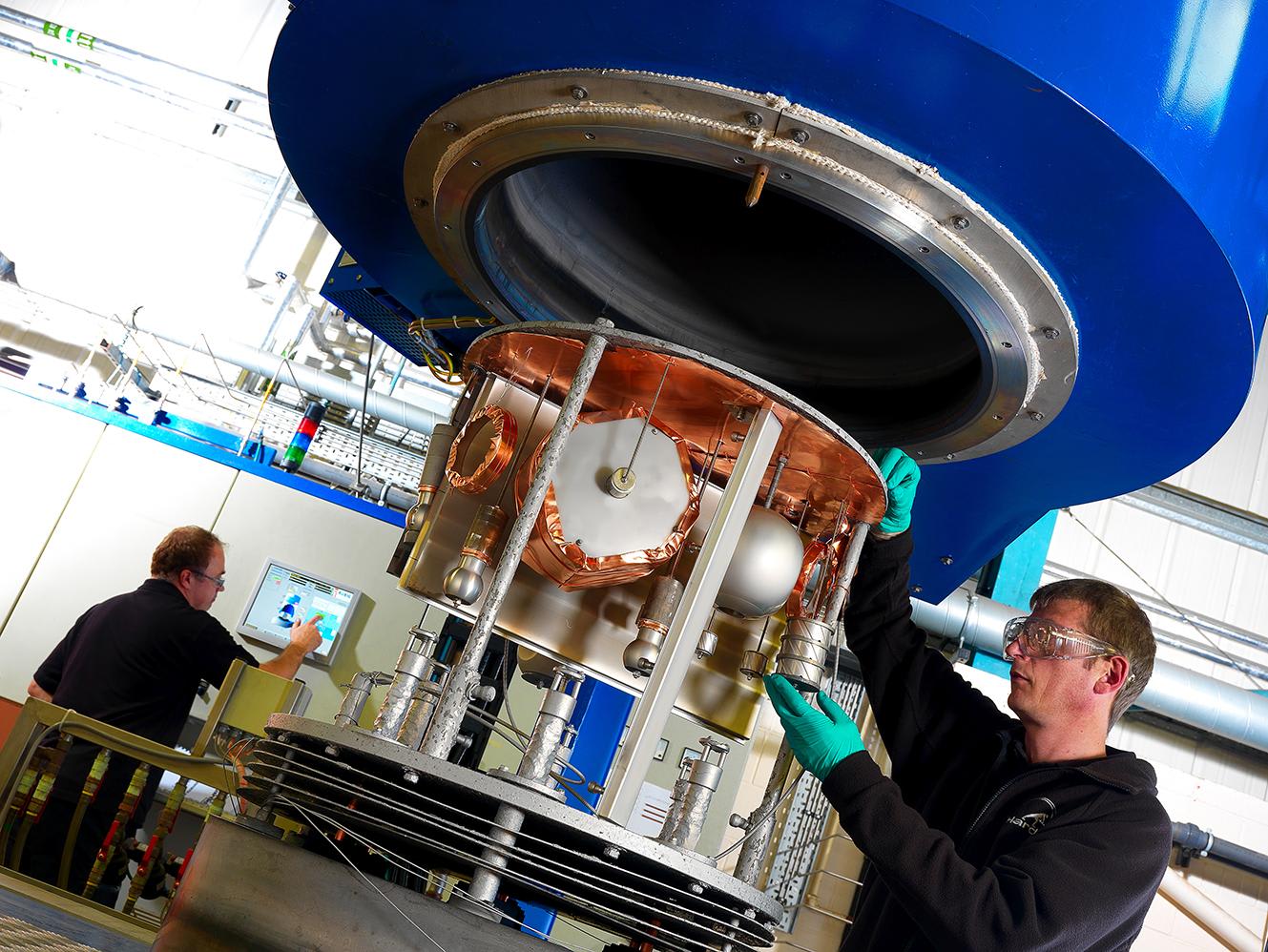
Hardide Coatings Ltd, developer of Hardide surface coating technology, has recently completed raising funds for the construction of two additional reactors at the company’s U.S. facility. This comes shortly after Hardide gained National Aerospace and Defense Contractors Accreditation Program (Nadcap) accreditation for its Hardide-A coating.
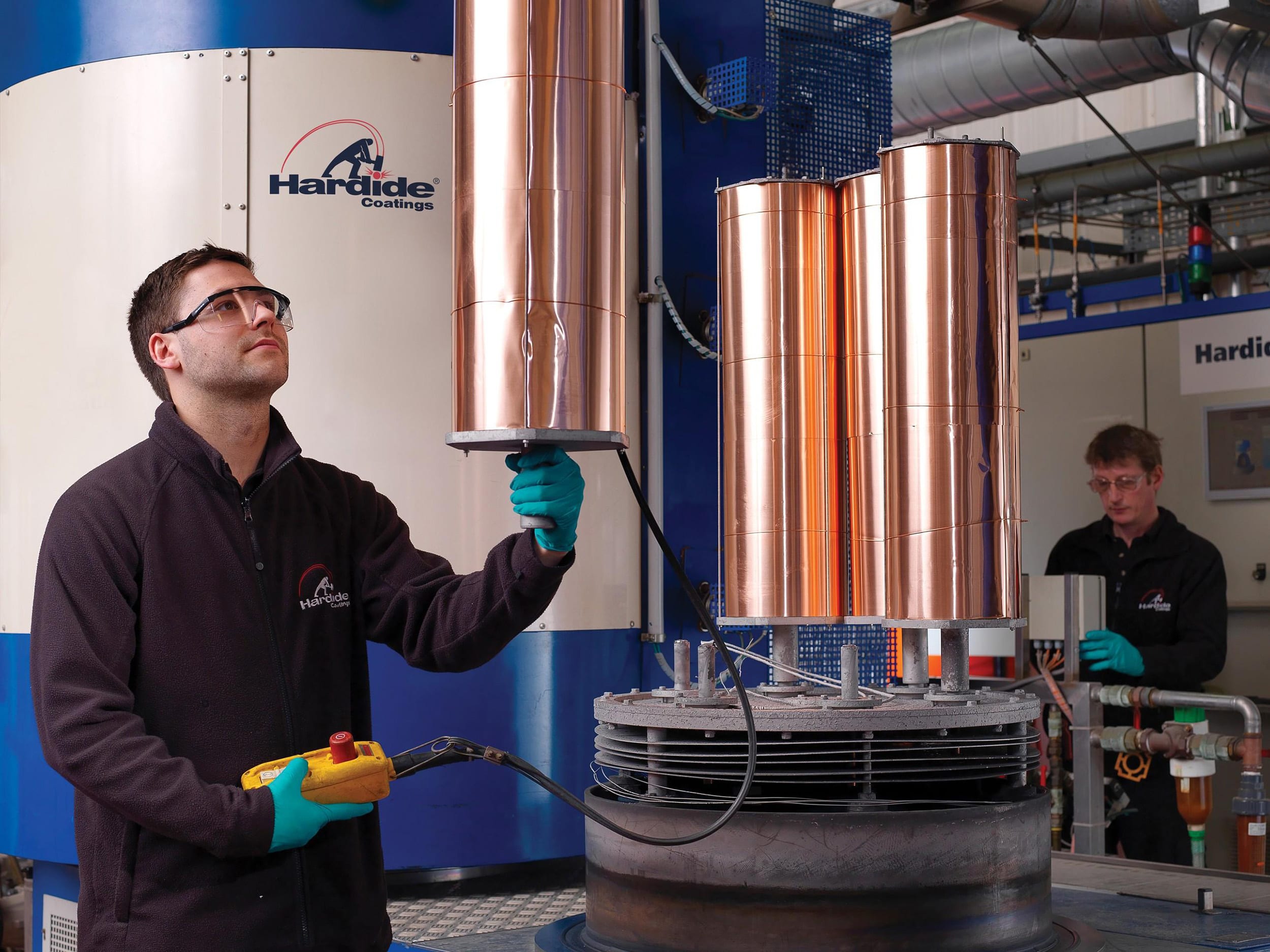
The accreditation allowed Hardide to expand its business in the aerospace sector to offer advanced tungsten carbide-based coatings to aerospace manufacturers, which drove the decision to expand stateside operations. The accreditation followed its March 2017 award of approved supplier status by Airbus Group.
Aerospace is considered a key growth market for Hardide, according to Philip Kirkham, Hardide Coatings' CEO. “An increasing number of aerospace companies require their suppliers to be Nadcap accredited, so to be fully approved opens up the market to us. As well as cementing our position with customers such as Airbus, Leonardo, and BAE Systems, it will qualify us to work with any of the prime contractors and their worldwide supply chains.”
Hardide Coatings developed Hardide-A for the aerospace and defense industry as a replacement for toxic hard-chrome plating (HCP). HCP has been a mainstay of industrial coating in aerospace, heavy equipment, automotive, and various other industries where extreme operating environments require corrosion- and wear-resistant coatings. An example of this would be in hydraulic aircraft landing gear or wing flap actuators where leak-tight seals are present. Corroded metal finishes can accelerate seal degradation and affect reliability, downtime, and maintenance costs.
But the hexavalent chrome salts used to produce HCP pose extreme health and environmental hazards. HCP is to be banned shortly under European Union’s Registration, Evaluation, Authorization, and Restriction of Chemicals (REACH) regulations.
Hardide-A has less environmental impact, possesses versatile geometric compatibility, corrosion and fatigue resistance. These are big advantages over alternatives like high- velocity oxygen fuel (HVOF) coating, cadmium plating, and other coating processes where spray coatings cannot be used.
Hardide-A requires minimal pre-coating part design changes and matches HCP in thickness and hardness. It has a low-friction, smooth-as-coated surface and can be diamond ground, honed, and superfinished for tighter dimensional accuracy. Hardide finishes also can survive impact and part deformation.
Overall, Hardide outperforms HCP and HVOF in terms off corrosion and fatigue resistance. In cases like the aircraft actuators, HVOF and other spray coatings can wear irregularly or leach cobalt binding agents while leaving tungsten carbide grains in place (which abrade seals). In abrasive or corrosive environments, the Hardide coating’s uniform nanostructure allows the coated part to wear uniformly and retain or even improve surface finish.
Although no potential Hardide customers had been pushing for Hardide Coatings to acquired Nadcap accreditation, the company—which secured a large order with General Electric in the second half of 2017—initiated the process three years ago.
“This accreditation really does prove that Hardide works under the most stringent process control standards required to coat aircraft components,” said Kirkham.
More From SAE Media Group
Automotive Engineering
Hardide Coatings Awarded Two Major UK Aerospace Funding Grants
Automotive Engineering
Brunel Pursues Ultrasound for ‘Greener’ Production of Aluminum Alloys
Aerospace & Defense Tech Briefs
PPG Primes Second Location for New Aerospace E-Coat Pilot System
Aerospace & Defense Tech Briefs
Robotic Rotational Molding Creates New Opportunities for Military and Aerospace Applications
Aerospace & Defense Tech Briefs
Novel Chromium–Molybdenum Metal Alloy Withstands Extreme Conditions
Aerospace & Defense Tech Briefs
Cold Spray Technology

Aerospace & Defense Tech Briefs
Equispheres Accelerates Additive Manufacturing Innovation with $5M from Lockheed Martin
Aerospace INSIDER
High-Power Contacts
Aerospace & Defense Tech Briefs
Biobased Carbon Fibers and Thermosetting Resins for Use in DOD Composites Applications
Aerospace & Defense Tech Briefs
Aerospace Manufacturers Turn to Non-Hazardous PVD Coatings as Regulations Tighten on Toxic Hard Chrome Plating


Tech Briefs
Method Recovers Metals from Electronic Waste
Aerospace & Defense Tech Briefs
The Next Material Disruption
Aerospace & Defense Tech Briefs
Industrial-Scale Metal 3D Printer
Aerospace & Defense Tech Briefs
The Rapid Rise of Beryllium-Aluminum Alloys in Aerospace

Aerospace & Defense Tech Briefs
Chemically Bonded Phosphate Ceramics Stop Corrosion
Aerospace & Defense Tech Briefs
Axial and Radial Seals
Green Design & Manufacturing
Stainless Steel Strip for Solid Oxide Fuel Cells
Aerospace & Defense Tech Briefs
Testing Services
Aerospace & Defense Tech Briefs
Additive Manufacturing Adoption Up, Growing Rapidly in Aerospace

Aerospace & Defense Tech Briefs
Plasma-Spray Coating as an Alternative to Chromium Plating
Tech Briefs
High Atomic Number Coatings for Fabrics
Aerospace & Defense Tech Briefs
High-Strength Aluminum Powder Developed for Additive Manufacturing in Aerospace, Automotive
Aerospace & Defense Tech Briefs
Additive Manufacturing and Materials a Prime Focus for GKN Aerospace
Aerospace & Defense Tech Briefs
Electrocoat Primer System
Top Stories
INSIDERManufacturing & Prototyping
 How Airbus is Using w-DED to 3D Print Larger Titanium Airplane Parts
INSIDERManned Systems
 FAA to Replace Aging Network of Ground-Based Radars
NewsTransportation
 CES 2026: Bosch is Ready to Bring AI to Your (Likely ICE-powered) Vehicle
NewsSoftware
 Accelerating Down the Road to Autonomy
EditorialDesign
 DarkSky One Wants to Make the World a Darker Place
INSIDERMaterials
 Can This Self-Healing Composite Make Airplane and Spacecraft Components Last...
Webcasts
Defense
 How Sift's Unified Observability Platform Accelerates Drone Innovation
Automotive
 E/E Architecture Redefined: Building Smarter, Safer, and Scalable...
Power
 Hydrogen Engines Are Heating Up for Heavy Duty
Electronics & Computers
 Advantages of Smart Power Distribution Unit Design for Automotive...
Unmanned Systems
 Quiet, Please: NVH Improvement Opportunities in the Early Design...
