




Navistar’s SuperTruck II Explores Composites, WiFi to Cut Weight

Lightweighting was one strategy pursued by SuperTruck teams during the first phase of the U.S. Department of Energy-sponsored initiative to improve heavy-truck freight efficiency by 50%. For example, the International Catalist features a “hybrid” front suspension that leverages lightweight alloys with composite materials, reducing weight and enabling an electronic ride height management system that provides dynamic ride height and pitch control for improved aerodynamics.
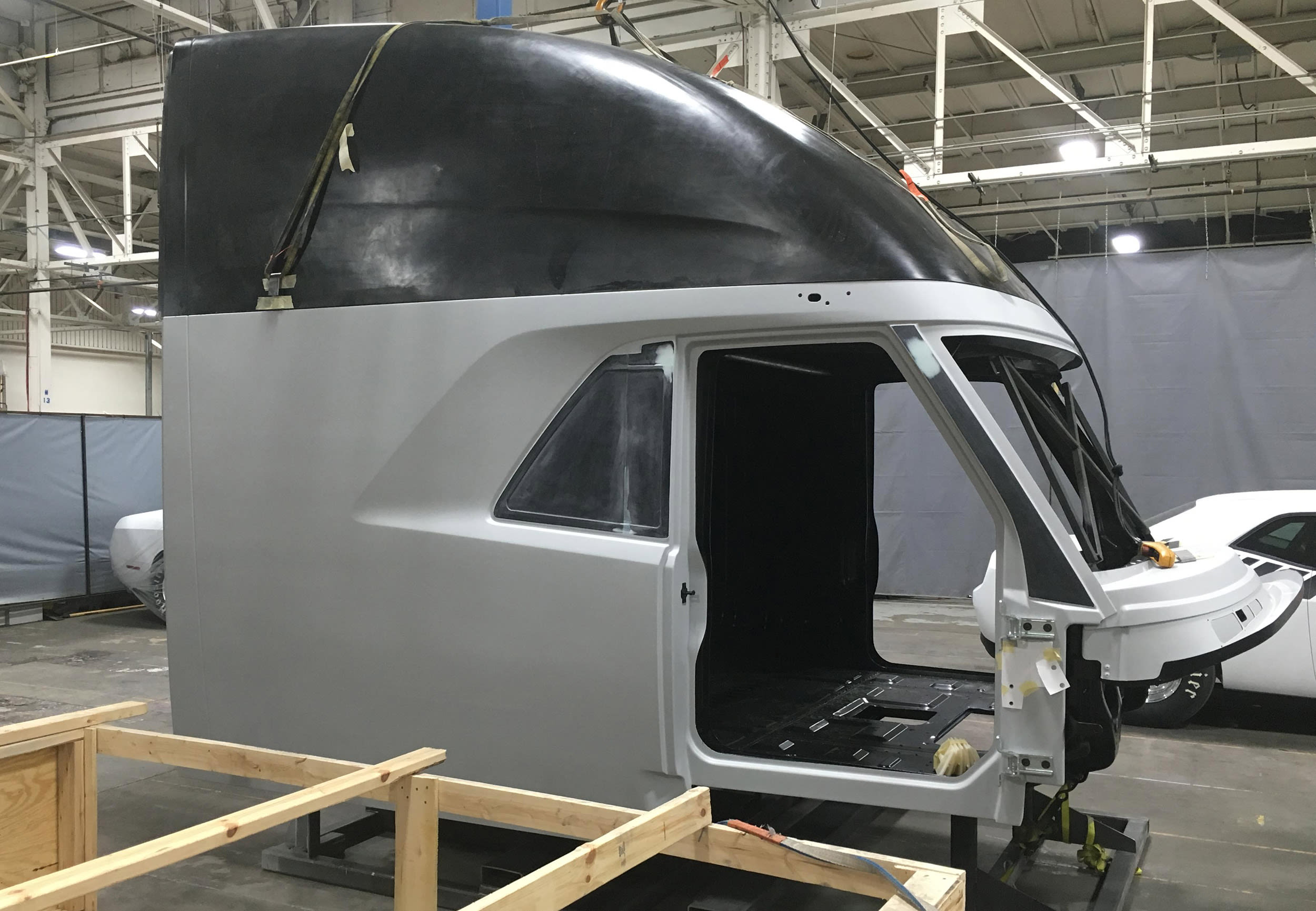
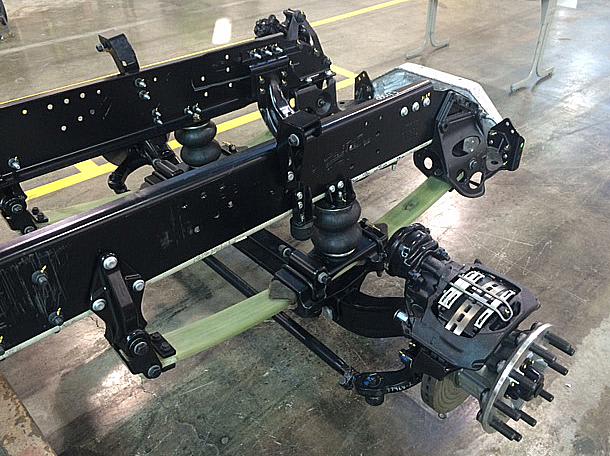
“Typically, air-ride front suspensions are very heavy, they’re very soft to drive—but we’ve integrated a composite leaf spring and an air spring into one suspension,” explained Dean Oppermann, chief engineer for advanced vehicles and the SuperTruck program at Navistar. “We’ve been able to do it in a way that reduces weight of the system, maintains our ride height control, but also offers more stability with the leaf spring-type suspension.”
Designed and developed by Hendrickson, the Catalist hybrid front suspension is approximately 40 lb (18 kg) lighter than a conventional steel leaf suspension with same load rating, he said. The hybrid suspension using a steel leaf, called AIRTEK, is ready for production now. “This production suspension is currently being updated with an electronic ride height control valve to productionize the pitch control that has been demonstrated on the Catalist property,” Oppermann shared.
The Catalist also makes extensive use of lighter-weight carbon-fiber panels, in the upper body, roof headers, back panel and dash panel. The Navistar-designed cab/sleeper composite surfaces were manufactured by a third-party low-volume composite component manufacturer.
“The continued reduction of raw material costs and manufacturing costs of complex composite components, coupled with the requirement for complex aerodynamic geometries to support GHG regulations, could make composites a viable alternative to conventional materials for low-volume applications,” he said.
Navistar’s emphasis on lightweighting continues unabated with its SuperTruck II program, which got under way late last year. Engineers are investigating WiFi technology for activating/deactivating features in the vehicle, according to Oppermann.
“One of the wasted weight attributes of a truck is we carry harnesses that we call ‘150% content.’ These harnesses support every feature that we sell for our products even though the feature may not be requested by our customers,” he explained. “Wireless and intelligent power distribution modules allow support of all content with a small common harness. This technology can result in a 25- to 50-lb reduction in wire length/complexity as well as simplified routing and clipping strategies.”
Other areas for lightweighting under investigation in Navistar’s SuperTruck II project include interior trim through design and material selection, as well as further use of composites in frame rails, cross members, cab/sleeper structure, driveshaft and trailer components.
More From SAE Media Group
Off-Highway Engineering
Mellor Bus Stresses Lightweight Construction for New Midsized Battery-Electric Buses
Off-Highway Engineering
Meritor Pursues Lightweighting Strategies for Drivelines
Automotive Engineering
Aluminum: Toward 50% Body Content
Off-Highway Engineering
ZM Trucks Starts Production in Fontana, California
Automotive Engineering
Altair Honors Lightweight Advances
Automotive Engineering
Engineering ‘Electron Guzzlers’
Automotive Engineering
Gearing Up Drive Axle Innovations
Automotive Engineering
Recaro Pioneers Seating Shells Made with CF Recyclate
Off-Highway Engineering
EV Startup Prepares to Enter Commercial Market with Novel EAxle
Aerospace INSIDER
Making Carbon Aircraft Brakes More Environmentally Friendly
Automotive Engineering
2019’s Best Automotive Plastics Innovations
Automotive Engineering
LEAF Turns to the 2020s
Off-Highway Engineering
ZF Premieres AxTrax 2 Electric Axle Platform at ACT Expo
Off-Highway Engineering
Blue Arc Amps up for EV Production
NASA Spinoff
Scaling Up Hydrogen
NASA Spinoff
Innovation Comes Out of the Wool Work
Automotive Engineering
Multi-material Structures Move mpg Upward
Off-Highway Engineering
REE’s P7 Brings Advanced Suspension Control to Medium-Duty Trucks
Off-Highway Engineering
Electrification’s Impact on Commercial-Vehicle Chassis Design
Automotive Engineering
Gordon Murray Calls New IStream Superlight Chassis Concept a Paradigm Shift
Power Electronics INSIDER
World’s Strongest Battery Paves Way for Light, Energy-Efficient Vehicles
Automotive Engineering
Steel Red-hot for Weight Reduction
Automotive Engineering
Altair Honors Weight-Saving Innovations

Automotive Engineering
Innovations for Lightweighting: Magna and Ford test carbon-fiber subframes
NASA Spinoff
Home-Grown Housing
Green Design & Manufacturing
MUTE: The Efficient City Car
Tech Briefs
Shape Memory Alloy Tubular Structure
Automotive Engineering
Racecar with Composite-Intensive Suspension Gets Track Tested in 2015
Automotive Engineering
2016 SAE Congress: Clemson University and Toyota Unveil UBox Concept
Top Stories
INSIDERManufacturing & Prototyping
 How Airbus is Using w-DED to 3D Print Larger Titanium Airplane Parts
INSIDERManned Systems
 FAA to Replace Aging Network of Ground-Based Radars
NewsTransportation
 CES 2026: Bosch is Ready to Bring AI to Your (Likely ICE-powered) Vehicle
NewsSoftware
 Accelerating Down the Road to Autonomy
EditorialDesign
 DarkSky One Wants to Make the World a Darker Place
INSIDERMaterials
 Can This Self-Healing Composite Make Airplane and Spacecraft Components Last...
Webcasts
Defense
 How Sift's Unified Observability Platform Accelerates Drone Innovation
Automotive
 E/E Architecture Redefined: Building Smarter, Safer, and Scalable...
Power
 Hydrogen Engines Are Heating Up for Heavy Duty
Electronics & Computers
 Advantages of Smart Power Distribution Unit Design for Automotive...
Unmanned Systems
 Quiet, Please: NVH Improvement Opportunities in the Early Design...
