




Gordon Murray Calls New IStream Superlight Chassis Concept a Paradigm Shift
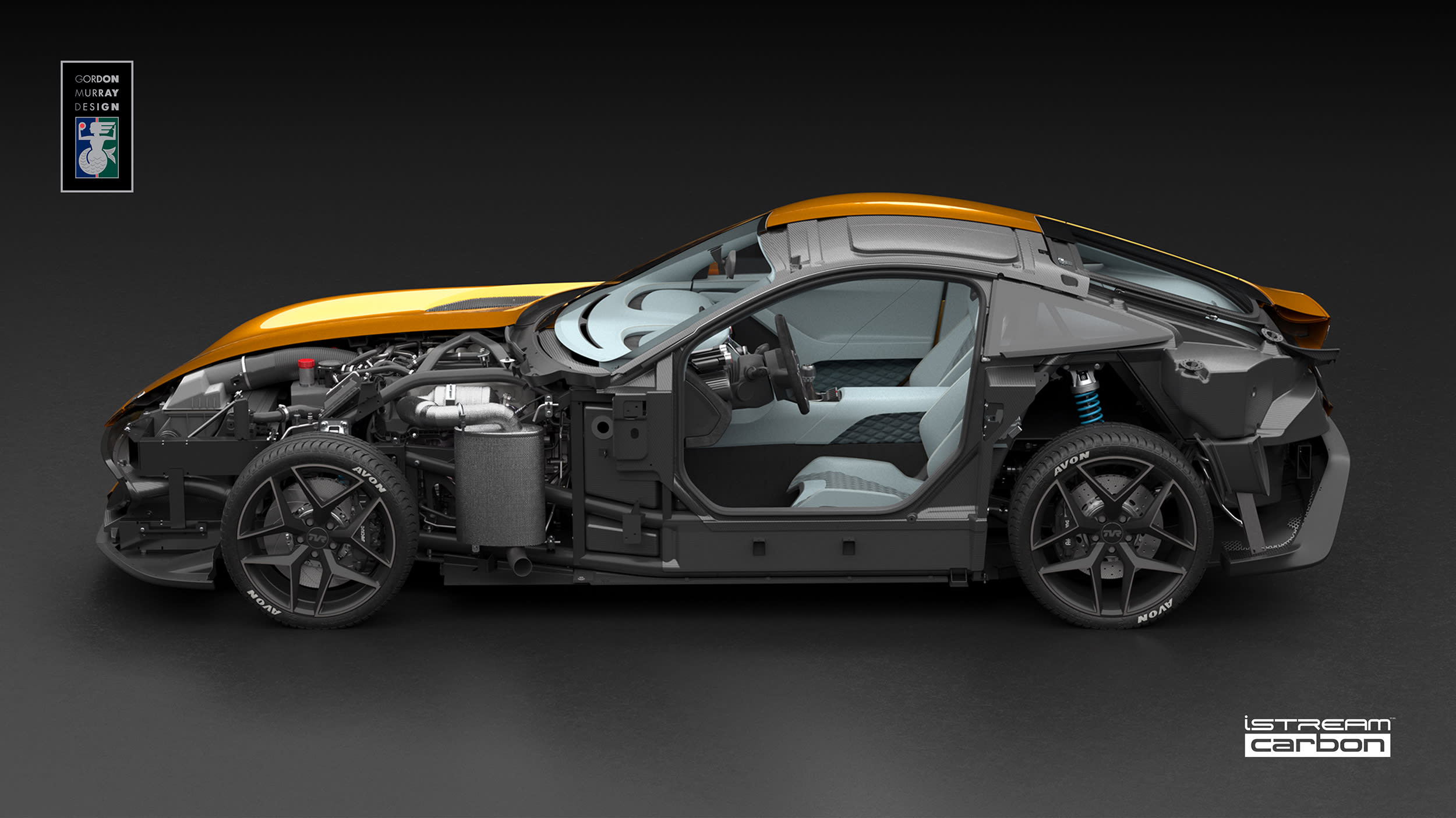
High-profile automotive engineer and designer Prof. Gordon Murray is utterly confident of the potential for his company’s latest iStream Superlight manufacturing system—and says so forcefully: “It is a breakthrough that will deliver the lightest chassis technology for decades to come.” He also believes Superlight manufacturing to be “a paradigm-shifting” innovation.
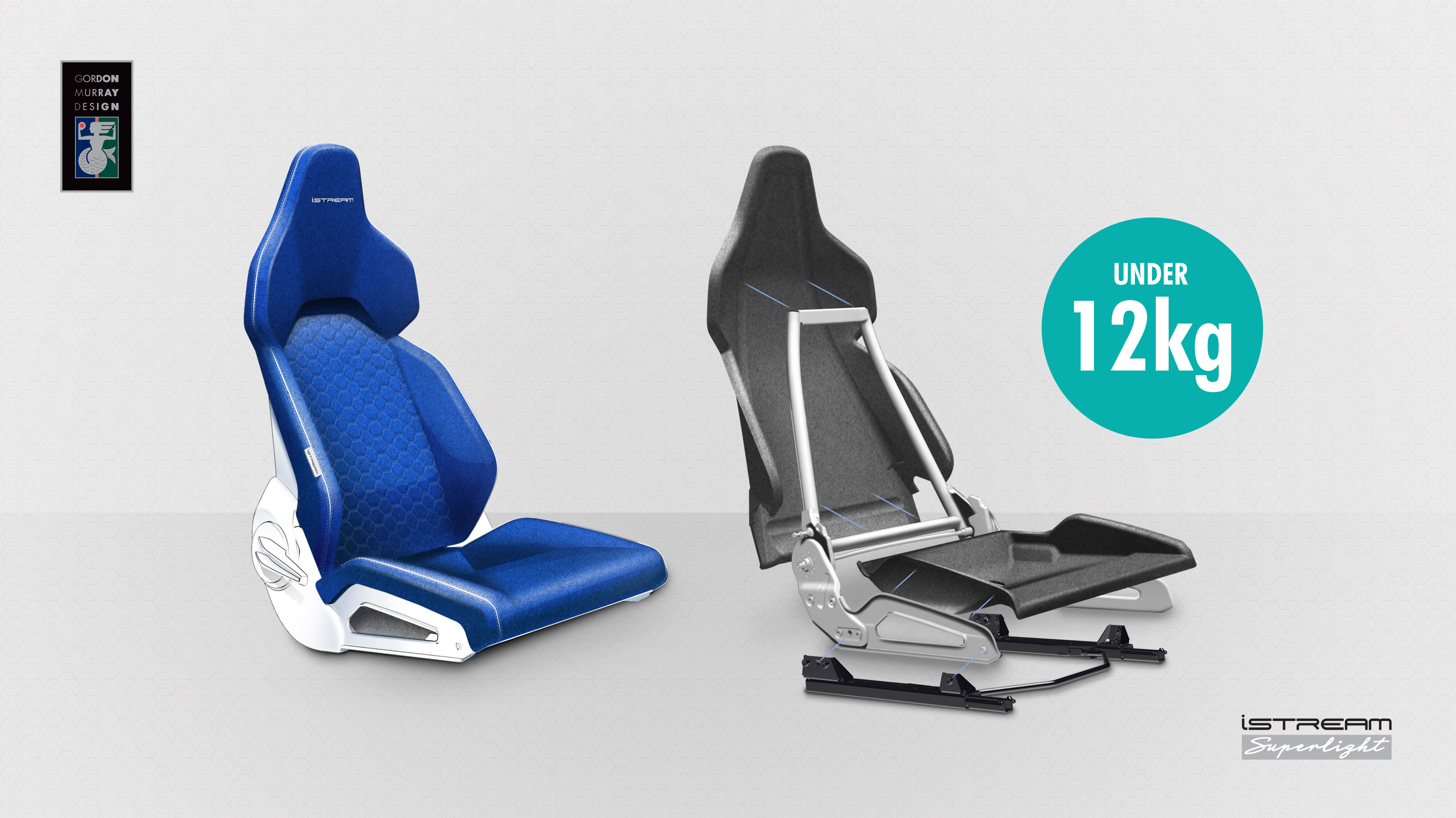
But it isn’t just his established chassis-lightening program that saves the kilograms; Gordon Murray Design (GMD) also has designed a seat that weighs less than 12 kg (26.5 lb) and is said to need only “ultra-low” tooling costs for simple and quick assembly.
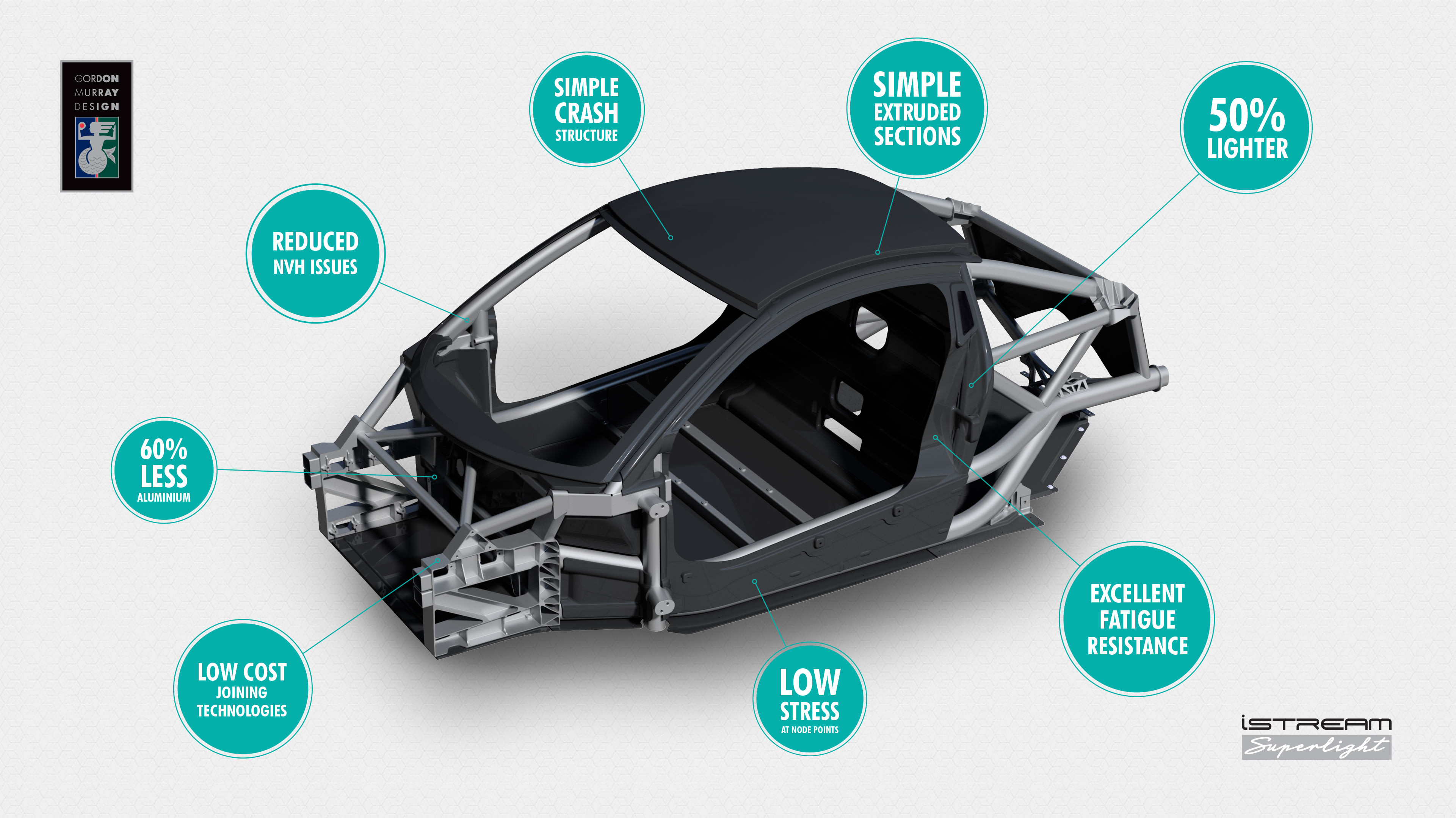
Established in 2007, GMD benefits from Murray’s time as a Formula One technical director with Brabham and McLaren. The iStream Superlight, suitable for “all vehicle segments” from city cars to SUVs and light commercial vehicles, follows the previous iStream manufacturing system that has demonstrated the novel thinking of Murray and his team. It uses a high-strength aluminum thin-wall tubular frame and honeycomb recycled carbon composite chassis panels.
It will be used for GMD’s own T.43 sports car project, which is now in development. The car will have an overall weight of around 850 kg (1874 lb) and will be powered by a 1.5-L turbocharged 3-cylinder delivering 164 kW (220 hp).

Salient points claimed for the iStream Superlight are a 50% weight saving over conventional stamped-steel bodies in white (BIW); a “high degree” of flexibility in optimizing aluminum section shapes; cold-metal transfer welding to reduce distortion and manufacturing time; improved frame stiffness via aluminum section and carbon panels; a carbon sandwich panel cycle time of 100 s and use of recycled carbon fiber. High levels of torsional rigidity and durability are targeted.
The T.43 initial build will be by GMA (Gordon Murray Automotive), formed in late 2017. The iStream technology has been available to the auto industry for several years via a licensing program; now, a new dimension involves licensing automotive platforms alongside iStream licenses.
The forthcoming (2019) production V8 TVR Griffith sports car uses iStream technology and achieves torsional stiffness of 20,000N/o.
Light seats: not easy
Meanwhile, with the need to achieve acceptable levels of comfort, safety and aesthetics, successful design of genuinely lightweight seats has long posed a challenge.
But Andy Smith, GMD’s R&D Director, said of GMD’s lightweight seat concept: “Developed as part of the Innovate UK-funded project (backed by the U.K. government), the 4-way composite seat weighs less than 12 kg complete, a 30% saving versus conventional modern automotive seats.”
Based on what he terms an “innovative” sandwich construction for the seat’s base and back, the design is said to significantly reduce the part count found in competitive designs and has passed the relevant automotive safety standards.
“Costs are expected to be comparable with conventional technologies—and certainly cheaper than previous composite designs,” said Smith. The seat is stated as satisfying all applicable European automotive safety requirements (UN ECE), including luggage retention.
GMD also sees potential for the weight-optimized seat within the aerospace and rail industries.
More From SAE Media Group
Automotive Engineering
2016 SAE Congress: Clemson University and Toyota Unveil UBox Concept
Automotive Engineering
Altair Honors Weight-Saving Innovations
Automotive Engineering
Volvo’s Polestar Powerhouse Plug-In Hybrid

Automotive Engineering
Lightweighting Tour-De-Force: 2021 Ducati Superleggera V4
Automotive Engineering
2019’s Best Automotive Plastics Innovations
Off-Highway Engineering
Meritor Pursues Lightweighting Strategies for Drivelines
Automotive Engineering
Systems-engineering a New 4x4 Benchmark
Off-Highway Engineering
Western Star Adds ‘Weight Sensitive’ 47X to Vocational Lineup
Off-Highway Engineering
EV Startup Prepares to Enter Commercial Market with Novel EAxle
Automotive Engineering
Lotus Breaks out with New Eletre Electric SUV
Automotive Engineering
Top Mass-Cutting Innovations Receive Altair Enlighten Awards
Automotive Engineering
Altair Honors Lightweight Advances
Automotive Engineering
Zero Prototype Summit 2024: The Future Is Closer Than Ever
Autonomous Vehicle Engineering
Quadricycle AV Pod Pops Open in London
Automotive Engineering
Kia’s PBV Concepts Expand Commercial Possibilities
Off-Highway Engineering
Kia Takes Aim at Commercial Vans with PBV Concepts
Automotive Engineering
All-Composite EV Wheel Heads to Production
Automotive Engineering
The Ford GT
Automotive Engineering
ZF's CEO Talks About Lightweight Vehicle Applications
Off-Highway Engineering
Making Strides in Sustainable Transportation
Automotive Engineering
Toyota Stretches SUV Line-Up with World Debut of Grand Highlander
Automotive Engineering
Tenneco Opens Engineering, Simulation Center in Poland
Automotive Engineering
2023 Cadillac Lyriq Executive Chief Engineer: New EV Her ‘North Star’
Automotive Engineering
With 2019 Sierra, GMC Puts Brand Differentiation Behind It—literally
Off-Highway Engineering
Electrification’s Impact on Commercial-Vehicle Chassis Design
Off-Highway Engineering
Mellor Bus Stresses Lightweight Construction for New Midsized Battery-Electric Buses
Automotive Engineering
Brembo’s New Octyma Brakes Provide 8 Reasons for Better Deceleration
Automotive Engineering
Nissan’s 2021 Rogue Is a COVID Beater
Automotive Engineering
McLaren CEO Fast-Forwarding Technology-Centric McLaren Automotive
Top Stories
NewsSensors/Data Acquisition
 Microvision Aquires Luminar, Plans Relationship Restoration, Multi-industry Push
INSIDERRF & Microwave Electronics
 A Next Generation Helmet System for Navy Pilots
INSIDERWeapons Systems
 New Raytheon and Lockheed Martin Agreements Expand Missile Defense Production
NewsAutomotive
 Ford Announces 48-Volt Architecture for Future Electric Truck
INSIDERAerospace
 Active Strake System Cuts Cruise Drag, Boosts Flight Efficiency
ArticlesTransportation

Webcasts
Aerospace
 Cooling a New Generation of Aerospace and Defense Embedded...
Energy
 Battery Abuse Testing: Pushing to Failure
Power
 A FREE Two-Day Event Dedicated to Connected Mobility
Automotive
 Quiet, Please: NVH Improvement Opportunities in the Early Design Cycle
Electronics & Computers
 Advantages of Smart Power Distribution Unit Design for Automotive &...
Unmanned Systems
 Sesame Solar's Nanogrid Tech Promises Major Gains in Drone Endurance