




WCX17: Delphi Aims for 42% Efficiency with Next-Gen GDCI

Delphi projects that engines employing its coming third-generation gasoline direct-injection compression-ignition (GDCI) combustion system will attain a thermal efficiency of 42%, the company said at the 2017 SAE High-Efficiency IC Engines Symposium in Detroit. That thermal efficiency would top any current production-vehicle gasoline engine, the most efficient of which are claimed to have peak thermal efficiency of about 40%.
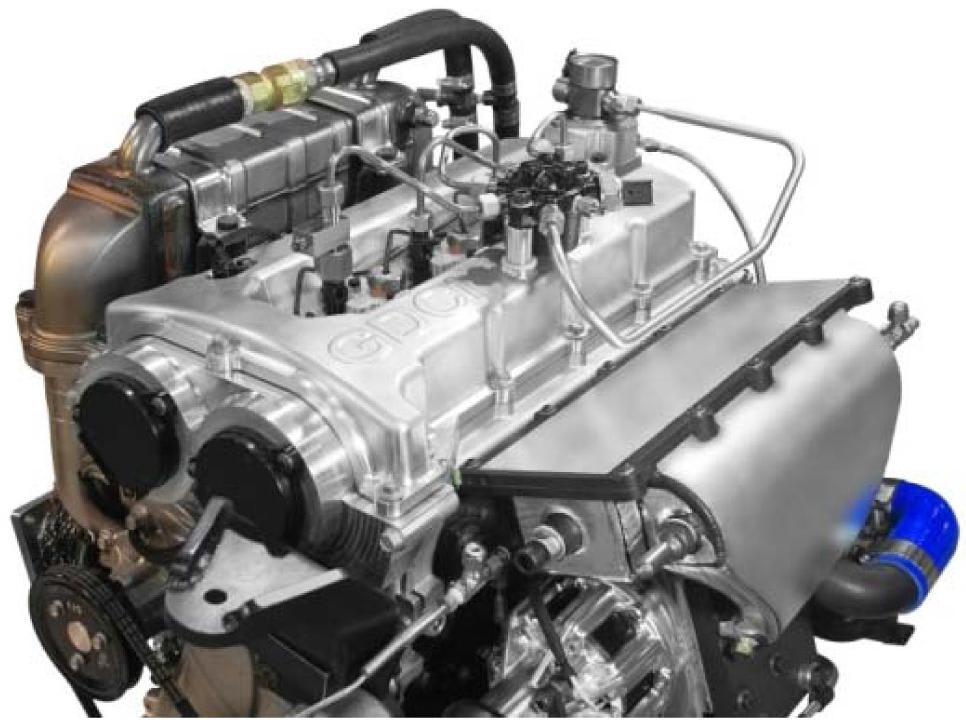
Mark Sellnau, engineering manager, Delphi Advanced Powertrain, said a gasoline engine using the third-generation GDCI system now under development is projected to have approximately 22% better thermal efficiency than a current conventional spark-ignited gasoline engine with direct fuel injection and 11% better than a 2L diesel engine. He said many of the initial engineering challenges for GDCI have been overcome and that the company believes it can make the low-temperature combustion system emissions-compliant at the EPA Tier 3, bin 30 level.
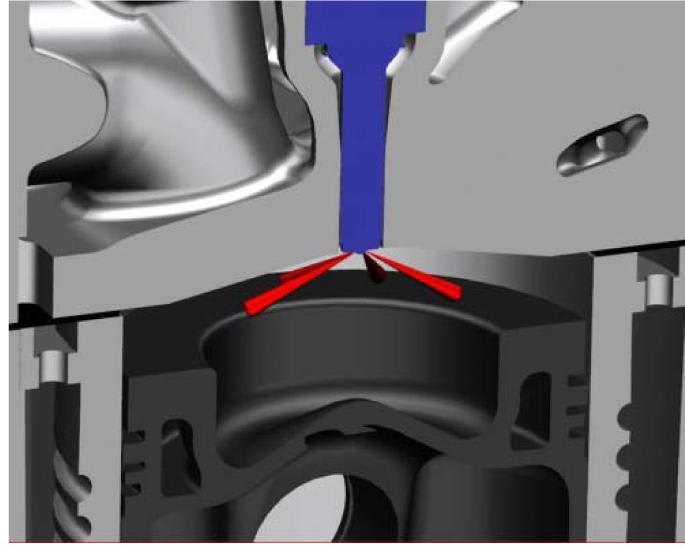
Major advances over Delphi’s second-generation GDCI system include “wetless” combustion, quicker cold-start operation and an optimized low-temperature exhaust aftertreatment that achieves roughly 90% carbon monoxide conversion in about 4s.
Sellnau said the third-generation system has increased the compression ratio to 16:1 (from 15:1) and its new longer stroke and increased top-dead-center piston clearance enable the wetless operation that sees fuel completely vaporized before it contacts cylinder or combustion-chamber surfaces. Advanced fuel injectors operate at 350 bar (5076 psi) and provide three injection events. The third injection, Sellnau said, is “what differentiates (GDCI) from HCCI (homogenous-charge compression ignition).”
Much of Delphi’s GDCI research is being conducted under the auspices of a four-year, $9.8-million program funded by the U.S. Department of Energy; Delphi’s partners in the project include Oak Ridge National Laboratory, Umicore and the University of Wisconsin-Madison.
The system will require a variety of emissions-reduction measures that, in addition to the newly-formulated low-temperature catalyst, include an intake-air heater, gasoline particulate filter and urea injection. But Sellnau was confident those measures, coupled with the combustion-related design advances of the third-generation system, will enable a production engine to be Tier 3, bin 30 compliant—a vital achievement to advance the system for production-vehicle readiness.
Moreover, he promised the latest GDCI will operate with gasoline at currently-available octane. “We really need to get to market with commercial gasoline,” he said.
Sellanu said the project team began gathering test results for the third-generation GDCI system in February 2017 and added, “I think we’re going to see a very efficient engine evolving and going into our vehicle program.” He did not, however, provide a projection on when the system might be fitted to a production-vehicle engine.
More From SAE Media Group

Automotive Engineering
Maruti Suzuki Refines Swift Engine for 10% FE Gain
Automotive Engineering
New Axial-Piston Engine Aimed at Range Extenders, Military Applications
Off-Highway Engineering
Mahle, Liebherr Develop Active Pre-Chamber for Hydrogen ICE
Automotive Engineering
Engine Researchers: 50% Gasoline-Engine Efficiency in Sight
Automotive Engineering
German Spark-Ignited Compression-Ignition Research Paralleling Mazda’s SPCCI
Automotive Engineering
Achates Power OP Engine Begins Real-World Test Phase
Automotive Engineering
Nautilus Claims Radical Advance in HCCI Engine Development
Tech Briefs
Ducted Fuel Injection for Soot Reduction
Automotive Engineering
Targeting 40% BTE with Advanced VCR
Automotive Engineering
Spark of Genius
Automotive Engineering
Audi Evolves the Miller Cycle in Its New 2.0-L Spark-Ignition Engine
Off-Highway Engineering
Could This Infinitely Variable Compression Mechanism Be the Next Piston Engine Game-Changer?
Automotive Engineering
Cooled EGR Shows Benefits for Gasoline Engines
Off-Highway Engineering
IAV Brings Variable Valvetrains to Heavy Duty
Automotive Engineering
Mahle’s Pre-Chamber MJI Technology Is Sparking Ignition Advances
Automotive Engineering
Extending the ICE Age: Hyundai Optimizing Engines and Fuels
Automotive Engineering
New Four-Chamber Rotary Engine Could Supplant Wankel and Piston Engines for UAV Applications
Off-Highway Engineering
SwRI: CHEDE Consortium Closing in on 55% HD Diesel-Engine Efficiency
Automotive Engineering
New Peugeot 3-Cylinder Gasoline Engine Family Optimizes Combustion
Automotive Engineering
Injecting a Sense of Urgency to Clean up Diesels
Off-Highway Engineering
MTU Training Facility Helps Keep Complex Engines up and Running
Off-Highway Engineering
Refining Heavy-Duty Diesel Fuel Systems
Off-Highway Engineering
Corrosion Resistance Ranking
Off-Highway Engineering
Cummins’ New Mid-Displacement Turbos Quieter and More Efficient
Automotive Engineering
ICE Breaker!
Aerospace & Defense Tech Briefs
X Marks the Spot
Automotive Engineering
Eaton Goes Internal with Its Next-Generation EGR Solution
Automotive Engineering
SwRI’s D-EGR Demo Car Wows SAE Engines Symposium with 42% BTE
Off-Highway Engineering
Kohler Extends Its Hand in Off-Highway Diesels
Top Stories
INSIDERManufacturing & Prototyping
 How Airbus is Using w-DED to 3D Print Larger Titanium Airplane Parts
INSIDERManned Systems
 FAA to Replace Aging Network of Ground-Based Radars
NewsTransportation
 CES 2026: Bosch is Ready to Bring AI to Your (Likely ICE-powered) Vehicle
NewsSoftware
 Accelerating Down the Road to Autonomy
EditorialDesign
 DarkSky One Wants to Make the World a Darker Place
INSIDERMaterials
 Can This Self-Healing Composite Make Airplane and Spacecraft Components Last...
Webcasts
Defense
 How Sift's Unified Observability Platform Accelerates Drone Innovation
Automotive
 E/E Architecture Redefined: Building Smarter, Safer, and Scalable...
Power
 Hydrogen Engines Are Heating Up for Heavy Duty
Electronics & Computers
 Advantages of Smart Power Distribution Unit Design for Automotive...
Unmanned Systems
 Quiet, Please: NVH Improvement Opportunities in the Early Design...
