




New Peugeot 3-Cylinder Gasoline Engine Family Optimizes Combustion
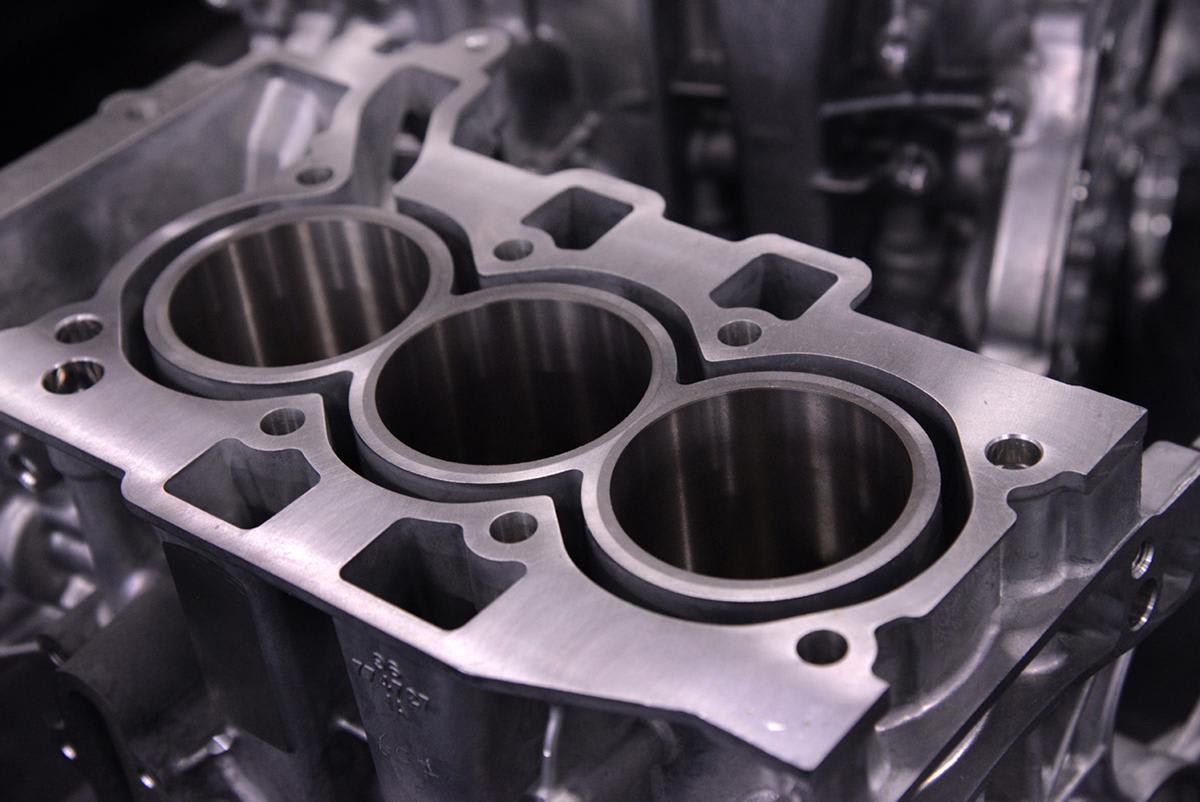
A new family of 3-cylinder gasoline engines from Peugeot, called PureTech, employs optimized combustion to offer what the automaker calls a breakthrough in terms of fuel economy, CO2, and drivability. The family consists of 1.0- and 1.2-L naturally aspirated units along with 1.2-L turbocharged units—all employing direct injection. There are five units in all, covering a power range from 50 to 96 kW (67 to 129 hp). More than 250 engineers developed the engines over four years. Applications were filed for 121 patents. Major factors in optimized combustion include centrally positioned, high-pressure (200 bar, or 2.9 ksi) injection. Also contributing are the shape of the spray (optimized via improved laser technology for injector manufacture), the management of injection pulses (up to three per combustion event), and the introduction of variable intake and exhaust timing. Since friction accounts for roughly 20% of the power consumed in an engine, Peugeot says, its engineers optimized the size of the crankshaft, offset the cylinders, employed a lubricated timing belt, and applied a diamond-like carbon coating on the piston pins, rings, and push rods. The oil pump is controlled electronically to provide the optimal amount of lubrication. Average fuel-economy improvement of the five PureTech variants is 18% compared to the 1.6-L VTi/THP engine the new ones replace. The variants are:
- 1.0-L VTi 68
- 1.2-L VTi 82
- 1.2-L e-VTi 82 (with stop-start)
- 1.2-L e-THP 110 (with stop-start and turbo)
- 1.2-L e-THP 130 (with stop-start and turbo)
Launching this month will be three 1.2-L variants on the Peugeot 308 and 308 SW, with the remainder to follow later this year on other models.
More From SAE Media Group
Off-Highway Engineering
Navistar Updates A26 Engine, Improves FE by 4%
Automotive Engineering
Achates Powers toward Production
Automotive Engineering
Audi Evolves the Miller Cycle in Its New 2.0-L Spark-Ignition Engine
Automotive Engineering
New Axial-Piston Engine Aimed at Range Extenders, Military Applications
Automotive Engineering
Tata Launches Family of Petrol Engines
Automotive Engineering
German Spark-Ignited Compression-Ignition Research Paralleling Mazda’s SPCCI
Automotive Engineering
SwRI’s D-EGR Demo Car Wows SAE Engines Symposium with 42% BTE
Automotive Engineering
Injecting a Sense of Urgency to Clean up Diesels
Automotive Engineering
New Four-Chamber Rotary Engine Could Supplant Wankel and Piston Engines for UAV Applications
Off-Highway Engineering
Could This Infinitely Variable Compression Mechanism Be the Next Piston Engine Game-Changer?
Automotive Engineering
Optimizing Hybrids for Cost and Efficiency
Automotive Engineering
2022 Nissan Rogue Gets a VC Turbo Triple
Automotive Engineering
Ferrari Massages 458 to Create 488 GTB
Off-Highway Engineering
Kohler Extends Its Hand in Off-Highway Diesels
Off-Highway Engineering
Mahle, Liebherr Develop Active Pre-Chamber for Hydrogen ICE
Automotive Engineering
Extending a Wankel Future on Hydrogen Fuel
Automotive Engineering
V-Charging Aims to Add Muscle to Downsized Engines
Automotive Engineering
GM details Corvette’s new and mighty LT6 V8
Aerospace & Defense Tech Briefs
X Marks the Spot
Automotive Engineering
More sting for the STINGRAY

Automotive Engineering
Unique Helmholtz Induction Feeds 2023 Corvette Z06
Off-Highway Engineering
Cummins New X15 Engine Meets Upcoming Regs While Boosting Efficiency
Automotive Engineering
Frictionless Engine Seals
Off-Highway Engineering
Volvo Penta Debuts Two New Off-Highway Engines
Automotive Engineering
New-Gen Torque Converter Aims at 2017 Vehicle Intro
Automotive Engineering
Turbocharger Speed Sensors Aim for Light-Duty Applications
Automotive Engineering
Chevrolet Delivers a Bombshell with First-Ever 4-Cylinder for Fullsize Pickups
Automotive Engineering
Pushing the ICE Forward, Gradually
Automotive Engineering
Engine Researchers: 50% Gasoline-Engine Efficiency in Sight
Top Stories
INSIDERManufacturing & Prototyping
 How Airbus is Using w-DED to 3D Print Larger Titanium Airplane Parts
INSIDERManned Systems
 FAA to Replace Aging Network of Ground-Based Radars
NewsTransportation
 CES 2026: Bosch is Ready to Bring AI to Your (Likely ICE-powered) Vehicle
NewsSoftware
 Accelerating Down the Road to Autonomy
EditorialDesign
 DarkSky One Wants to Make the World a Darker Place
INSIDERMaterials
 Can This Self-Healing Composite Make Airplane and Spacecraft Components Last...
Webcasts
Defense
 How Sift's Unified Observability Platform Accelerates Drone Innovation
Automotive
 E/E Architecture Redefined: Building Smarter, Safer, and Scalable...
Power
 Hydrogen Engines Are Heating Up for Heavy Duty
Electronics & Computers
 Advantages of Smart Power Distribution Unit Design for Automotive...
Unmanned Systems
 Quiet, Please: NVH Improvement Opportunities in the Early Design...
