




IAV Brings Variable Valvetrains to Heavy Duty
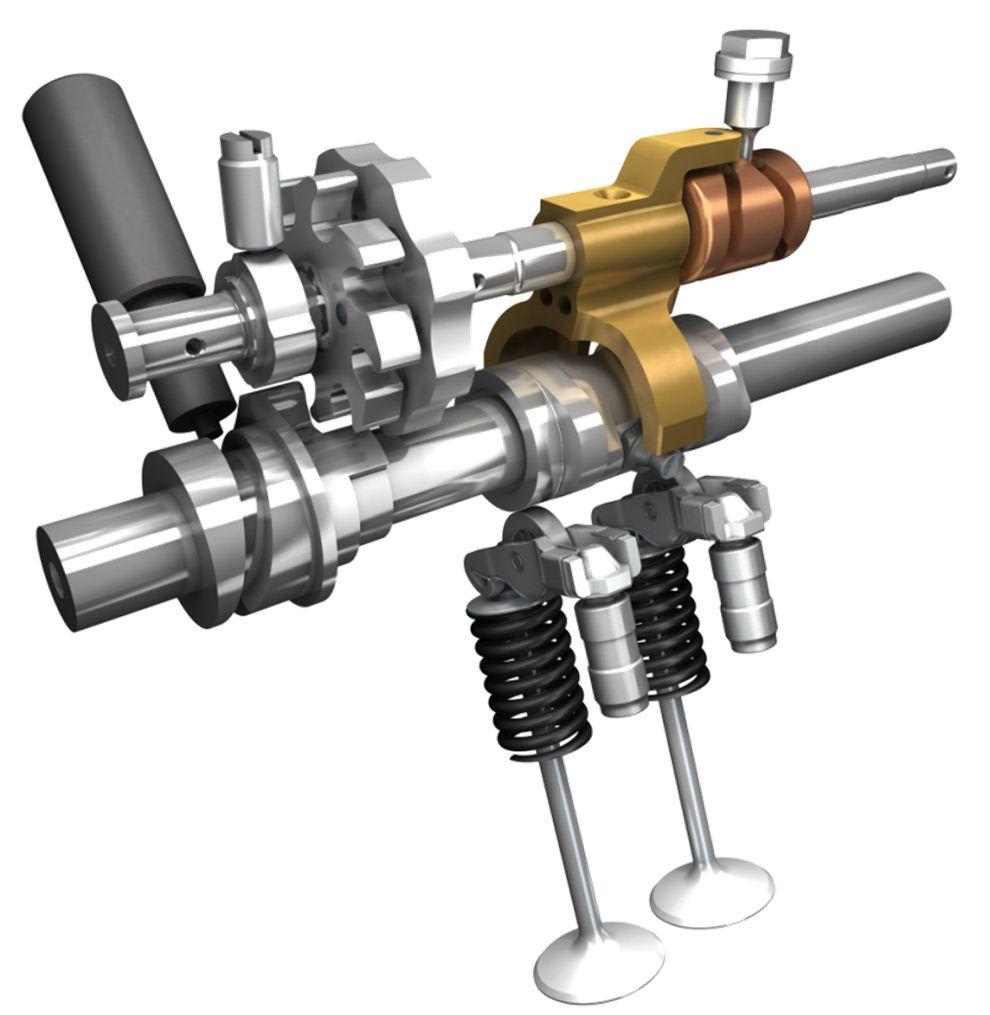
Variable valve actuation, especially timing, has been readily available for light passenger engines for years. Problems in introducing the technology to heavy-duty diesel engines include the vastly different thermodynamics at play and the durability required. With already high compression ratios, clearance between the piston and valve in diesels can be an issue. Since a diesel is typically unthrottled, it is more difficult to improve efficiency compared to a gasoline engine. Constant switching in engines that run continuously means building reliable gadgets that can run for thousands of hours.
However, with the continued push for both fuel efficiency and criterion emissions control, IAV thinks it is time for heavy-duty applications to consider it. An engine with a fixed valve lift and timing must balance high-speed engine performance and low-speed fuel economy. Low speed and cold start exhaust temperatures also affect aftertreatment devices, especially important as regulatory pressures continue.
The IAV SlideCam system, available under licensing agreement from the company, toggles between two cam lobes, according to Robert Dolan, Director, Commercial Vehicle and Government Programs, which can vary timing or lift or both. “It is a switchable system, with two settings on the hot side and two settings on the cold side,” he explained. “That allows, for example, a Miller cycle and a retarder function.”
One device produces two benefits. Using it to produce a Miller cycle operation makes combustion more efficient, meaning better fuel economy. The other is improving aftertreatment.
SlideCam’s ability to open the exhaust valve earlier when needed means it can hold the temperature of the aftertreatment devices at a higher temperature without lowering combustion process efficiency. Standard techniques with fixed cams include post-injection of fuel during low load operation, which can entrain fuel and lead to more frequent oil changes, as well as impacting fuel efficiency.
Dolan reports that IAV is currently working with an on-highway OEM to transfer the technology through a patent arrangement. “It could also see off-highway utility as well,” he said.
More From SAE Media Group
Automotive Engineering
Eaton Goes Internal with Its Next-Generation EGR Solution
Automotive Engineering
German Spark-Ignited Compression-Ignition Research Paralleling Mazda’s SPCCI
Automotive Engineering
Audi Evolves the Miller Cycle in Its New 2.0-L Spark-Ignition Engine
Off-Highway Engineering
Mahle, Liebherr Develop Active Pre-Chamber for Hydrogen ICE
Automotive Engineering
Engine Researchers: 50% Gasoline-Engine Efficiency in Sight
Automotive Engineering
Targeting 40% BTE with Advanced VCR
Off-Highway Engineering
Eaton Demonstrates Waste Heat Recovery, Variable Valve Actuation for HD Diesels
Automotive Engineering
GM details Corvette’s new and mighty LT6 V8
Aerospace & Defense Tech Briefs
X Marks the Spot
Off-Highway Engineering
Navistar Updates A26 Engine, Improves FE by 4%

Off-Highway Engineering
SwRI: CHEDE Consortium Closing in on 55% HD Diesel-Engine Efficiency
Automotive Engineering
Chevrolet Delivers a Bombshell with First-Ever 4-Cylinder for Fullsize Pickups
Automotive Engineering
Injecting a Sense of Urgency to Clean up Diesels
Off-Highway Engineering
Flex-Fuel Snowmobile Challenge Results in Improved Efficiency and Lower Emissions
Off-Highway Engineering
Cummins New X15 Engine Meets Upcoming Regs While Boosting Efficiency
Automotive Engineering
Optimizing Hybrids for Cost and Efficiency
Off-Highway Engineering
Isuzu Simplifies Fuel Changeovers
Off-Highway Engineering
Developing an Alternative Engine Concept
Automotive Engineering
V-Charging Aims to Add Muscle to Downsized Engines
Off-Highway Engineering
Could This Infinitely Variable Compression Mechanism Be the Next Piston Engine Game-Changer?
Automotive Engineering
Cooled EGR Shows Benefits for Gasoline Engines
Automotive Engineering
New Axial-Piston Engine Aimed at Range Extenders, Military Applications
Automotive Engineering
SwRI’s D-EGR Demo Car Wows SAE Engines Symposium with 42% BTE
Automotive Engineering
Mahle’s Pre-Chamber MJI Technology Is Sparking Ignition Advances
Automotive Engineering
Extending the ICE Age: Hyundai Optimizing Engines and Fuels
Automotive Engineering
New Four-Chamber Rotary Engine Could Supplant Wankel and Piston Engines for UAV Applications
Automotive Engineering
New Peugeot 3-Cylinder Gasoline Engine Family Optimizes Combustion
Automotive Engineering
Toyota Unveils More New Gasoline ICEs with 40% Thermal Efficiency
Automotive Engineering
Pushing the ICE Forward, Gradually
Top Stories
INSIDERManufacturing & Prototyping
 How Airbus is Using w-DED to 3D Print Larger Titanium Airplane Parts
INSIDERManned Systems
 FAA to Replace Aging Network of Ground-Based Radars
NewsTransportation
 CES 2026: Bosch is Ready to Bring AI to Your (Likely ICE-powered) Vehicle
NewsSoftware
 Accelerating Down the Road to Autonomy
EditorialDesign
 DarkSky One Wants to Make the World a Darker Place
INSIDERMaterials
 Can This Self-Healing Composite Make Airplane and Spacecraft Components Last...
Webcasts
Defense
 How Sift's Unified Observability Platform Accelerates Drone Innovation
Automotive
 E/E Architecture Redefined: Building Smarter, Safer, and Scalable...
Power
 Hydrogen Engines Are Heating Up for Heavy Duty
Electronics & Computers
 Advantages of Smart Power Distribution Unit Design for Automotive...
Unmanned Systems
 Quiet, Please: NVH Improvement Opportunities in the Early Design...
