




SAKOR Develops 'Spacecraft Emulator' to Test Dream Chaser Control System
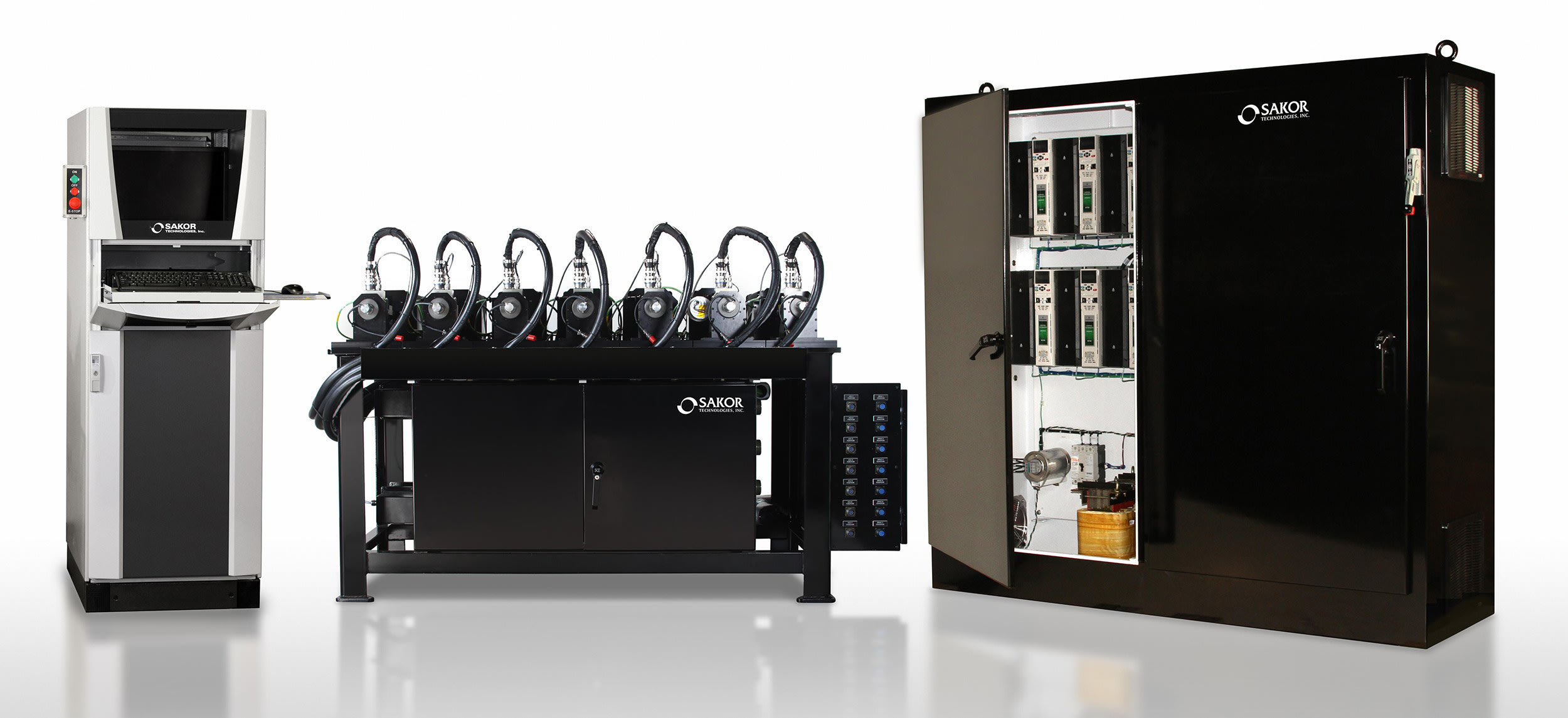
SAKOR Technologies, Inc. has supplied a test system to Southwest Research Institute (SwRI) to be used to test the atmospheric flight control system for the Dream Chaser, a reusable lifting-body spacecraft, capable of either crewed or uncrewed flight and horizontal landing on a runway. Owned and operated by Sierra Nevada Corp. (SNC), the Dream Chaser is designed as a multi-mission space utility vehicle for low-Earth orbit.
Contracted by SNC to design and build the atmospheric flight control system, SwRI selected SAKOR to build a sophisticated system to exercise the Dream Chaser spacecraft’s new control system and simulate flight from atmospheric interface to landing. The system characterizes overall design performance as well as dynamic response to physical forces typically experienced in standard and extreme flight conditions.
SAKOR developed the test system over the course of a year, from development of initial test specifications through system delivery. The work was completed as part of a parallel engineering process: SAKOR was building the test system while SwRI was engineering the flight control system.
The Dream Chaser spacecraft features seven control surfaces and the new test system features seven dynamometers, each simulating dynamic loads on a specific control surface.
SAKOR’s DynoLAB data acquisition and control system controls the entire test stand, acting as a spacecraft emulator. Sending test profiles to the atmospheric flight controller as well as simulating force feedback from each control surface, DynoLAB communicates directly with the atmospheric flight control system via a MIL-STD-1553B avionics bus, which is a built-in capability of the DynoLAB system and is widely used in military aircraft and satellites.
“The test system is very complex, consisting of seven independent dynamometers that simulate the control surfaces of the spacecraft. It is among the most complicated we have developed,” Randal Beattie, President of SAKOR, shared with Aerospace Engineering.
The system uses “quite a bit of off-the-shelf technology,” he noted—most notably the DynoLAB system. “DynoLAB has all the capabilities necessary to run the system and perform the required calculations. Developing such a software system from scratch would have taken a year or more; with DynoLAB, SAKOR could offer built-in capabilities needed to run the dynamometers without additional software development.
“The dynamometers themselves needed to be very powerful for their size and have very fast response,” Beattie added. “SAKOR selected specific motors designed for this challenge. The combination of power and dynamic response was particularly challenging.”
SAKOR worked closely with SwRI and SNC to determine the requirements for connectors and wiring certified for space flight in a vacuum, he said. The company also collaborated with aerospace vendors to research and select the proper components for the project; many components had to be rated for working in a difficult and challenging simulated space environment.
Another challenge was that the test system had to simulate both static and highly dynamic forces on the aircraft. “These include high speed fluctuations and highly dynamic load variations, including buffeting and turbulence that affects the vehicle upon reentry. Ensuring the stability of the control system under these highly dynamic conditions is of crucial importance,” Beattie shared. “So, in addition to static tests and simulations, the test system must be able to prove the flight control system can respond to and withstand high dynamic forces.”
The test system also had to be mobile, so it could be used in conjunction with a large vacuum chamber, thermal chamber, and vibration system.
SwRI is currently successfully testing the control system design, according to Beattie: “The test system is functioning exactly as specified.”
SAKOR has done “a significant amount of work” in the automotive, hybrid-electric and electric vehicle, motorsports, military, and commercial vehicle segments, he noted, adding that “the work done on this project is directly translatable to all segments of the transportation industry.”
More From SAE Media Group

Aerospace & Defense Tech Briefs
New Zealand and LeoLabs Establish the First Low-Earth Orbit Regulatory Platform
Aerospace & Defense Tech Briefs
AGI and ANSYS Partner to Integrate Next-Gen Digital Modeling into Engineering Design
Aerospace & Defense Tech Briefs
Northrop Grumman Tests, Qualifies Orion Launch Abort Motor for Flight in Cold Conditions
Aerospace & Defense Tech Briefs
U.K. Space Agency Partners with Industry to Advance Spaceflight Program
Aerospace & Defense Tech Briefs
Stratolaunch All-Composite Aircraft Achieves First Flight
Aerospace INSIDER
Hermeus Quarterhorse Joins Hypersonic High Cadence Testing Program
Aerospace & Defense Tech Briefs
Air Caster Technology
Aerospace & Defense Tech Briefs
OmegA Rocket Sustains Explosion During First Static Test, Northrop Grumman Maintains Test Was a Success
Aerospace & Defense Tech Briefs
Lockheed Martin Validates Heatshield for the Mars 2020 Rover Mission
Aerospace INSIDER
Quarterhorse Hypersonic Test Aircraft Completes First Flight
Aerospace & Defense Tech Briefs
Final Orion Capsule Parachute System Test Successful
Aerospace & Defense Tech Briefs
ISS Launches Largest Satellite to Date to Test Active Debris Removal
Aerospace INSIDER
Ursa Major Performs First Successful Hotfire of Hypersonic Draper Engine

Aerospace & Defense Tech Briefs
Navigation Unit
Aerospace & Defense Tech Briefs
Battery Technology Is Still the Key Barrier to Better Urban Air Mobility
Aerospace & Defense Tech Briefs
Lockheed Martin’s “Non-Operational” Space Fence Detects Indian Anti-Satellite Operations While Still in Test Mode
Aerospace & Defense Tech Briefs
Japan’s IBUKI-2 (GOSAT-2) Satellite Launches, Powers Up, Completes Critical Phase
Aerospace & Defense Tech Briefs
Iridium, Aireon, SpaceX Celebrate Satellite Launch, System Deployment
Aerospace & Defense Tech Briefs
GE Aviation’s AiRXOS Launches New Air Mobility Portfolio and Management Tools Purpose Built for the Urban Air Mobility Market
Aerospace INSIDER
Anduril Completes First Semi-Autonomous Flight of CCA Prototype
Aerospace & Defense Tech Briefs
NASA Invests in Aerospace Start-Up, University Projects on CubeSat Platform
Aerospace & Defense Tech Briefs
NASA Selects Frontier Aerospace to Continue Development of New Deep Space Thruster
Aerospace INSIDER
Blue Origin Rocket Reaches Intended Orbit on First Launch
Top Stories
INSIDERDefense
 New Raytheon and Lockheed Martin Agreements Expand Missile Defense Production
NewsAutomotive
 Ford Announces 48-Volt Architecture for Future Electric Truck
INSIDERManufacturing & Prototyping
 Active Strake System Cuts Cruise Drag, Boosts Flight Efficiency
ArticlesTransportation
 Accelerating Down the Road to Autonomy
INSIDERMaterials
 How Airbus is Using w-DED to 3D Print Larger Titanium Airplane Parts
Road ReadyTransportation

Webcasts
Electronics & Computers
 Cooling a New Generation of Aerospace and Defense Embedded...
Power
 Battery Abuse Testing: Pushing to Failure
Connectivity
 A FREE Two-Day Event Dedicated to Connected Mobility
Automotive
 Quiet, Please: NVH Improvement Opportunities in the Early Design Cycle
Transportation
 Advantages of Smart Power Distribution Unit Design for Automotive &...
Aerospace
 Sesame Solar's Nanogrid Tech Promises Major Gains in Drone Endurance