




Meet Arc: Inversion's New Autonomous Space Vehicle for Logistics and Hypersonic Testing
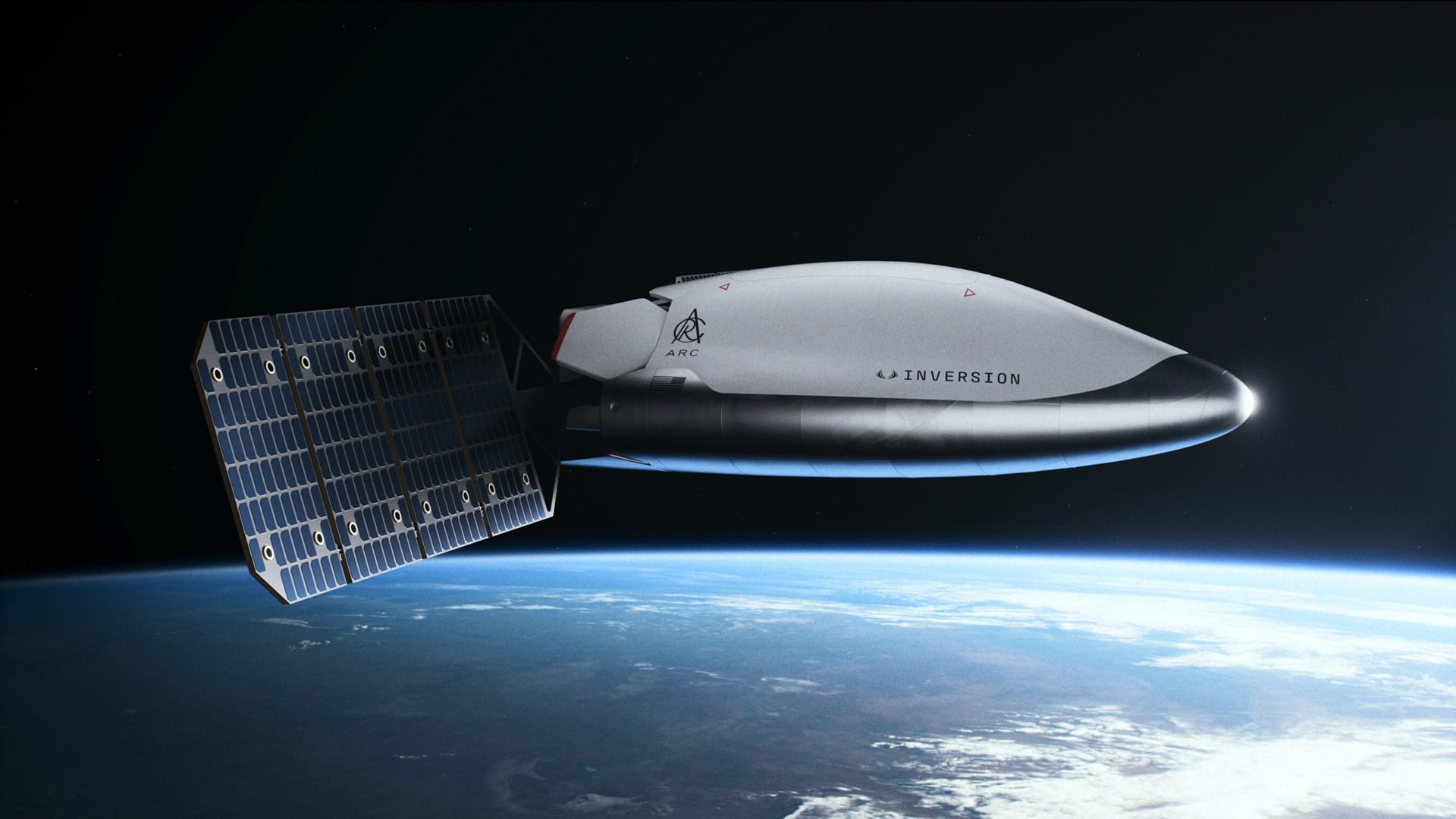
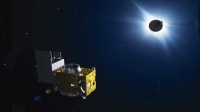
Inversion, the California-based defense and space manufacturing startup, has unveiled its new flagship space vehicle designed for cargo delivery missions and hypersonic testing, "Arc."
Arc reshapes defense readiness by enabling access to anywhere on Earth in under an hour – allowing for the rapid delivery of mission-critical cargo and effects to austere, infrastructure-limited, or denied environments. This capability establishes space as a new global logistics domain, the company noted in a press release announcing the unveiling of Arc.
Arc features a versatile payload bay designed to accommodate a wide range of mission-critical cargo and effects. When launched to low-Earth orbit, Arc vehicles will form constellations of varying sizes and locations tailored to each customer's needs. When called down on demand, Arc spacecraft descend from orbit, maneuver through hypersonic reentry, and touch down safely under parachutes – all autonomously.
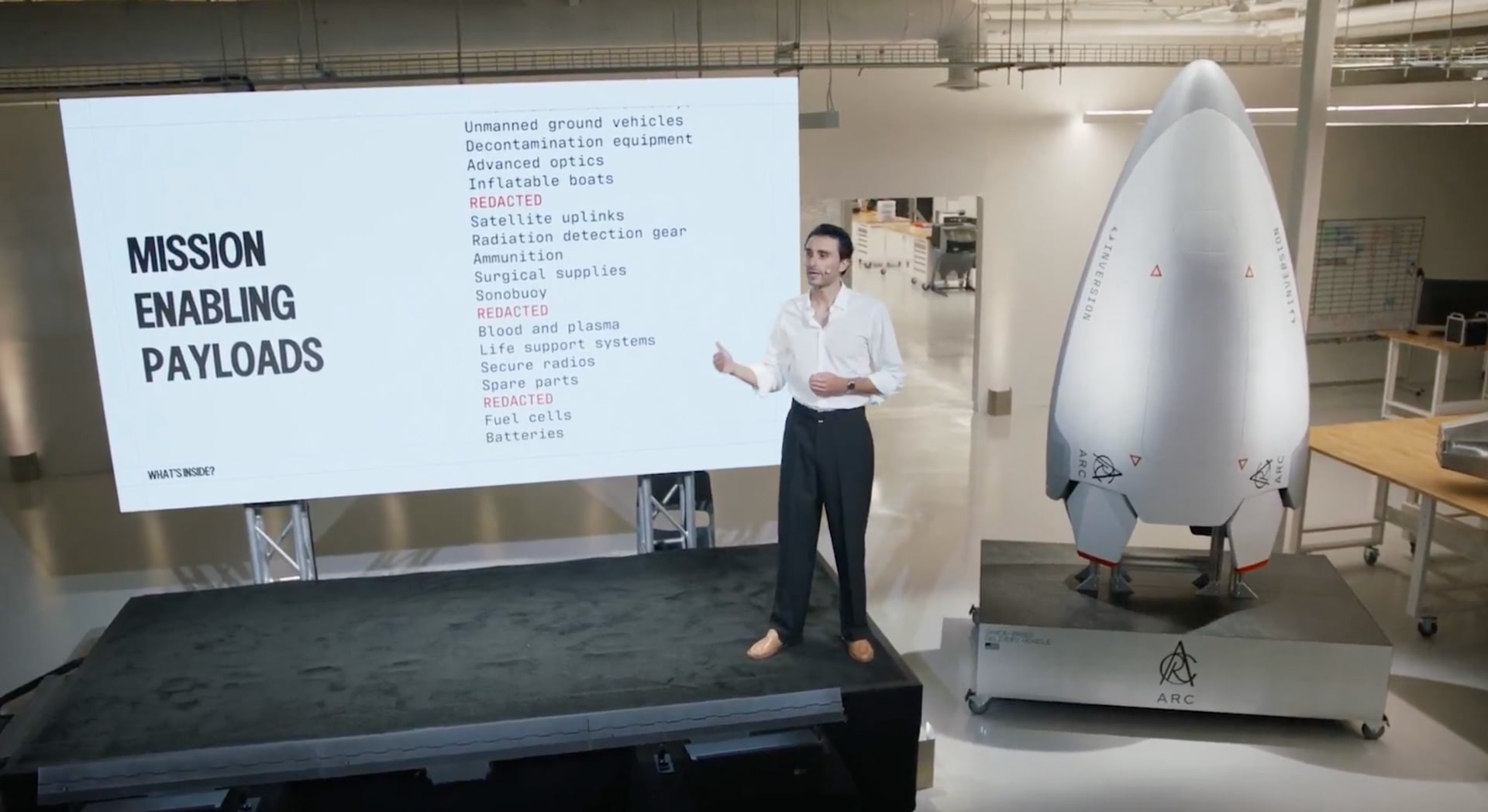
"With massive cross-range to cover great distances during reentry, and high maneuverability throughout every phase of flight, Arc delivers a transportation capability that has never existed before," said Justin Fiaschetti, Co-Founder and CEO of Inversion. "We see a future where thousands of Arc spacecraft form a logistics network that provides transformative reach, resilience, and deterrence for the United States and its allies."
Fully reusable and capable of precise landings for rapid recovery, Arc makes hypersonic testing faster, repeatable, and more affordable. Inversion's selection for the Kratos-led MACH-TB 2.0 Program of Record underscores the interest in Arc as a critical part of the nation's hypersonic testing infrastructure.
Arc builds on the flight heritage of Inversion's first spacecraft, Ray , which launched to orbit in January 2025 and validated key technical subsystems including avionics, solar panels, propulsion, and an in-house designed separation system. Nearly every component was developed internally by a team of just 25 people for under $1 million – demonstrating Inversion's ability to deliver advanced space systems at exceptionally low cost.
At the Inversion launch event , Founders Justin Fiaschetti and Austin Briggs presented details about Arc's unique mission sets, unveiled a full-scale mockup of the spacecraft, highlighted recent technical milestones, and showcased engineering hardware.
"Our team is on schedule to fly Arc's first mission in 2026," said Austin Briggs, Co-Founder and CTO of Inversion. "We've already built a full-scale manufacturing development unit of the primary structure, completed our first mission profile, and run dozens of drop tests to fine-tune accurate landings. We have completed advanced aerodynamic modeling, detailed component design, and partnered with NASA on a next-generation thermal protection system designed for the most extreme reentry environments. Every milestone brings Arc closer to flight maturity, and the pace of progress is only accelerating."
While national security is today's most urgent demand signal, Inversion's long-term vision extends far beyond defense. The company sees space as a new global logistics network – one that expands access to every corner of the planet. Over time, that same infrastructure can expand to support broader commercial markets, creating a logistics layer in space that connects communities and economies with unprecedented speed and reach.
"History shows that every breakthrough in logistics – from railroads to aviation – has unlocked new industries and reshaped economies at scales few could have imagined at the start," said Fiaschetti. "Arc represents the next leap, creating a logistics network in space that will make Earth radically more accessible."
More From SAE Media Group
Aerospace INSIDER
Three Companies to Build New Multi-Orbit Logistics Prototype Spacecraft

Aerospace INSIDER
ESA’s Future Low Earth Orbit Cargo Return Service Spacecraft
Aerospace & Defense Tech Briefs
NASA Invites Proposal from Space-Based Large-Scale 3D-Printing Company
Aerospace & Defense Tech Briefs
Space Tango Takes Its Next Steps in Orbital Manufacturing
Aerospace & Defense Tech Briefs
In-Orbit Commercial Spacecraft Undocking
Aerospace & Defense Tech Briefs
Made in Space Is Set to Make in Space
Tech Briefs
Spacecraft to Remove Orbital Debris
Tech Briefs INSIDER
Students' Decelerator Design Wins NASA's 'Big Idea' Challenge
Tech Briefs
Building Technology to Clean Up Space
NASA Spinoff
A Huge Development for Tiny Satellites
Aerospace INSIDER
DARPA Teams With Industry to Create Spaceplane
Aerospace & Defense Tech Briefs
NASA Demonstrates a First-of-Its-Kind Space Communications
NASA Spinoff
Make Way for Satellites
NASA Spinoff
Cloud Software for Above the Clouds
Aerospace & Defense Tech Briefs
National Space Council Receives Report on Human Spaceflight in Low-Earth Orbit
Aerospace & Defense Tech Briefs
Space Docking and Satellite AI Research
Aerospace & Defense Tech Briefs
FADA-CATEC Uses 3D Printing to Slim down the CHEOPS Satellite

Motion Design
Exo-Brake Enables Safe Return for Small Spacecraft
NASA Spinoff
Separation Device Launches New Science Payloads
NASA Spinoff
Launch, Return, Repeat
Aerospace INSIDER
Boeing Unmanned Plane Launches for U.S. Space Force
Aerospace INSIDER
NASA Seeks Space Technologies for Suborbital and Orbital Flight Tests
Tech Briefs
7 Space Sustainability Startups
NASA Spinoff
Commercial Sales Flow from NASA Valves
Aerospace & Defense Tech Briefs
A New Expanding NASA Aeroshell Could Mean Larger Planetary Payloads
Aerospace INSIDER
Boeing Starliner Launch Delayed to Test Helium Leak Repair

Top Stories
NewsSensors/Data Acquisition
 Microvision Aquires Luminar, Plans Relationship Restoration, Multi-industry Push
INSIDERRF & Microwave Electronics
 A Next Generation Helmet System for Navy Pilots
INSIDERWeapons Systems
 New Raytheon and Lockheed Martin Agreements Expand Missile Defense Production
NewsAutomotive
 Ford Announces 48-Volt Architecture for Future Electric Truck
INSIDERAerospace
 Active Strake System Cuts Cruise Drag, Boosts Flight Efficiency
ArticlesTransportation

Webcasts
Aerospace
 Cooling a New Generation of Aerospace and Defense Embedded...
Energy
 Battery Abuse Testing: Pushing to Failure
Power
 A FREE Two-Day Event Dedicated to Connected Mobility
Automotive
 Quiet, Please: NVH Improvement Opportunities in the Early Design Cycle
Electronics & Computers
 Advantages of Smart Power Distribution Unit Design for Automotive &...
Unmanned Systems
 Sesame Solar's Nanogrid Tech Promises Major Gains in Drone Endurance