




Magnetic Field Lines Made Visible in 3-D and Real Time

Scientists at the Fraunhofer Institute for Integrated Circuits IIS in Erlangen, Germany, have developed a high-resolution magnetic line camera to measure magnetic fields in real time. Field lines in magnetic systems such as generators or motors, which are invisible to the human eye, can be made visible using this camera. It is especially suitable for industrial applications, for example in quality assurance during the manufacture of magnets.
As Fraunhofer tells it, people encounter magnetic field sensors nearly everywhere today, but very few know it. Such sensors make sure washing machines run concentrically, that headlights automatically adjust to the correct angle if a vehicle is heavily loaded, or that occupants are warned if a seatbelt is not fastened correctly. If a mechanical movement is transformed into a rotation, the magnetic sensor detects this and passes the information to systems downstream—to the headlight sensors, for instance.
It is therefore important that magnets operate reliably. Quality assurance during fabrication has historically been expensive and time-consuming. The new line camera was designed to measure magnetic fields in real time and thus quickly detect defective magnets. It has become possible for the first time to integrate this kind of magnetic testing into industrial processes.
“Imagine the device not as a camera, but more as a flat plate with a row of magnetic field sensors,” said Project Manager Klaus-Dieter Taschka from IIS. The heart of the device is a 3-D Hall-effect sensor named HallinOne that was invented at IIS. “It enables a sensor chip to detect in all three axes any magnetic field present. These kinds of sensors can solve a range of measurement problems, such as rotation angle sensors, separation and positional sensors, and rpm sensors, for instance.”
Using the magnetic line camera, it is possible to measure the strength and direction of the magnetic field at 32 positions spaced 2.5 mm (0.1 in) apart. The field lines thus become visible along the line over a distance of 80 mm (3.15 in) and can be monitored and recorded. The actual 3-D sensor measures no more than 0.1 x 0.1 mm² (0.004 x 0.004 in²) in size. This permits point measurements and thus very high measurement accuracy.
The measuring procedure itself takes place in just a millisecond, so the camera provides 1000 images per second. This speed allows the magnetic camera to be built into production facilities and test magnets on a running conveyor belt.
The real-time aspect is also important, as the shape of the magnet as well as the magnetization direction influences the measurement values and must be taken into account during calibration of the system. At the conclusion of the measurement process, the system assigns the various magnetic shapes to the measurement results and calculates in the error tolerances. For simple applications, the camera can be connected through a USB interface to a PC.
Fraunhofer scientists say the next steps include developing a two-dimensional camera that can take magnetic color pictures of a 40 x 40 mm² (1.6 x 1.6 in²) surface – and at a speed of over 100 images per second.
More From SAE Media Group
Automotive Engineering
High-Performance Redundant Linear Hall Sensor
Automotive Engineering
Precision Hall-Effect Angle Sensor ICs
Off-Highway Engineering
Dynamic Inclination Sensor
Automotive Engineering
Gas-Damped Auto Crash Sensor
Automotive Engineering
Integrated Accelerometer/gyro Combo Series
Off-Highway Engineering
Magnetic Multiturn Encoder Technology
Off-Highway Engineering
Compact Pressure Transducers
Automotive Engineering
CES 2017: Honda Partners with VocalZoom to Advance Speech-Recognition Technology
Off-Highway Engineering
Touchless Variable Gap Sensor
Automotive Engineering
Ams Sensor Line Provides More Accurate Motor Control
Automotive Engineering
Lidar Heats up as Sensor Demand Rises
Automotive Engineering
High-Temperature Pressure Sensor
Automotive Engineering
Through-Shaft Sensor
Automotive Engineering
Camera and Sensor Wash System
Automotive Engineering
Measuring Module with TEDS Support
Off-Highway Engineering
MEMS-Based Pressure Sensors
Off-Highway Engineering
Inductive Sensor Technology
Aerospace & Defense Tech Briefs
Honeywell’s New Sensors Self-Diagnose Internal Failures
Automotive Engineering
Osram and Vergence Automation Develop New Lidar and 4D Camera for Autonomous Vehicles
Automotive Engineering
Compact High-Shock 6DOF Sensor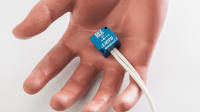
Automotive Engineering
Actuator Sensor Manipulation Box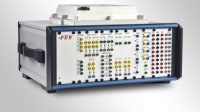
Off-Highway Engineering
Fan Driver

Automotive Engineering
Compact RTD Temperature Sensors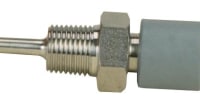
Off-Highway Engineering
Condition Monitoring Sensor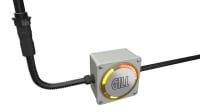
Off-Highway Engineering
Rotary Position Sensor

Automotive Engineering
Photodiode Chips
Automotive Engineering
Pedestrian Headforms
Off-Highway Engineering
Inertial Measurement Unit
Top Stories
INSIDERManufacturing & Prototyping
 How Airbus is Using w-DED to 3D Print Larger Titanium Airplane Parts
INSIDERManned Systems
 FAA to Replace Aging Network of Ground-Based Radars
NewsTransportation
 CES 2026: Bosch is Ready to Bring AI to Your (Likely ICE-powered) Vehicle
NewsSoftware
 Accelerating Down the Road to Autonomy
EditorialDesign
 DarkSky One Wants to Make the World a Darker Place
INSIDERMaterials
 Can This Self-Healing Composite Make Airplane and Spacecraft Components Last...
Webcasts
Defense
 How Sift's Unified Observability Platform Accelerates Drone Innovation
Automotive
 E/E Architecture Redefined: Building Smarter, Safer, and Scalable...
Power
 Hydrogen Engines Are Heating Up for Heavy Duty
Electronics & Computers
 Advantages of Smart Power Distribution Unit Design for Automotive...
Unmanned Systems
 Quiet, Please: NVH Improvement Opportunities in the Early Design...
