




Honeywell’s New Sensors Self-Diagnose Internal Failures
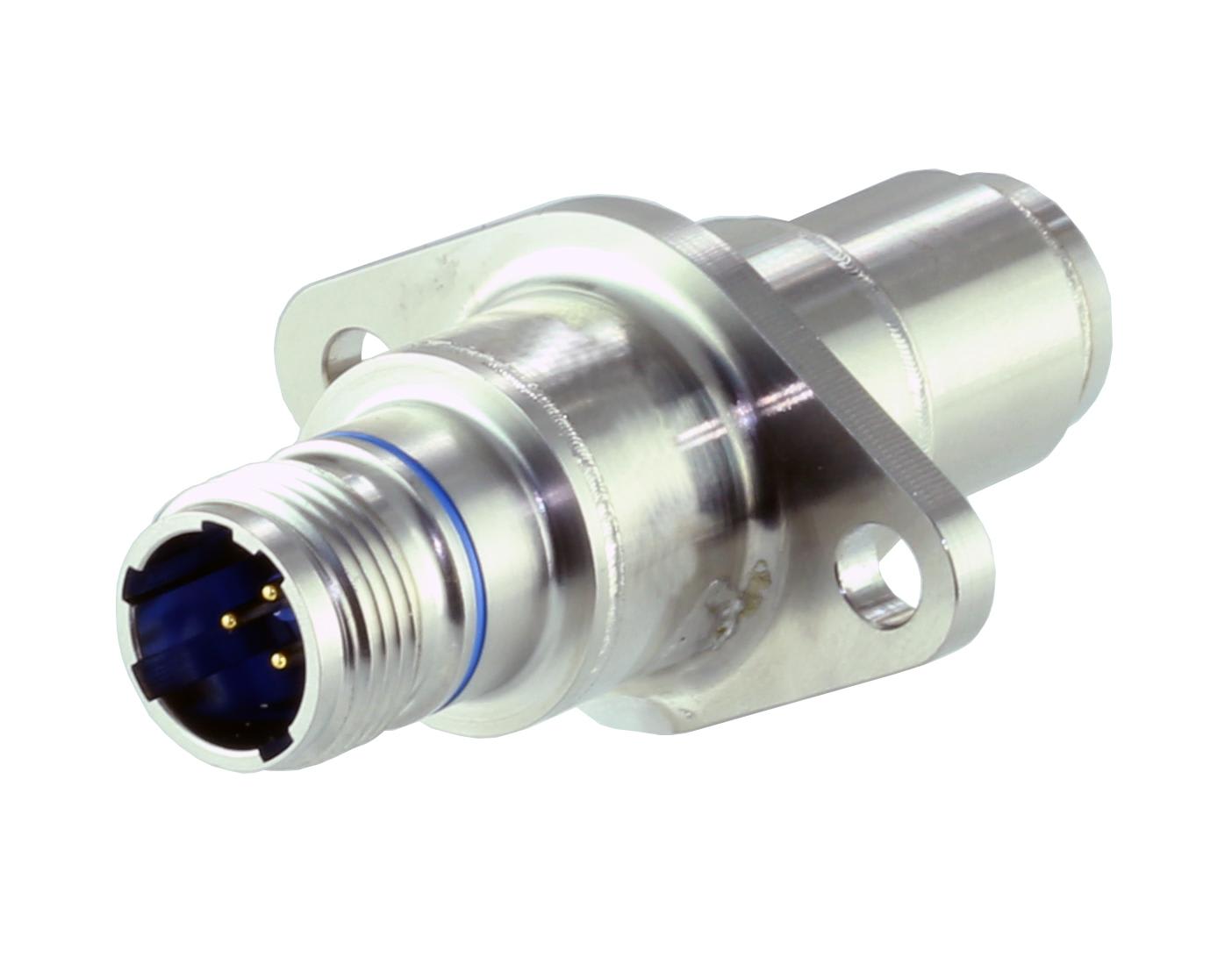
In August, Honeywell announced a new series of self-diagnosing sensors designed to improve the performance of aircraft systems and reduce maintenance costs associated with false readings. The Integral Health Monitoring (IHM) series of aerospace proximity sensors can detect when a sensor has been damaged or impacted. The new sensor technology utilizes a unique circuit where, once an impact occurs and a metallic object is detected in front of the sensing face, a signal is passed through the conditioning circuitry to give an output configured according to the sensor application. In doing so, the sensor can detect any internal failures and display a fault output instead of a false positive or false negative.
"Aircraft operators who receive a sensor reading often cannot be sure if they have a system issue that needs to be addressed or if the sensor itself is malfunctioning," said Graham Robinson, President of Honeywell's Sensing and Internet of Things business. "Our circuit can detect whether a sensor reading is correct or the result of damage or some other problem with the sensor itself."
For instance, proximity sensors in aircraft landing gear systems provide a pilot with a fault alert on landing approach to warn if the landing gear is not completely deployed. However, the new health-monitoring sensors can indicate if the error message was caused by the sensor itself rather than an issue with the landing gear.
"Our proximity sensors can notify engineers or operators of potential issues with a system before or after the component fails," said Robinson. "The sensor fault-detection provides mechanics on the ground with the information they need to perform inspections and repairs without a long and costly troubleshooting process."
The IHM sensors are configurable, noncontact, hermetically sealed devices designed to sense the presence or absence of a target in harsh-duty aircraft applications (e.g., when a thrust reverser is not fully closed). The design eliminates mechanical failure mechanisms, reduces wear, minimizes downtime, and increasing reliability.
As Honeywell and other OEMs and suppliers design for the demand of next-gen aircraft and integrated vehicle health monitoring (IVHM), operators will be able to move away from scheduled maintenance cycle and concentrate on maximizing day-to-day operations, budget, and profit margins.
Honeywell claims that the IHM sensor technology, which can be configured with an optional health monitoring output to a host system, is an improvement on traditional ECKO (eddy current killed oscillator)—the previous standard in aerospace applications.
The sensors can be designed into a range of aircraft systems such as thrust reverser actuation systems, flight controls, aircraft doors, cargo loading systems, evacuation slide locks, and landing gears systems.
In addition to the IHM sensors, Honeywell also recently introduced LVDTs (linear variable differential transformers) for use in engine mechanisms, pilot controls, and nose-wheel steering applications. The LVTDs are designed to provide next-generation aircraft with continuous position monitoring and have also been developed for use in harsh environments. The LVDT sensors are already being incorporated into Honeywell-manufactured aircraft systems and can support other component and system manufacturers.
More From SAE Media Group
Aerospace & Defense Tech Briefs
MagniX and AeroTEC to Fly All-Electric ECaravan May 28

Aerospace & Defense Tech Briefs
Airlines for America and SAE International Recognize Lufthansa Technik, 3D.aero for Nondestructive Testing Innovation
Aerospace & Defense Tech Briefs
Curtiss-Wright Black Boxes Receive European Approval
Aerospace & Defense Tech Briefs
Vertical Aerospace Is Honeywell’s Latest Partner in the UAM Industry
Aerospace & Defense Tech Briefs
Maintaining the Data-Rich Pratt & Whitney GTF Engine
Aerospace & Defense Tech Briefs
Avoiding EMI
Aerospace & Defense Tech Briefs
Rolls-Royce to Work with Airframe Manufacturers, Seek Partners for EVTOL Project
Aerospace & Defense Tech Briefs
Flight Vision System for Rotary-Wing Aircraft
Aerospace & Defense Tech Briefs
Martin UAV VTOL Unmanned Aircraft Taps Persistent Systems Wave Relay Data Link Technology
Aerospace & Defense Tech Briefs
Airbus Streamlines Fiber Optic Cable Repair Process
Aerospace INSIDER
Integrated Servo Motor
Aerospace Manufacturing and Machining INSIDER
Army Launches CMOSS Prototyping Competition for Computer Chassis and Cards
Automotive Engineering
Actuator Sensor Manipulation Box
Aerospace & Defense Tech Briefs
Air Racing Is Going Electric
Aerospace & Defense Tech Briefs
Rolls-Royce’s Race to Develop the World’s Fastest All-Electric Aircraft
Aerospace & Defense Tech Briefs
Battery Technology Is Still the Key Barrier to Better Urban Air Mobility
Aerospace & Defense Tech Briefs
Air Force Tests Fully Autonomous UAS Control System
Aerospace & Defense Tech Briefs
Bell Nexus Full-Scale Air Taxi Design Debuts, Taps Novel VTOL, Hybrid Propulsion, Energy Storage, and Avionics Technologies
Aerospace & Defense Tech Briefs
Honeywell Acquires TruTrak and Expands General Aviation Avionics Portfolio
Aerospace & Defense Tech Briefs
Rockford Xellerix to Support Pilatus PC-24 Electrification
Aerospace & Defense Tech Briefs
Northrop Grumman Will Develop Next-Gen Navigation System for U.S. Air Force
Aerospace & Defense Tech Briefs
Sikorsky’s Autonomous Black Hawk Helicopter Takes Flight
Aerospace & Defense Tech Briefs
Curtiss-Wright and Honeywell Team to Develop Cloud-Enabled Flight Recorders of the Future
Aerospace & Defense Tech Briefs
Collins Aerospace Will Provide Avionics and Synthetic Vision for the Supersonic X-59 QueSST
Aerospace & Defense Tech Briefs
NATS Will Test AI at Heathrow to Reduce Weather-Related Flight Delays
Aerospace & Defense Tech Briefs
Vertical Flight Society Applauds EVTOL Innovation, Bell Nexus UAM Concept
Aerospace & Defense Tech Briefs
Gaming Tech Helps Apache Maintainers Reduce Training Time

Aerospace & Defense Tech Briefs
Personal Air Transport Drives Need for Advanced VTOL Technologies, Standards
Top Stories
INSIDERManufacturing & Prototyping
 How Airbus is Using w-DED to 3D Print Larger Titanium Airplane Parts
INSIDERManned Systems
 FAA to Replace Aging Network of Ground-Based Radars
NewsTransportation
 CES 2026: Bosch is Ready to Bring AI to Your (Likely ICE-powered) Vehicle
NewsSoftware
 Accelerating Down the Road to Autonomy
EditorialDesign
 DarkSky One Wants to Make the World a Darker Place
INSIDERMaterials
 Can This Self-Healing Composite Make Airplane and Spacecraft Components Last...
Webcasts
Defense
 How Sift's Unified Observability Platform Accelerates Drone Innovation
Automotive
 E/E Architecture Redefined: Building Smarter, Safer, and Scalable...
Power
 Hydrogen Engines Are Heating Up for Heavy Duty
Electronics & Computers
 Advantages of Smart Power Distribution Unit Design for Automotive...
Unmanned Systems
 Quiet, Please: NVH Improvement Opportunities in the Early Design...
