




Ams Sensor Line Provides More Accurate Motor Control

The number of electric motors in vehicles is growing steadily as users want more sunroofs, seat adjusters, and other features; while mileage regulations prompt a shift from hydraulic to electric functions. As usage expands, automakers are also asking for more precise control.
Ams AG is responding to these trends with its 47 series family of magnetic position sensors, which feature Dynamic Angle Error Compensation. DAEC reduces the measurement error attributable to propagation delay compared to systems that rely on DSPs or microcontrollers to determine position. The line boasts accuracy down to a maximum ±0.17° angle error (excluding integral non-linearity).
“Propagation delay is a major contributor to errors; the higher the speed, the higher the error rate,” said Heinz Oyrer, Senior Automotive Marketing Manager at ams. “With a motor that goes to 14,500 rpm, the error rate can be around 12%. Correction implemented externally with DSPs or microcontrollers can reduce that down to 1.2%. Our devices bring it close to zero, dropping down to around 0.12%.”
When measurements are handled by the sensor instead of a processor, the DSP or microcontroller can be used for other tasks. The ams 47 series, which currently consists of three sensors, also integrates more components than previous devices, reducing size and simplifying production.
That also makes it easier to fit controller boards onto the motors, Oyrer explained. The ams parts also eliminate the need for shielding from stray magnetic fields.
“Our sensors are immune to stray fields, which is important in areas like engine compartments where there can be a lot of magnetic fields,” Oyrer said. “We use four cells that are based on differential principles, so stray fields can be cancelled out.”
He also noted that the market for motor control devices is growing steadily. The industry is also shifting to brushless dc motors, which offer smaller size and increased efficiency than brushed motors, as many developments create more demand.
“Now there are around 35 motors on the average car, double that on many luxury vehicles,” Oyrer said. “The trend is to add more to provide more features in the cabin and to replace hydraulics with electric motors. Electrified powertrains also play into this trend.”
More From SAE Media Group
Automotive Engineering
Through-Shaft Sensor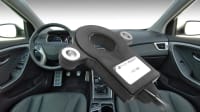
Automotive Engineering
Electro-Hydraulic Steering Unit
Off-Highway Engineering
Efficient Mid-Range Alternator
Automotive Engineering
‘Zonal’ for the Win
Off-Highway Engineering
ABS Ramps up Commercial-Vehicle Battery-Pack Assembly
Automotive Engineering
Shifting to an E-Mobility Product Portfolio
Automotive Engineering
Automotive-Grade Magnetic Position Sensors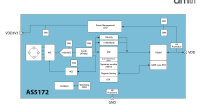
Off-Highway Engineering
Relieving the Pressure on Fleet Managers, Installers
Off-Highway Engineering
A Secure Technology Future Underscores U.S. Army's R&D Work
Off-Highway Engineering
Magnetic Field Lines Made Visible in 3-D and Real Time
Automotive Engineering
Delphi Says 48-Volt Mild-Hybrid Systems Could Offer 15% CO2 Reductions
Aerospace INSIDER
Integrated Servo Motor
Automotive Engineering
VW Emissions Scandal Will Impact Future Engine Controls, Testing
Off-Highway Engineering
CAN Controller
Off-Highway Engineering
Fan Controller Family
Aerospace & Defense Tech Briefs
Honeywell’s New Sensors Self-Diagnose Internal Failures
Off-Highway Engineering
Dynamic Inclination Sensor
Automotive Engineering
High-Performance Redundant Linear Hall Sensor
Automotive Engineering
Pedestrian Headforms
Automotive Engineering
Powertrain Sensors Add Functions, Help Reduce Wiring
Automotive Engineering
Integrated Accelerometer/gyro Combo Series
Automotive Engineering
Hella's Vehicle-Damage Detection Technology Moves Toward Production
Automotive Engineering
Punch Powertrain Pushes Its Flywheel-CVT Hybrid Technology
Automotive Engineering
Gas-Damped Auto Crash Sensor
Automotive Engineering
GKN's New Two-Speed EAxle Powers BMW I8
Automotive Engineering
48-V System
Automotive Engineering
Automakers Expanding 48-V Production Plans, Says AVL Electrification Chief
Off-Highway Engineering
John Deere Electronic Solutions' Modular Inverter for Hybrid Electric Vehicles
Off-Highway Engineering
Fan Driver
Aerospace & Defense Tech Briefs
Hybrid-Electric Distributed Propulsion Explored
Top Stories
INSIDERManufacturing & Prototyping
 How Airbus is Using w-DED to 3D Print Larger Titanium Airplane Parts
INSIDERManned Systems
 FAA to Replace Aging Network of Ground-Based Radars
NewsTransportation
 CES 2026: Bosch is Ready to Bring AI to Your (Likely ICE-powered) Vehicle
NewsSoftware
 Accelerating Down the Road to Autonomy
EditorialDesign
 DarkSky One Wants to Make the World a Darker Place
INSIDERMaterials
 Can This Self-Healing Composite Make Airplane and Spacecraft Components Last...
Webcasts
Defense
 How Sift's Unified Observability Platform Accelerates Drone Innovation
Automotive
 E/E Architecture Redefined: Building Smarter, Safer, and Scalable...
Power
 Hydrogen Engines Are Heating Up for Heavy Duty
Electronics & Computers
 Advantages of Smart Power Distribution Unit Design for Automotive...
Unmanned Systems
 Quiet, Please: NVH Improvement Opportunities in the Early Design...
