




Automakers Expanding 48-V Production Plans, Says AVL Electrification Chief

Automotive battery suppliers are adding 48-V volumes to their prototype and production schedules at a steady rate, as a number of automakers prepare to launch new dual-voltage electrical systems within the next few years, one of the industry’s top electrical-engineering executives told the 2014 SAE Hybrid & EV Symposium audience in La Jolla, CA.
“The new 48-/12-volt systems will arrive first in the European luxury brands,” confirmed Denise Gray, Vice President of Powertrain Electrification at AVL List, who delivered the annual three-day event’s keynote address on February 13. “We’ve been talking with all the major OEMs about this. The higher-voltage systems will allow more recuperation of braking energy,” she said, in addition to handling the higher power demands of a growing list of vehicle features and functionality including heated seats and steering wheels, active chassis systems, and electric power steering and air conditioning.
The higher voltage system also is more efficient because it can use a lighter-gauge wiring harness—the greater voltage allowing more current to flow through a given wire, as established in Ohm’s Law. The thinner cables require less copper, saving cost.
The 12-V (nominal) circuit would retain a conventional lead-acid battery to handle engine starting and the vehicle’s “hotel loads” including the lighting and infotainment systems.
Gray told Automotive Engineering in a separate interview that incumbent 12-V systems limit brake-energy recuperation to about 2 kW. Adding a 48-V (nominal) belt-alternator-starter “mild hybrid” system will boost recuperation capability to up to 8 kW and thus increase vehicle fuel efficiency by approximately 15%, she said. AVL, a major engineering-services provider, has various projects related to 48 V systems in development, including specialized testbeds.
She said the introduction of 48/12-V systems will coincide with the introduction of the new Worldwide harmonized Light vehicles Test Procedures (WLTP) expected to be approved by late 2015. Aimed at Europe, Japan, and India, the WLTP is a harmonized standard for determining levels of CO2 and other emissions, fuel and energy consumption, and light-duty EV range. It is being developed to fill the need for a measurement that more accurately reflects real-world operating models (i.e., to include more transients) than is currently provided by the New European Drive Cycle (NEDC).
The dual-voltage systems are widely expected to be adopted for U.S. market passenger vehicles and light trucks following their European introduction, with mass adoption underway by 2020.
Moving to higher voltages beyond the typical 12-V system is not a new initiative. In the 1990s, the industry was poised to adopt 36-V (42-V nominal) systems, led by Daimler-Benz. At the time the drivers were the same: more power-gobbling electrical features. But the trend fizzled as engineers developed more efficient 12-V solutions.
More From SAE Media Group
Automotive Engineering
Controlling GM’s Electrified Herd
Automotive Engineering
Ford Accelerates Research on 48-V Mild Hybrid Systems
Automotive Engineering
Renault's New Zoe Vies for EV Range Crown
Automotive Engineering
Researching the Green Zone of Plug-In Hybrid Electric Driving
Automotive Engineering
Nissan Debuts New Series-Type Hybrid for 2017 Note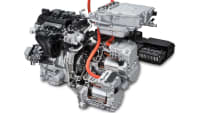
Automotive Engineering
Electric Propulsion Is Now “Inescapable”
Automotive Engineering
High-Power Wireless Charging Technology
Automotive Engineering
Polestar CEO Aims to “Democratize” Performance EVs
Off-Highway Engineering
Electric Power to Revolutionize Heavy-Duty Distribution Trucks
Automotive Engineering
Can Turning off the Engine Turn Customers On?
Automotive Engineering
Delphi Says 48-Volt Mild-Hybrid Systems Could Offer 15% CO2 Reductions
Automotive Engineering
High-Voltage Developments
Automotive Engineering
Automakers and Suppliers Crank up Their Interest in Electric Bikes
Off-Highway Engineering
ABS Ramps up Commercial-Vehicle Battery-Pack Assembly
Automotive Engineering
United Kingdom Develops a Pop-Up Electric Vehicle Charging Station for City Streets
Automotive Engineering
Nissan and EVgo Partner to Build 200 New EV Fast Chargers in the U.S.
Automotive Engineering
Tesla and Panasonic Expand Cooperation on Battery Cells
Automotive Engineering
Toyota Tilting Three-Wheeler Enters the 'Real World'
Automotive Engineering
2017 Chrysler Pacifica Plug-In Is Industry-First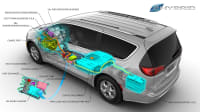
Automotive Engineering
SAE Is Working with Euro JV on Fast-Charging Network
Automotive Engineering
Connected Car, Autonomy Disruptions to Ripple Through Supply Chain
Automotive Engineering
The Impact of Shifting to the ‘Softer’ Side
Automotive Engineering
Subaru Uses ANSYS Tools to Accelerate Hybrid Vehicle Design
Battery & Electrification Technology
Ultracapacitor Solutions to Address Energy-Storage Needs of Vehicles
Automotive Engineering
CES 2017: Faraday Future Shows Its First Vehicle—the FF 91
Automotive Engineering
Powering up the New Stop-Start Systems
Automotive Engineering
Punch Powertrain Pushes Its Flywheel-CVT Hybrid Technology
Automotive Engineering
Next-Generation Level 2 Charger Is Grid-Smart
Automotive Engineering
BMW Shows Plug-In Hybrid Electric Based on X5 Sports Activity Vehicle
Automotive Engineering
Continental Shows Next-Generation Highly Automated Car
Top Stories
INSIDERManufacturing & Prototyping
 How Airbus is Using w-DED to 3D Print Larger Titanium Airplane Parts
INSIDERManned Systems
 FAA to Replace Aging Network of Ground-Based Radars
NewsTransportation
 CES 2026: Bosch is Ready to Bring AI to Your (Likely ICE-powered) Vehicle
NewsSoftware
 Accelerating Down the Road to Autonomy
EditorialDesign
 DarkSky One Wants to Make the World a Darker Place
INSIDERMaterials
 Can This Self-Healing Composite Make Airplane and Spacecraft Components Last...
Webcasts
Defense
 How Sift's Unified Observability Platform Accelerates Drone Innovation
Automotive
 E/E Architecture Redefined: Building Smarter, Safer, and Scalable...
Power
 Hydrogen Engines Are Heating Up for Heavy Duty
Electronics & Computers
 Advantages of Smart Power Distribution Unit Design for Automotive...
Unmanned Systems
 Quiet, Please: NVH Improvement Opportunities in the Early Design...
