




Nissan Debuts New Series-Type Hybrid for 2017 Note
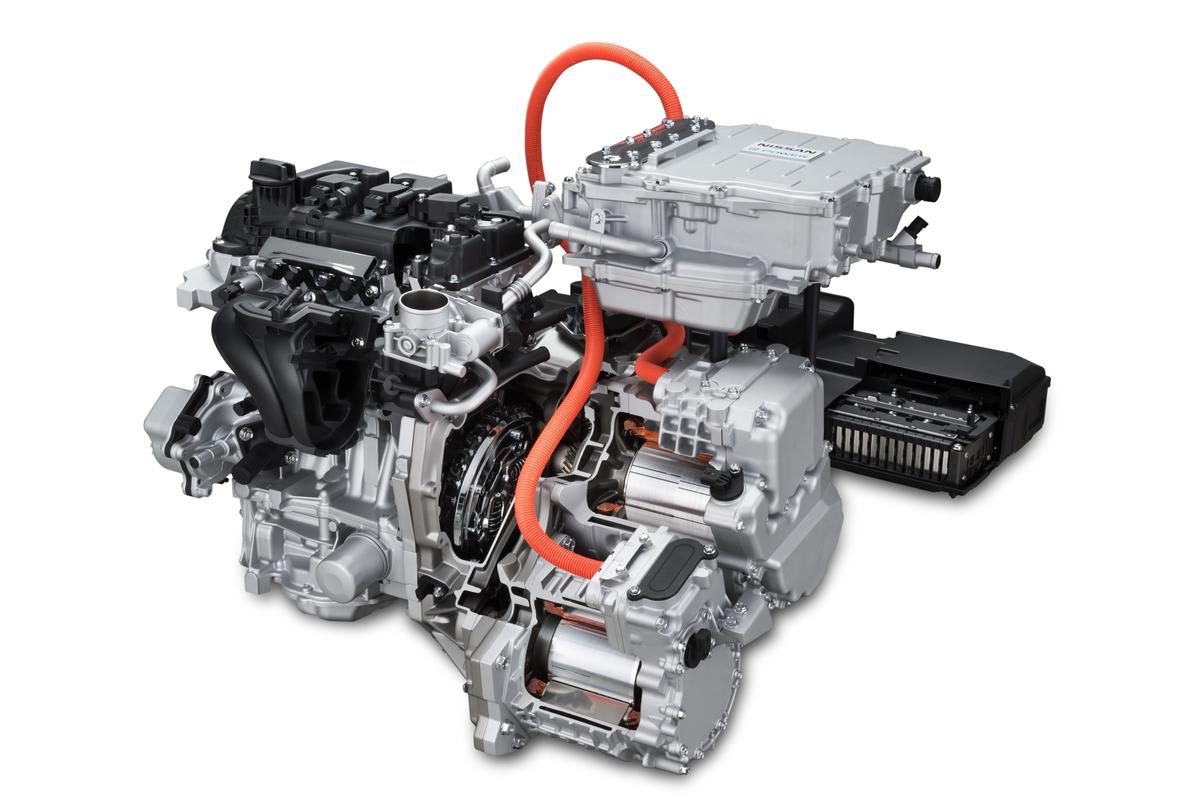
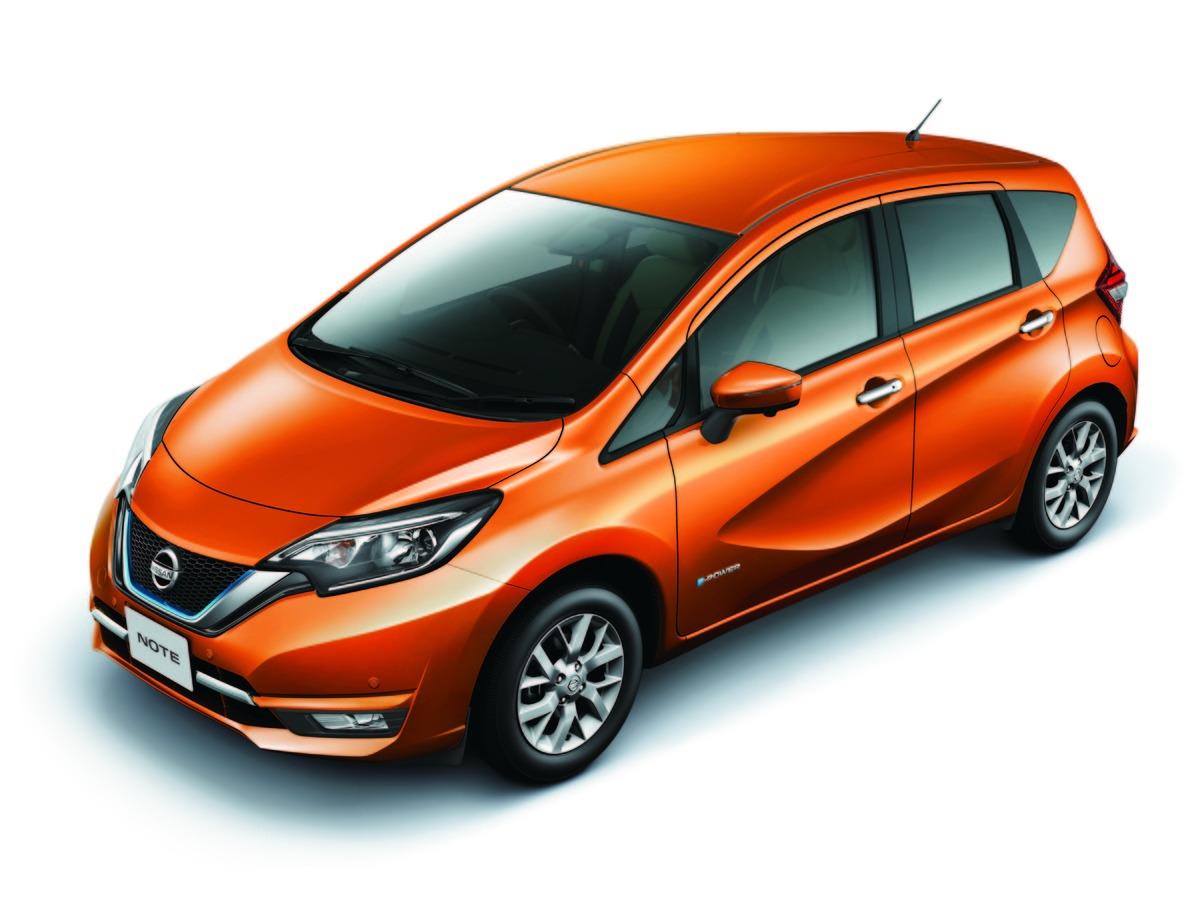
Nissan’s recently unveiled 2017 Note, a Japan-market 5-door, is powered by what the company claims is the world’s first series-type hybrid propulsion system in a compact automobile. The Note and its so-called e-Power system show that Nissan engineers have learned to adopt elements of the battery-electric Leaf driveline (including the 80-kW/107-hp traction motor) to a hybrid configuration, albeit without plug-in capability.

The introduction of e-Power, which is slated to spread to other Nissan and possibly Renault vehicles, expands upon Nissan’s comparatively limited hybrid approach represented by the single motor, CVT-based, P2-type system as used in the 2017 Rogue Hybrid.
Nissan calls e-Power "a gateway to 100% electric cars" and provides “all the benefits of an EV without having to worry about charging the battery." Eliminating EV range anxiety and minimizing system costs appear to be the primary drivers behind the series-hybrid strategy. The company is betting on the new Note e-Power to draw customers in Japan, where more than half the passenger vehicles sold are now hybrids.
Technically a series hybrid has only an electric transmission path between the power source and the driven wheels. Diesel-electric railroad locomotives exemplify this configuration, with the diesel turning at constant speed to spin an electric generator which then powers traction motors at the locomotive’s rail wheels (trucks).
BMW’s i3 range-extender is the only true series hybrid car currently available—and it’s a B-segment compact, so it’s unclear where Nissan is staking its “world first” claim. The i3’s twin-cylinder ICE only provides power to charge the battery, where the Chevrolet Volt’s (sometimes labeled a series hybrid) Voltec electric transaxle is capable of clutching the combustion engine into the final drive via a planetary gearset to provide extra power in certain driving situations.
Series hybrids have also been built by engineering consultancies including FEV and AVL in recent years to demonstrate the type’s efficiency potential. Some have even used Wankel rotaries rather than piston engines.
Nissan’s Tokyo announcement on the Note was intentionally light on technical detail, with chief powrtrain engineer Naoki Nakada stating that minimizing the car’s battery size was a key program bogey, aimed at reducing cost (and mass).
He also noted that the Note’s lithium-ion batteries are “one-twentieth the size” of those in the Leaf, “and made to fit under the front seats without having to sacrifice interior space." If Nakada-san was speaking specifically about the battery’s total capacity that would calculate to 1.5 kWh, as the Leaf battery is rated at 30 kWh.
The ICE is Nissan’s 1.2-L gasoline triple is taken from the Micra and is calibrated for 2,500-rpm operation to charge the battery pack.
Recently Renault-Nissan Alliance chairman Carlos Ghosn said publicly that the new e-Power hybrid system is “definitely cost-competitive with diesel,” adding that it carries a 27% cost premium (similar to that of a comparable diesel) versus a conventional gasoline powertrain. Ghosn indicated that e-Power is capable of delivering diesel-like fuel efficiency.
More From SAE Media Group
Automotive Engineering
Continental’s First Production 48-V System on 2017 Renault Scenic
Automotive Engineering
Controlling GM’s Electrified Herd
Automotive Engineering
Renault's New Zoe Vies for EV Range Crown
Automotive Engineering
Ford Accelerates Research on 48-V Mild Hybrid Systems
Automotive Engineering
Automakers Expanding 48-V Production Plans, Says AVL Electrification Chief
Automotive Engineering
United Kingdom Develops a Pop-Up Electric Vehicle Charging Station for City Streets
Automotive Engineering
Polestar CEO Aims to “Democratize” Performance EVs
Automotive Engineering
Electric Propulsion Is Now “Inescapable”
Automotive Engineering
Researching the Green Zone of Plug-In Hybrid Electric Driving
Automotive Engineering
2017 Chrysler Pacifica Plug-In Is Industry-First
Automotive Engineering
Punch Powertrain Pushes Its Flywheel-CVT Hybrid Technology
Off-Highway Engineering
Electric Power to Revolutionize Heavy-Duty Distribution Trucks
Automotive Engineering
High-Voltage Developments
Automotive Engineering
Nissan and EVgo Partner to Build 200 New EV Fast Chargers in the U.S.
Automotive Engineering
Subaru Uses ANSYS Tools to Accelerate Hybrid Vehicle Design
Automotive Engineering
GKN's New Two-Speed EAxle Powers BMW I8
Automotive Engineering
2015 VW Golf GTE Plug-In Hybrid Is a Smooth Operator
Automotive Engineering
BMW Shows Plug-In Hybrid Electric Based on X5 Sports Activity Vehicle
Automotive Engineering
Toyota Tilting Three-Wheeler Enters the 'Real World'
Automotive Engineering
Renault Reveals Zoe EV Racecar Concept with 340-KW Output.
Automotive Engineering
High-Power Wireless Charging Technology
Automotive Engineering
Renault ARMs Its Twizy EV with Open-Source Architecture
Automotive Engineering
GKN to Buy Williams' Motorsports-Proven Flywheel Technology
Automotive Engineering
Connected Car, Autonomy Disruptions to Ripple Through Supply Chain
Off-Highway Engineering
Volvo, ABB Partner on Fast-Charging Electric Buses
Automotive Engineering
Automakers and Suppliers Crank up Their Interest in Electric Bikes
Off-Highway Engineering
ABS Ramps up Commercial-Vehicle Battery-Pack Assembly
Automotive Engineering
BorgWarner Prepares Manual Gearchange for ADAS Vehicles
Automotive Engineering
Positioning for Hybrid Growth
Automotive Engineering
Delphi Says 48-Volt Mild-Hybrid Systems Could Offer 15% CO2 Reductions
Transcript
00:00:11 Nissan’s new series hybrid system, e-POWER makes driving cleaner and more efficient while offering the acceleration and quietness of an electric vehicle. e-POWER technology is our newest form of electric-motor driven powertrain under Nissan Intelligent Mobility. e-POWER is Nissan’s new Intelligent Power offering in moving forward its electrification strategy. Built at the Oppama plant in Japan, NOTE e-POWER is the first mass produced compact car to feature this new powertrain. Similar to an EV, the wheels are completely driven by the electric motor. But the main difference is how electricity is produced.
00:00:58 It’s not using the electricity from the charged batteries but it uses the electricity generated by the engine. The system decides when to use the engine to produce electricity and increase efficiency. Energy management is key to the EV-like driving experience of the new e-POWER. In conventional hybrids, a low-output electric motor is mated to a gasoline engine, powering the wheels when the battery is low. But in the e-POWER system, the engine simply charges the battery. Compared to LEAF, the batteries are 1/20th the size and made to fit under the front seats without having to sacrifice interior space. e-POWER allows drivers to enjoy the benefits of EV
00:01:59 without having to worry about charging the battery. An electric motor-run car gives the best torque in stop-and-go situations, and you also get good response and smooth acceleration. You can have so much fun with this car! e-POWER technology aims to provide customers a gateway to 100% electric cars and further Nissan’s pursuit of a zero-emission society.
Top Stories
INSIDERManufacturing & Prototyping
 How Airbus is Using w-DED to 3D Print Larger Titanium Airplane Parts
INSIDERManned Systems
 FAA to Replace Aging Network of Ground-Based Radars
NewsTransportation
 CES 2026: Bosch is Ready to Bring AI to Your (Likely ICE-powered) Vehicle
NewsSoftware
 Accelerating Down the Road to Autonomy
EditorialDesign
 DarkSky One Wants to Make the World a Darker Place
INSIDERMaterials
 Can This Self-Healing Composite Make Airplane and Spacecraft Components Last...
Webcasts
Defense
 How Sift's Unified Observability Platform Accelerates Drone Innovation
Automotive
 E/E Architecture Redefined: Building Smarter, Safer, and Scalable...
Power
 Hydrogen Engines Are Heating Up for Heavy Duty
Electronics & Computers
 Advantages of Smart Power Distribution Unit Design for Automotive...
Unmanned Systems
 Quiet, Please: NVH Improvement Opportunities in the Early Design...
